 flip
flipPhakê, the Wise Man's Lentil Soup
Phakê, the Wise Man's Lentil Soup
Why this dish? Lentil soup (phakê) was the ultimate comfort and economical dish in Athens, praised for its restorative virtues. For Socrates, aging, walking barefoot in winter, living frugally with his family in Alopeke, this cheap and nourishing soup was both remedy and evening meal.
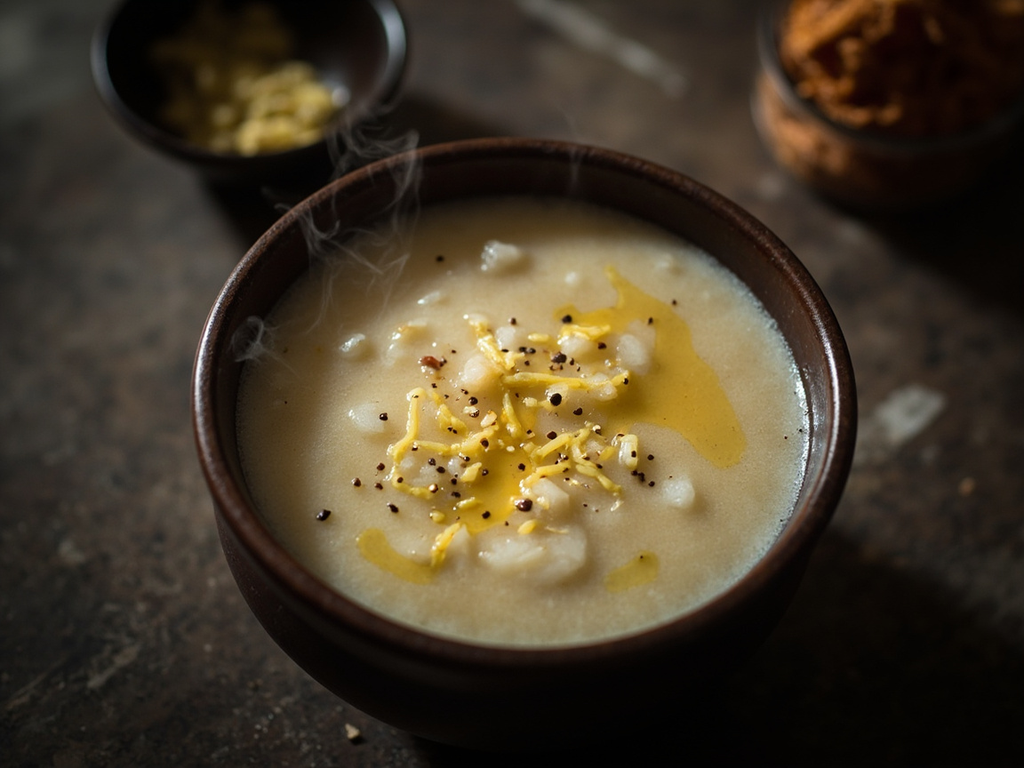
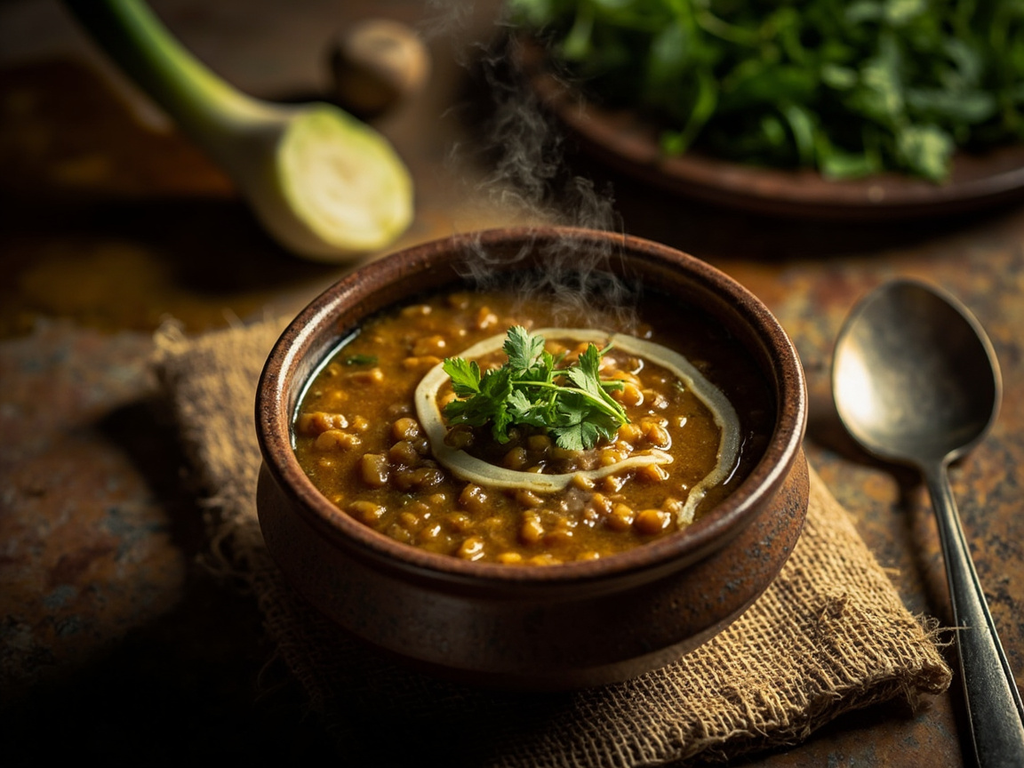
A thick lentil soup flavored with coriander, vinegar, and oil — humble, warm, fortifying. The dish that Greeks said was worth all medicines for those who know how to live simply.
Come warm yourself, the cold does not spare old bones like mine. A bowl of steaming phakê, a dash of vinegar in it — and I am fit to face winter barefoot, as at Potidaea long ago where the frost did not stop me! Do not mock the lentil: he who despises the poor man's dish despises health itself. Add the coriander when the fire is out, never before, otherwise its fragrance flees. Eat, and let your body serve your soul, not the other way around.
- •Lentils — a good measure (base)
- •Onion and leek — one of each (aromatics)
- •Fresh coriander — a bunch (final aroma)
- •Wine vinegar — a dash (restorative acidity)
- •Olive oil and salt — to taste (binder and flavor)
Phakê, the Wise Man's Lentil Soup
A thick lentil soup flavored with coriander, vinegar, and oil — humble, warm, fortifying. The dish that Greeks said was worth all medicines for those who know how to live simply.
Why this dish? Lentil soup (phakê) was the ultimate comfort and economical dish in Athens, praised for its restorative virtues. For Socrates, aging, walking barefoot in winter, living frugally with his family in Alopeke, this cheap and nourishing soup was both remedy and evening meal.
Come warm yourself, the cold does not spare old bones like mine. A bowl of steaming phakê, a dash of vinegar in it — and I am fit to face winter barefoot, as at Potidaea long ago where the frost did not stop me! Do not mock the lentil: he who despises the poor man's dish despises health itself. Add the coriander when the fire is out, never before, otherwise its fragrance flees. Eat, and let your body serve your soul, not the other way around.
Ingredients (period version)
- Lentils — a good measure (base)
- Onion and leek — one of each (aromatics)
- Fresh coriander — a bunch (final aroma)
- Wine vinegar — a dash (restorative acidity)
- Olive oil and salt — to taste (binder and flavor)
Ingredients
- Green or brown lentils — 250 g (base)
- Onion — 1 (aromatic)
- Leek — 1 (aromatic)
- Fresh chopped coriander — 1 small bunch (aroma)
- Red wine vinegar — 1-2 tbsp (acidity)
- Olive oil — 4 tbsp (binder)
- Salt — to taste (seasoning)
Method
- Rinse the lentils and place in a pot with the chopped onion and leek.
- Cover with water (3 times their volume), bring to a boil, then simmer for 30-35 minutes until tender.
- Season with salt at the end of cooking, add the olive oil, and lightly mash some lentils to thicken.
- Off the heat, stir in the vinegar and chopped coriander.
- Serve very hot, with a drizzle of oil and maza for dipping.
How it was made : Phakê was THE popular dish of Athens, so common that it appears repeatedly in Aristophanes' comedies. Simmered with aromatics and seasoned with vinegar, sometimes enriched with a little silphium or coriander, it was credited with fortifying properties. Cheap and filling, it embodied the cuisine of moderation dear to the philosophers.
The contemporary twist : Serve in a deep bowl with a poached egg in the center and a drizzle of robust olive oil — the "thinker's phakê," modern winter comfort.
Sources : Aristophanes (repeated mentions of phakê in his comedies) · Andrew Dalby, Siren Feasts: A History of Food and Gastronomy in Greece (1996)
Socrates · Charactorium