 flip
flipTulsi-Ada Kadha — homemade holy basil and ginger decoction
Tulsi-Ada Kadha — homemade holy basil and ginger decoction
Why this dish? Asima Chatterjee devoted her life to the chemistry of medicinal plants of the subcontinent — from the alkaloids of Rauwolfia and periwinkle to antiepileptics. This decoction of tulsi (holy basil), a plant from the garden of every Hindu home, embodies the folk knowledge of plant remedies that her science came to illuminate.
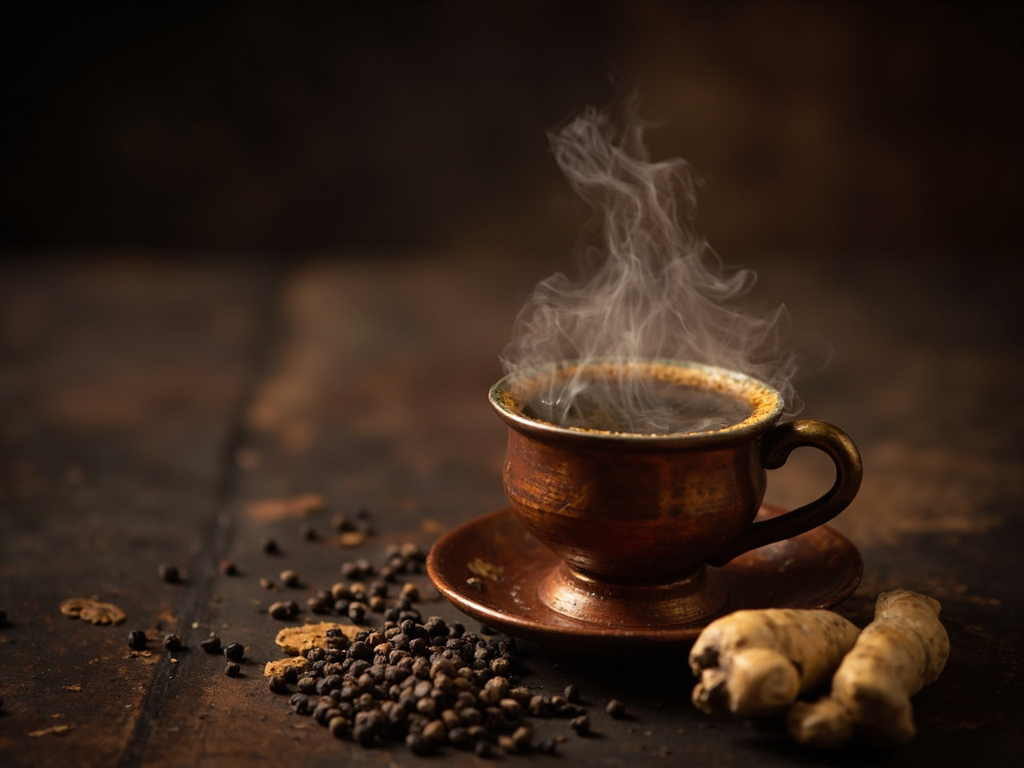
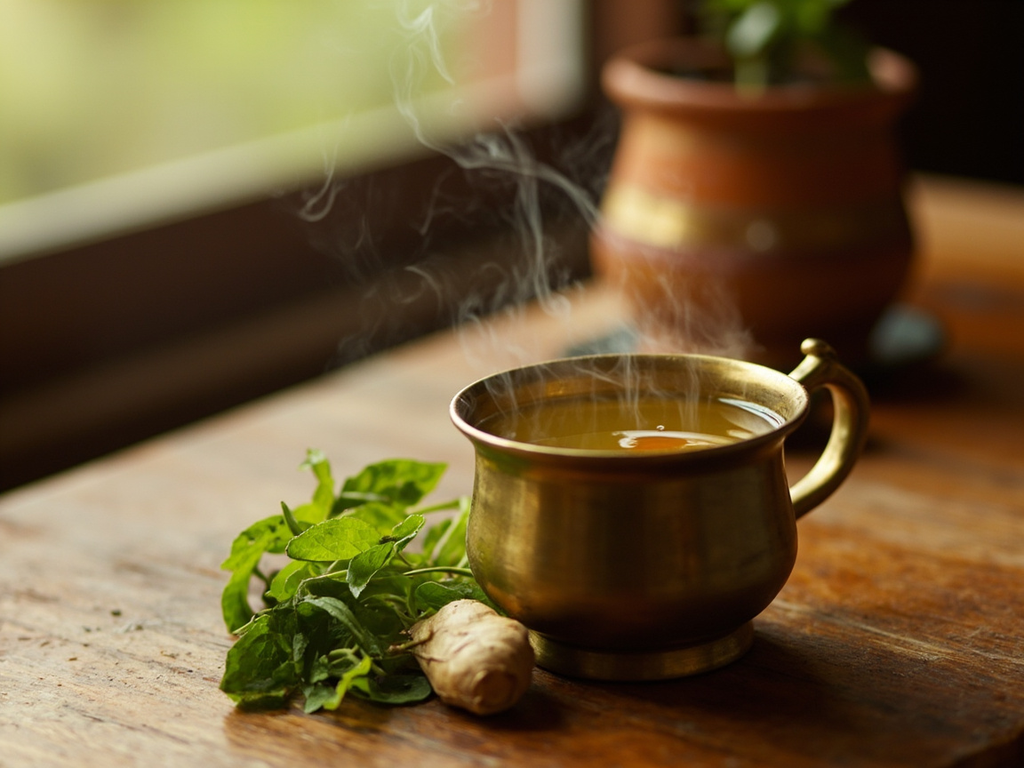
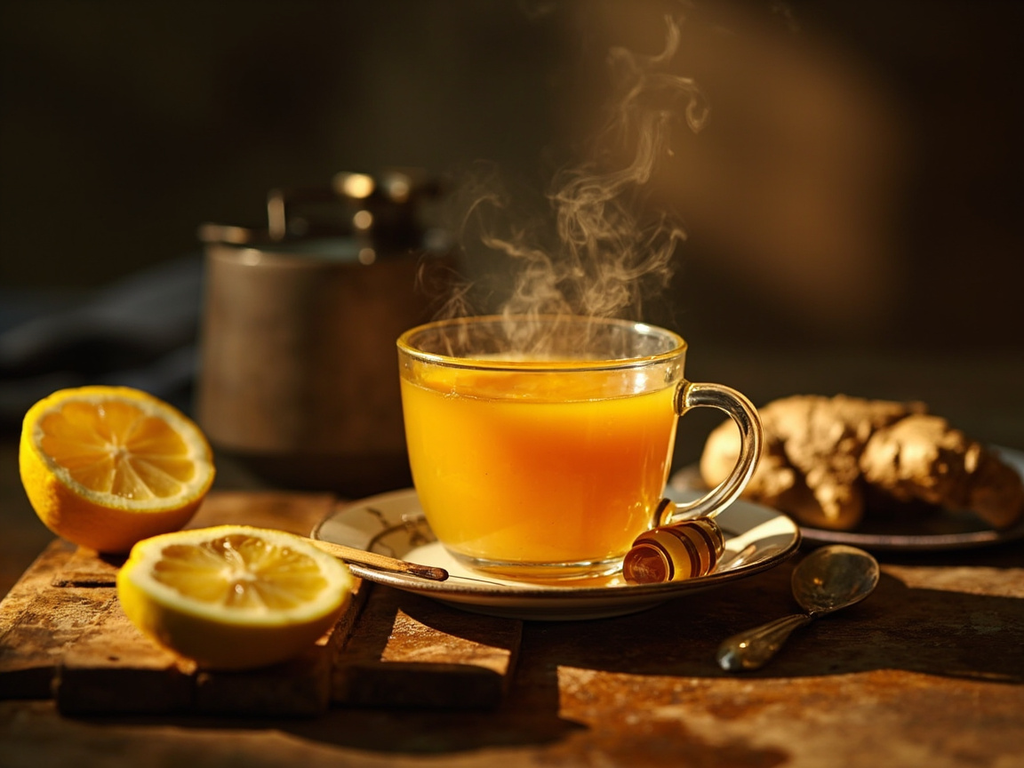
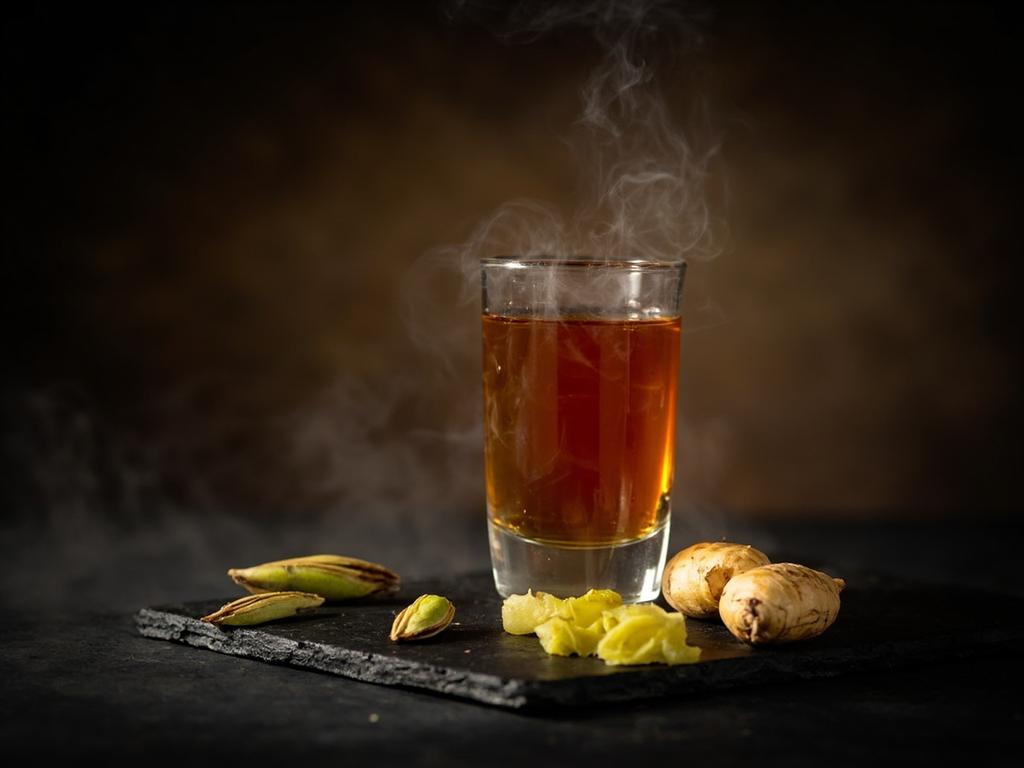
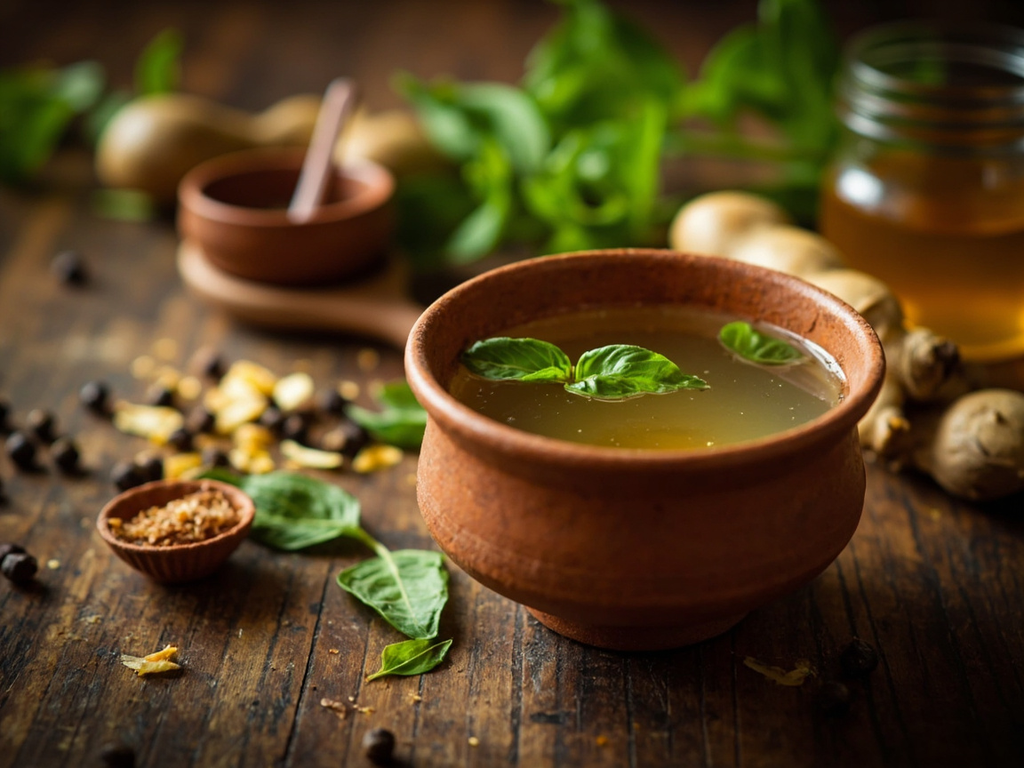
A homemade herbal tea of tulsi leaves (holy basil), ginger, black pepper, and honey, drunk hot against coughs and colds. The grandmother's remedy of Bengal, halfway between the kitchen and the domestic pharmacy.
Long before I weighed alkaloids on the balance, my grandmother picked tulsi leaves at the foot of the courtyard shrine to cure our colds — and my entire career has only sought, in those plants, the why of their power. Boil a handful of leaves with ginger and a few peppercorns, until the water takes on color and fragrance. Add the honey only after turning off the heat, never to the boiling. Drink it scalding hot, in the evening: that is the wisdom of our foremothers, and science has only proven them right.
- •Tulsi leaves (holy basil) — a handful (active principle)
- •Fresh ginger — a crushed piece (warming)
- •Black pepper — a few grains (expectorant)
- •Honey — a spoonful (soothing)
Tulsi-Ada Kadha — homemade holy basil and ginger decoction
A homemade herbal tea of tulsi leaves (holy basil), ginger, black pepper, and honey, drunk hot against coughs and colds. The grandmother's remedy of Bengal, halfway between the kitchen and the domestic pharmacy.
Why this dish? Asima Chatterjee devoted her life to the chemistry of medicinal plants of the subcontinent — from the alkaloids of Rauwolfia and periwinkle to antiepileptics. This decoction of tulsi (holy basil), a plant from the garden of every Hindu home, embodies the folk knowledge of plant remedies that her science came to illuminate.
Long before I weighed alkaloids on the balance, my grandmother picked tulsi leaves at the foot of the courtyard shrine to cure our colds — and my entire career has only sought, in those plants, the why of their power. Boil a handful of leaves with ginger and a few peppercorns, until the water takes on color and fragrance. Add the honey only after turning off the heat, never to the boiling. Drink it scalding hot, in the evening: that is the wisdom of our foremothers, and science has only proven them right.
Ingredients (period version)
- Tulsi leaves (holy basil) — a handful (active principle)
- Fresh ginger — a crushed piece (warming)
- Black pepper — a few grains (expectorant)
- Honey — a spoonful (soothing)
Ingredients
- Fresh tulsi leaves (or basil if unavailable) — 10 to 12 leaves (active principle)
- Water — 300 ml (decoction)
- Fresh ginger — 1 piece of 2 cm, crushed (warming)
- Black pepper — 4 to 5 grains, crushed (expectorant)
- Honey — 1 tsp (soothing)
Method
- Lightly crush the tulsi leaves, ginger, and peppercorns in a mortar.
- Bring the water to a boil, add everything, and let boil until reduced by about a third.
- Strain the decoction into a cup.
- Let cool for a minute, then add the honey (off the heat to preserve its qualities). Drink hot.
How it was made : Tulsi (Ocimum sanctum), planted in the courtyard of almost every Hindu home, has been venerated and used as a remedy for centuries in Ayurvedic medicine, especially for respiratory ailments. Family decoctions (kadha) of tulsi-ginger-pepper-honey remain a domestic reflex passed down through generations.
The contemporary twist : Present the kadha as a warm 'wellness infusion', accompanied by a small card explaining the active molecules — a bridge between ancestral knowledge and modern chemistry, in the manner of Asima.
Sources : K.T. Achaya, *Indian Food: A Historical Companion* · Asima Chatterjee & S.C. Pakrashi, *The Treatise on Indian Medicinal Plants* (CSIR, 1991-1995)
Asima Chatterjee · Charactorium