 flip
flipItria with honey and sesame, for the symposion
Itria with honey and sesame, for the symposion
Why this dish? Aspasia's salon was famous for its conversations that extended into the symposion, the second part of the meal where wine mixed with water was drunk. Small sweets with honey and sesame, called tragḗmata, were served to accompany debate and poetry.
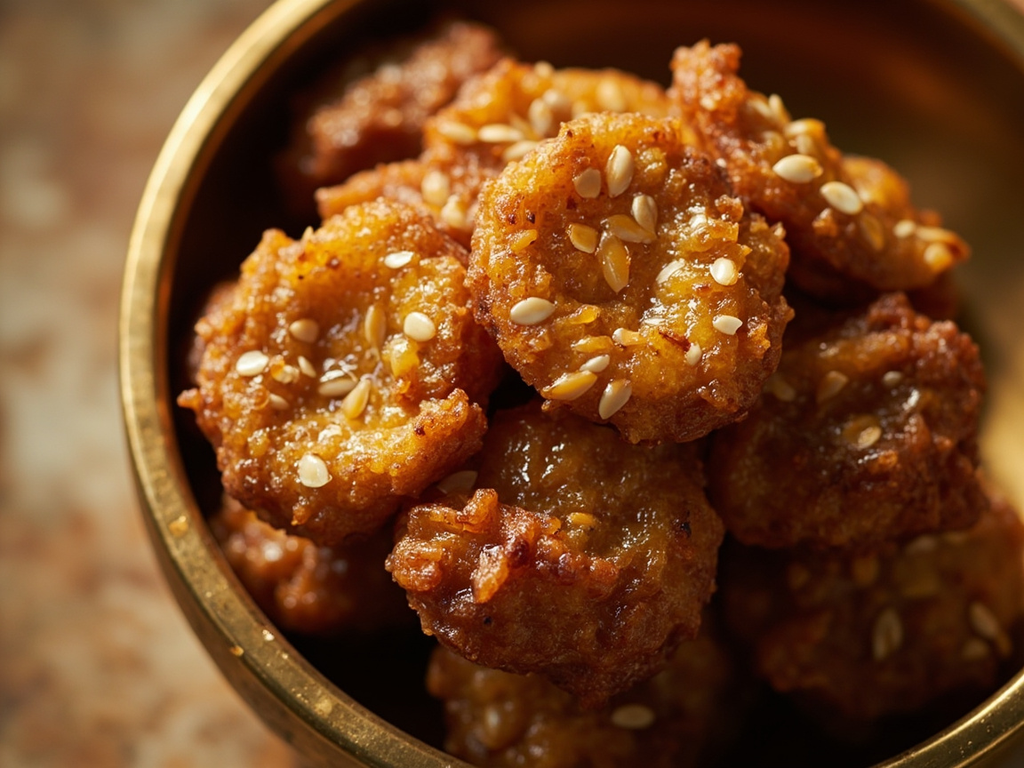
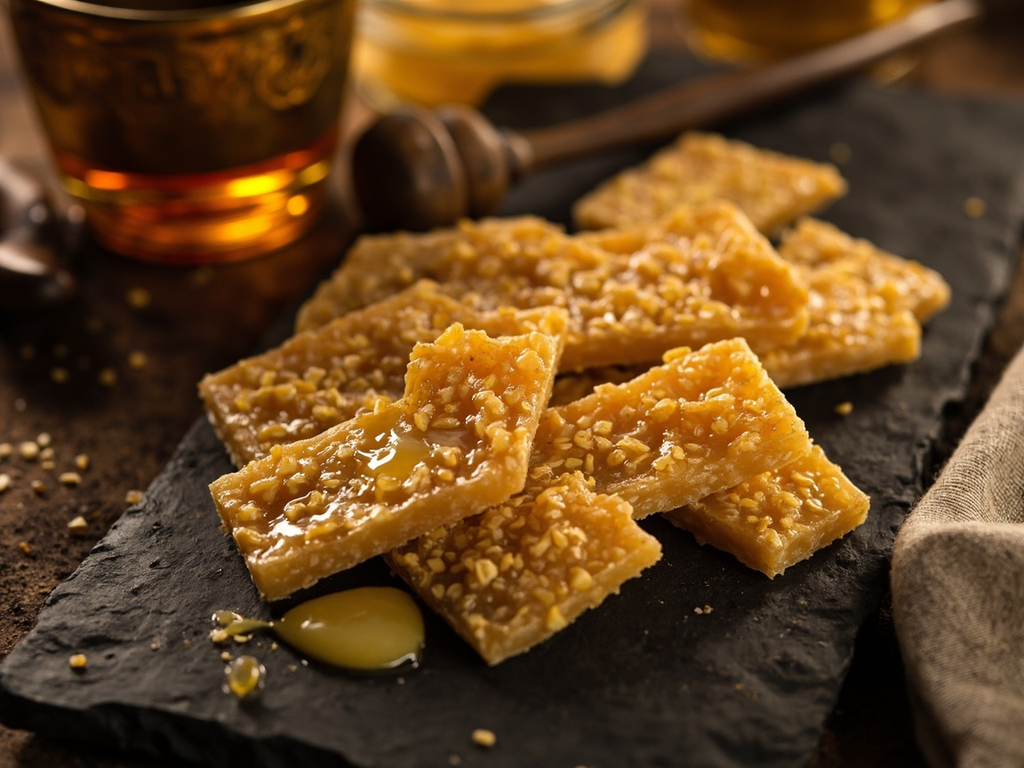
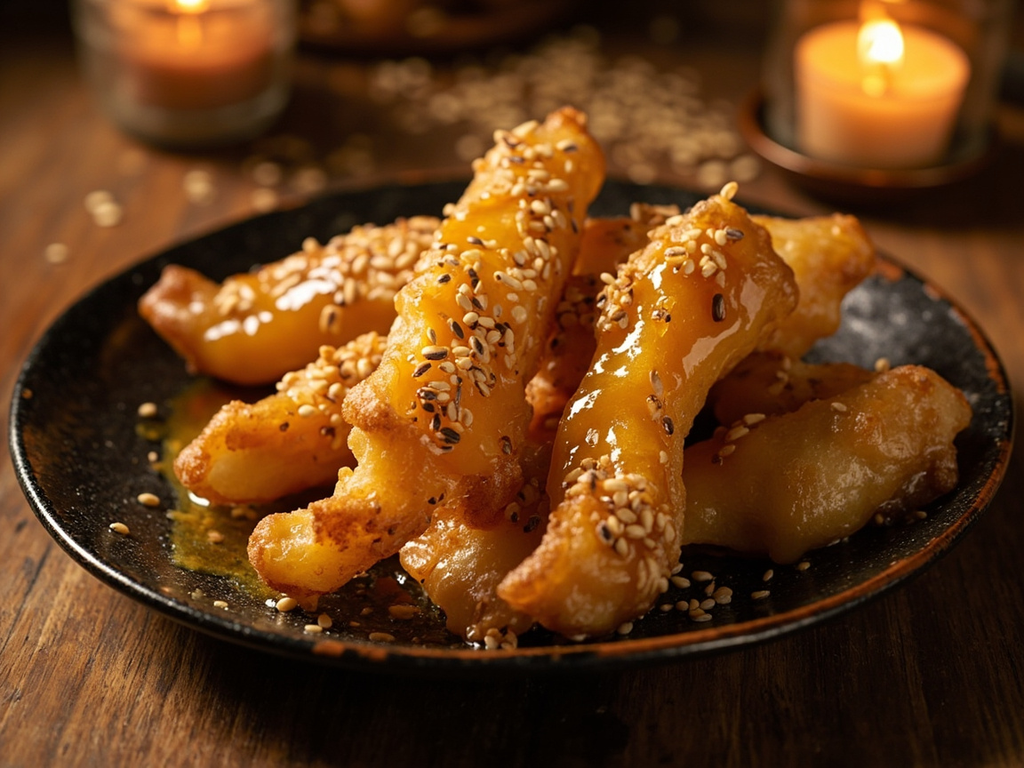
Thin, crispy fried dough strips drenched in warm honey and sprinkled with sesame seeds: the ancestor of baklava, an emblematic sweet of Athenian banquets.
When the cups went round and the talk grew heated, I had the itria brought in. A thin dough like a veil, golden in oil, then drowned in Hymettus honey and rolled in toasted sesame. You see, a good symposion is measured by the quality of its ideas, but also by the sweetness one offers to one's guests: a mind pleased with honey argues more gracefully. Take one while it still crackles.
- •Wheat flour — two handfuls (dough)
- •Water — as needed (binding)
- •Olive oil — for frying (cooking)
- •Hymettus honey — generously (coating)
- •Sesame seeds — a handful (finishing)
Itria with honey and sesame, for the symposion
Thin, crispy fried dough strips drenched in warm honey and sprinkled with sesame seeds: the ancestor of baklava, an emblematic sweet of Athenian banquets.
Why this dish? Aspasia's salon was famous for its conversations that extended into the symposion, the second part of the meal where wine mixed with water was drunk. Small sweets with honey and sesame, called tragḗmata, were served to accompany debate and poetry.
When the cups went round and the talk grew heated, I had the itria brought in. A thin dough like a veil, golden in oil, then drowned in Hymettus honey and rolled in toasted sesame. You see, a good symposion is measured by the quality of its ideas, but also by the sweetness one offers to one's guests: a mind pleased with honey argues more gracefully. Take one while it still crackles.
Ingredients (period version)
- Wheat flour — two handfuls (dough)
- Water — as needed (binding)
- Olive oil — for frying (cooking)
- Hymettus honey — generously (coating)
- Sesame seeds — a handful (finishing)
Ingredients
- Wheat flour — 200 g (dough)
- Warm water — 90–100 ml (binding)
- Olive oil (or neutral oil) — for deep-frying (cooking)
- Thyme honey — 150 g (coating)
- Sesame seeds — 60 g (finishing)
Method
- Knead the flour with water into a smooth, firm dough; let rest under a cloth for 20 minutes.
- Roll it out as thinly as possible and cut into strips or diamonds.
- Fry in hot oil until golden and crispy; drain.
- Warm the honey and toast the sesame seeds dry in a pan.
- Drizzle the itria with warm honey and sprinkle generously with sesame; serve warm.
How it was made : Itria, thin sheets of cooked or fried dough, are mentioned as early as the 5th century BC; combined with honey and sesame, they are one of the distant ancestors of Mediterranean flaky pastries. Sesame, a symbol of fertility, and honey, offered to the gods, made sweets both festive and sacred. At the symposion, these tragḗmata accompanied the 'second table' devoted to drinking.
The contemporary twist : Arrange them as a light mille-feuille, layered with honey and sesame, and dust with a hint of cinnamon as a nod to the Aegean trade routes.
Sources : Andrew Dalby, Siren Feasts, Routledge, 1996 · Athenaeus of Naucratis, Deipnosophistae (citations on honey pastries)
Aspasia · Charactorium