 flip
flipArroz, feijão e couve — the prato do dia
Arroz, feijão e couve — the prato do dia
Why this dish? This is the basic plate of every Brazilian home, the one that comes back at lunch and dinner, simple and nourishing. Astrud, raised in Brazil in a modest kitchen, knew this rice-and-beans duo as a lifelong anchor, which she kept even after settling in the United States.
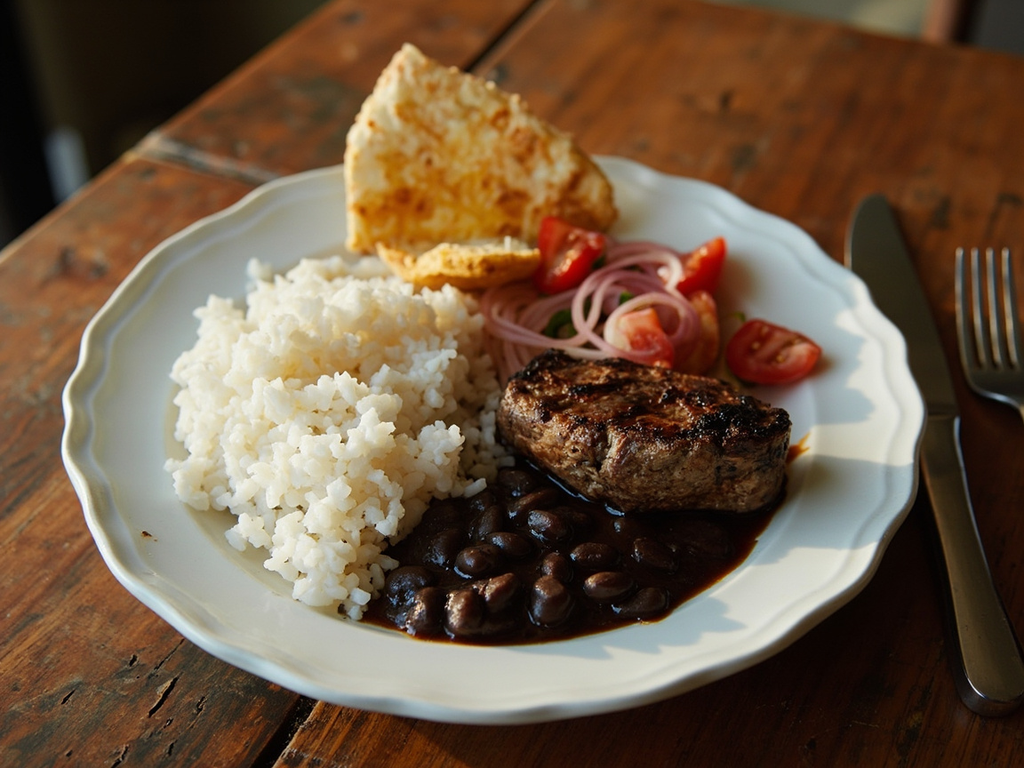
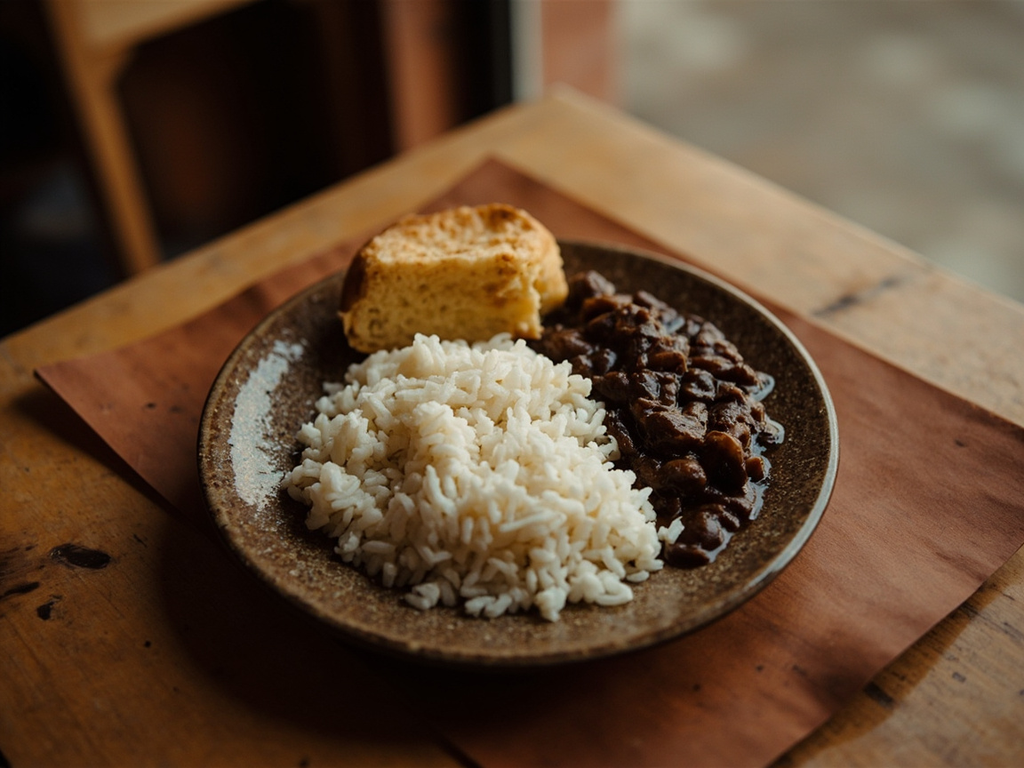
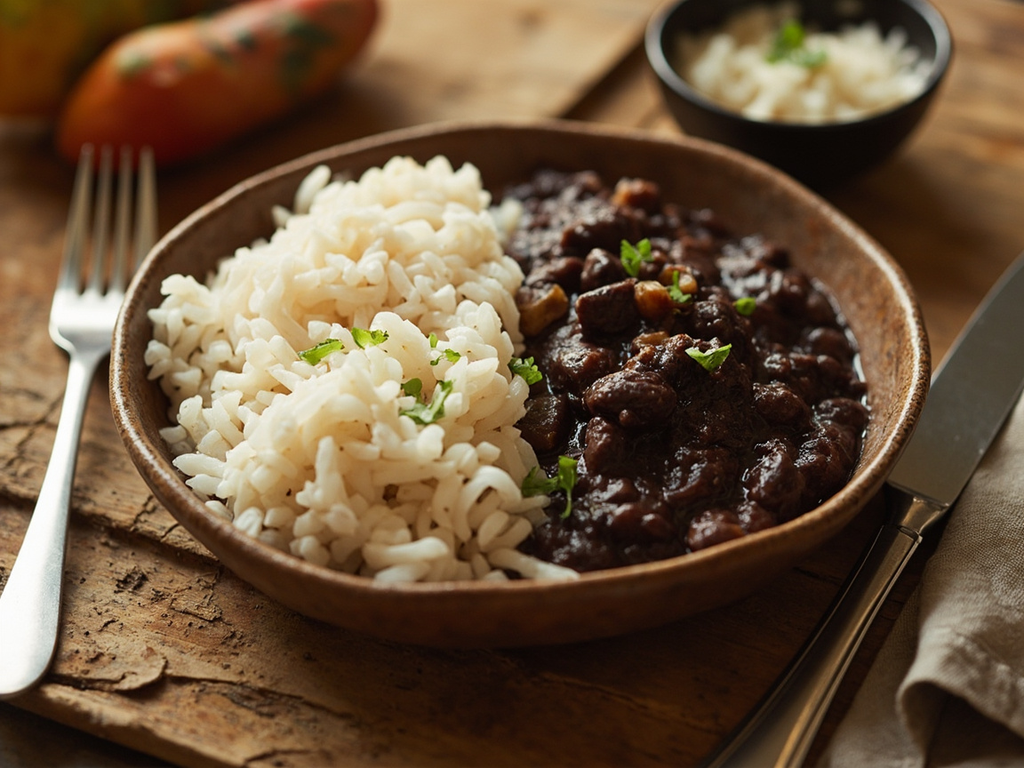
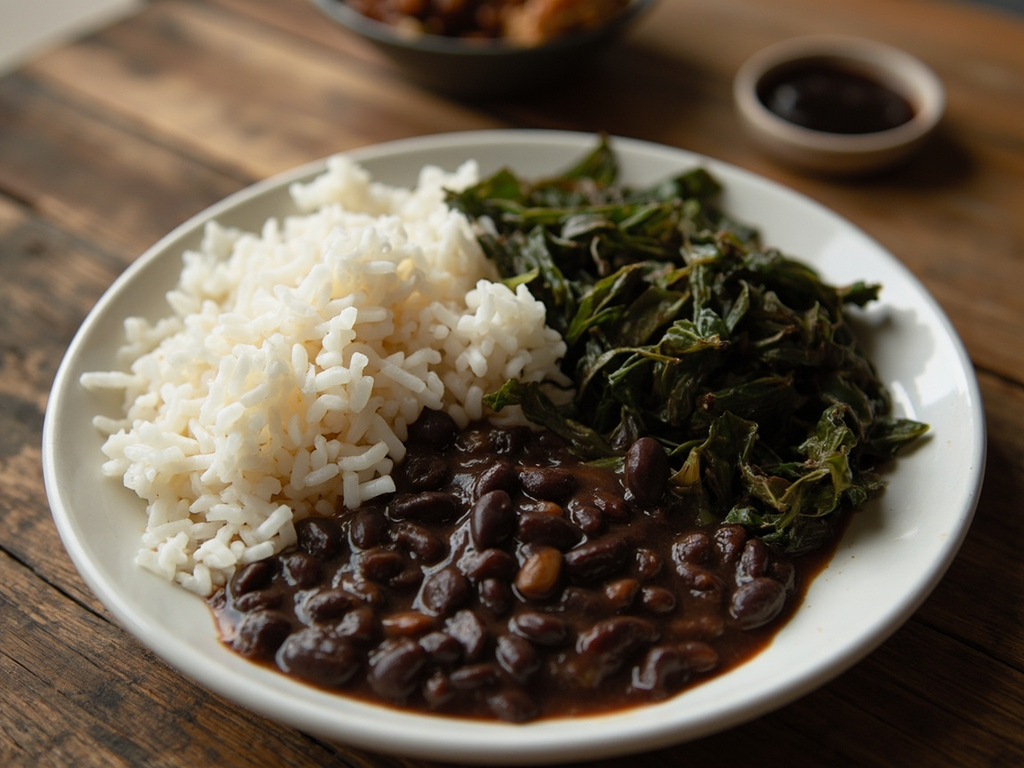
The heart of the Brazilian meal: fluffy white rice, slow-simmered black beans, and collard greens (couve) cut into thin strips and sautéed with garlic. Three humble elements that together form the country's most beloved plate.
You know, wherever I went to sing in the world, it was this plate I missed. The rice so white, the black beans that had simmered so gently, and the couve sliced so thin it almost melts. My mother would sauté the garlic until the whole kitchen smelled wonderful, and that, for me, was being home. No need for meat to be happy at the table, just a little tenderness and patience.
- •White rice — a large bowl (staple starch)
- •Black beans — a good handful per person, soaked the night before (legume, protein heart)
- •Collard greens (couve) — a few leaves (green vegetable)
- •Garlic — as much as you like (aromatic)
- •Onion — one (aromatic)
- •Bay leaf — one leaf (flavor for beans)
- •Salt — to taste (seasoning)
Arroz, feijão e couve — the prato do dia
The heart of the Brazilian meal: fluffy white rice, slow-simmered black beans, and collard greens (couve) cut into thin strips and sautéed with garlic. Three humble elements that together form the country's most beloved plate.
Why this dish? This is the basic plate of every Brazilian home, the one that comes back at lunch and dinner, simple and nourishing. Astrud, raised in Brazil in a modest kitchen, knew this rice-and-beans duo as a lifelong anchor, which she kept even after settling in the United States.
You know, wherever I went to sing in the world, it was this plate I missed. The rice so white, the black beans that had simmered so gently, and the couve sliced so thin it almost melts. My mother would sauté the garlic until the whole kitchen smelled wonderful, and that, for me, was being home. No need for meat to be happy at the table, just a little tenderness and patience.
Ingredients (period version)
- White rice — a large bowl (staple starch)
- Black beans — a good handful per person, soaked the night before (legume, protein heart)
- Collard greens (couve) — a few leaves (green vegetable)
- Garlic — as much as you like (aromatic)
- Onion — one (aromatic)
- Bay leaf — one leaf (flavor for beans)
- Salt — to taste (seasoning)
Ingredients
- Long-grain white rice — 300 g (staple starch)
- Dried black beans — 250 g (soaked 8 h) (legume)
- Kale or collard greens — 6 leaves (green vegetable)
- Garlic cloves — 4 (aromatic)
- Onion — 1 (aromatic)
- Bay leaf — 1 (flavor)
- Olive oil — 3 tbsp (fat)
- Salt — to taste (seasoning)
Method
- Drain the soaked beans, cover with fresh water, add the bay leaf, and cook over low heat for 1 to 1½ hours until very tender.
- In a pan, sauté a chopped onion and 2 chopped garlic cloves, then add a ladle of mashed beans and return to the pot to thicken the broth. Season with salt.
- Cook the rice: sauté the remaining garlic in a little oil, add the rice, stir until translucent, cover with salted water (1.5 volumes), and cook covered until absorbed.
- Remove the ribs from the collard leaves, roll them up, and slice very thinly. Sauté for 2 minutes over high heat in a drizzle of oil with a garlic clove.
- Serve the rice and beans side by side on the plate, with the couve on top.
How it was made : The arroz-feijão pair became the Brazilian dietary staple from colonial times: beans provided protein, rice provided energy. The couve à mineira, finely shredded and seared, traditionally accompanies feijoada but is also eaten alone, daily, throughout the country.
The contemporary twist : A pinch of toasted farinha de mandioca sprinkled over the plate just before serving, for the little crunch that Brazilians love.
Sources : Luís da Câmara Cascudo, História da Alimentação no Brasil
Astrud Gilberto · Charactorium