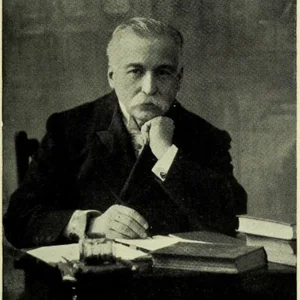

French chef and culinary author
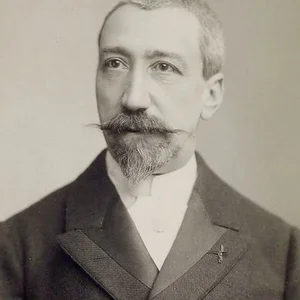
Auguste Escoffier(1846 — 1935)
Auguste Escoffier
France
7 min read
Frequently asked questions
Key Facts
- Auguste Escoffier naît en 1846 à Villeneuve-Loubet, près de Nice, et commence son apprentissage en cuisine dès l'âge de 13 ans.
- Il travaille à partir de 1890 aux côtés de César Ritz dans les grands hôtels européens (Savoy à Londres, Ritz à Paris), révolutionnant la cuisine des palaces.
- En 1903, il publie 'Le Guide culinaire', ouvrage de référence qui codifie la cuisine française classique et qui est encore utilisé aujourd'hui.
- Il modernise l'organisation des cuisines de restaurant en inventant le système de brigade, divisant les tâches entre des postes spécialisés (saucier, pâtissier, rôtisseur…).
- Il crée de nombreuses recettes célèbres, dont la pêche Melba (1893) en hommage à la cantatrice Nellie Melba, illustrant l'art de la cuisine bourgeoise et du luxe à la Belle Époque.
Works & Achievements
Founding work that codifies nearly 5,000 recipes and establishes the technical terminology of French cuisine. Still used in hospitality schools worldwide, it is considered the 'bible' of professional gastronomy.
Practical guide to menu composition for catering professionals, detailing the art of arranging dishes and wines according to seasons and occasions.
Condensed synthesis of fundamental culinary techniques, designed as a vade mecum for working cooks. A professional reference work that enjoyed great success.
Escoffier's culinary testament, aimed this time at the general public rather than professionals alone. Published the year before his death, it synthesizes his vision of an accessible cuisine without sacrificing excellence.
Major organizational innovation: Escoffier structured kitchen teams into specialized stations (saucier, poissonnier, rôtisseur, pâtissier…), a model still universal in professional catering.
Dessert invented in homage to opera singer Nellie Melba, combining poached peaches, vanilla ice cream, and raspberry coulis. It became one of the most celebrated desserts in the world culinary repertoire.
Anecdotes
Auguste Escoffier invented 'Peach Melba' in 1892 to honor the Australian opera singer Nellie Melba, while she was performing in London. He presented the dessert in an ice sculpture shaped like a swan, as a tribute to the role of Lohengrin she had just performed. This dessert, made of poached peaches, vanilla ice cream, and raspberry coulis, is still served today around the world.
César Ritz and Escoffier formed one of the most celebrated duos in the world of hospitality: one managed luxury and guest relations, the other the kitchen. Together, they transformed the Savoy in London and then the Ritz in Paris into temples of gastronomy. It was said that Ritz 'made guests dream' and that Escoffier 'made them come back'.
Escoffier was dismissed from the Savoy in 1898 along with César Ritz, accused of misappropriation of funds by the hotel's management. The affair was never fully resolved, but both men immediately bounced back by opening the Ritz in Paris in 1898, which instantly became the worldwide benchmark for luxury hospitality.
During a crossing aboard the luxury ocean liner 'Imperator' in 1913, Escoffier met the German Emperor Wilhelm II, who reportedly declared: 'I am the Emperor of Germany, but you are the Emperor of chefs.' This phrase captures the international reputation the chef had earned during his lifetime.
Escoffier was one of the first great chefs to speak out against food waste: during the First World War, he organized food drives and contributed to the war effort by feeding soldiers and refugees. He also established social canteens in Nice for the most destitute, combining culinary excellence with humanitarian commitment.
Primary Sources
Our aim in publishing this book is to facilitate the work of your colleagues by providing them with a collection as complete as possible of current recipes, as well as those most commonly used in grand establishments.
Cooking is an art that requires as much delicacy as rigor. Each dish is a work in which the precision of gesture meets the sensitivity of taste.
Young cooks must be trained not only in technique, but also in the dignity of their craft. French cuisine is a heritage that we have a duty to pass on.
A well-composed menu is a work of art in its own right: it must guide the diner through a harmonious progression of flavors, textures, and colors.
Key Places
Auguste Escoffier's birthplace, where the Museum of Culinary Art dedicated to him is now housed in his childhood home. This location marks the starting point of a career that would revolutionize world gastronomy.
It was at the Savoy that Escoffier and César Ritz collaborated from 1890 to 1898, transforming English hotel cuisine and inventing classics such as Peach Melba. This was the first laboratory of Escoffier's culinary revolution.
Opened in 1898 on the Place Vendôme, the Paris Ritz was the temple of luxury gastronomy that Escoffier helped found alongside César Ritz. Its kitchens became an absolute benchmark for professionals the world over.
Escoffier ran the kitchens here from 1899 to 1919, continuing his work of modernizing French gastronomy in England. It was here that he perfected the brigade system and the simplified menu.
A city of training and return for Escoffier, who spent his early professional years there and came back in his later life. The Nice region inspired his sensitivity for fresh produce and Mediterranean cuisine.
Typical Objects

The emblematic headwear of the chef, which Escoffier helped popularize as a symbol of the profession. Its height and whiteness embodied hierarchy and cleanliness within the kitchen brigade.

Escoffier's masterwork published in 1903, this reference volume catalogues nearly 5,000 recipes and established a universal technical vocabulary for professional French cuisine.

A daily working instrument in the great kitchens of the 19th century, copper being prized for its thermal conductivity. Escoffier made masterful use of it for his sauces and delicate preparations.

Escoffier introduced written systems for passing orders between the dining room and the kitchen, forerunners of the modern service ticket, to prevent errors in large brigades.

An indispensable utensil for achieving smooth, refined sauces, central to Escoffier's technique. It symbolizes the demand for work done well and the pursuit of perfect texture.

A mark of professional dignity according to Escoffier, who campaigned throughout his life for cooking to be recognized as a noble art. He required his brigades to maintain impeccable dress, a reflection of the respect owed to guests.
School Curriculum
Vocabulary & Tags
Key Vocabulary
Daily Life
Morning
Escoffier rose at dawn, well before his team. He inspected the morning deliveries: overnight fish, market vegetables, choice cuts from the butcher. He drafted or adjusted the day's menus, taking into account incoming supplies and the whims of the distinguished clients expected.
Afternoon
The afternoon was devoted to long preparations: stocks and sauces simmering for hours, pastries being shaped, plating rehearsals with his sous-chefs. Escoffier moved through the brigade, correcting a gesture, tasting a sauce, training his apprentices with rigor but without brutality — which was rare at the time.
Evening
The evening service was the moment of truth: Escoffier conducted his brigade like an orchestra conductor, timing each dish perfectly, ensuring the perfection of every plate. After service, he would write in his notebooks — new recipes, the day's ideas — and correspond with colleagues and publishers.
Food
Paradoxically, Escoffier ate sparingly in his daily life, preferring simple dishes between services. He constantly tasted his preparations but avoided excess. He appreciated garden vegetables, fresh bread, and wines from his native region, the Côte d'Azur.
Clothing
In the kitchen, Escoffier wore the tall white toque, an immaculate apron, and the buttoned jacket of the professional cook — an outfit he helped establish as the standard of the profession. Outside the kitchen, he dressed as a respectable bourgeois: dark suit, tie, hat, mindful of the chef's social image.
Housing
Escoffier lived for many years in or near the grand hotels where he worked, in London and then in Paris. Later in life, he settled in Monte Carlo with his wife Delphine Daffis, in a comfortable villa. He always maintained strong ties with Villeneuve-Loubet, his native village.
Historical Timeline
Period Vocabulary
Visual Style
Un style visuel Belle Époque alliant le faste des palaces dorés aux atmosphères chaudes et cuivrées des grandes cuisines professionnelles de la fin du XIXe siècle.
Sound Ambience
L'univers sonore d'Escoffier, entre le bouillonnement des grandes cuisines de palace et le raffinement feutré des salles à manger de luxe du Paris et du Londres de la Belle Époque.
Liens externes & ressources
Références
Œuvres
Le Guide culinaire
1903
Le Livre des menus
1912
L'Aide-mémoire culinaire
1919
Ma Cuisine
1934
Système de brigade de cuisine
1900
Création de la Pêche Melba
1892