 flip
flipHoney Cakes with Hyssop for Breaking the Fast
Honey Cakes with Hyssop for Breaking the Fast
Why this dish? After the fast of the Day of Atonement, the exhausted body craves quick, gentle sugar. These small unleavened cakes, drizzled with honey and scented with hyssop, are the first bite of the evening — light, comforting, almost medicinal. They close the day when the goat of Azazel has carried away sins to the desert: sweetness returns when the burden departs.
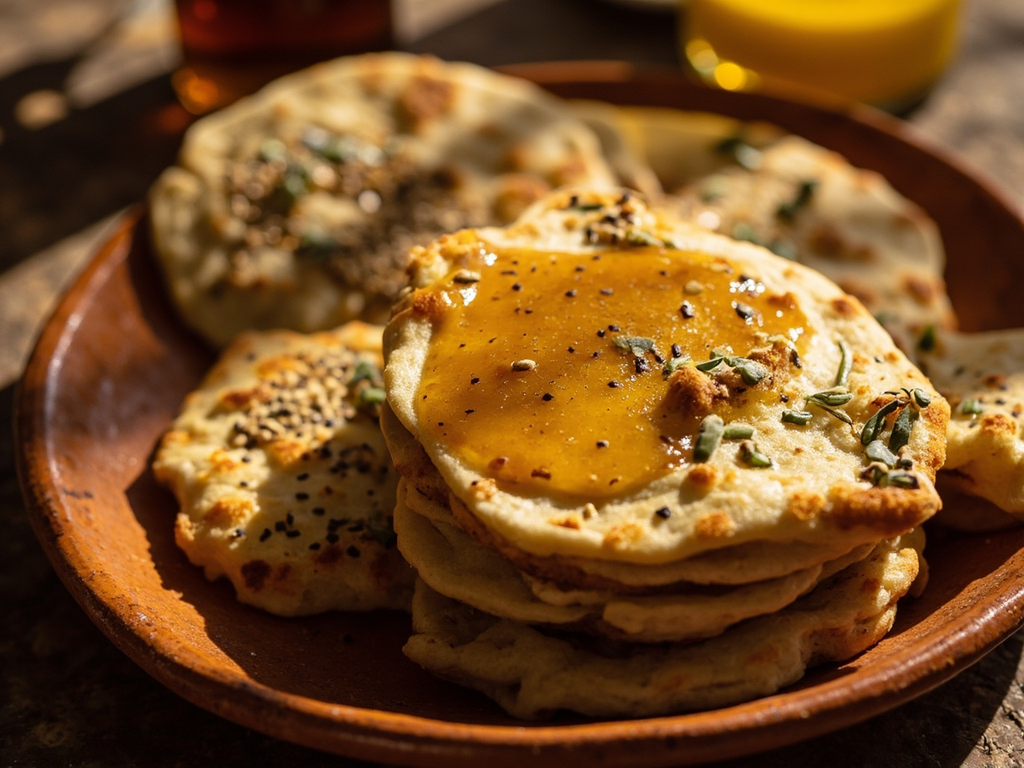
Thin unleavened flour cakes, fried or baked on stone, dipped in warm honey and sprinkled with crumbled hyssop. Tender and sweet at heart, with a bitter, resinous edge that prevents cloying.
The fast has emptied you, and here you are trembling like a reed? Eat gently, mortal, but eat little. Cook the thin cake on the stone, plunge it into warm honey, and dust it with ezov so that the bitterness reminds the sweetness that it does not reign alone. It is the remedy of evenings of great hunger — even a fallen one knows pity for an empty belly.
- •Wheat flour — two measures (base)
- •Olive oil — a drizzle (softness)
- •Water — as needed (binder)
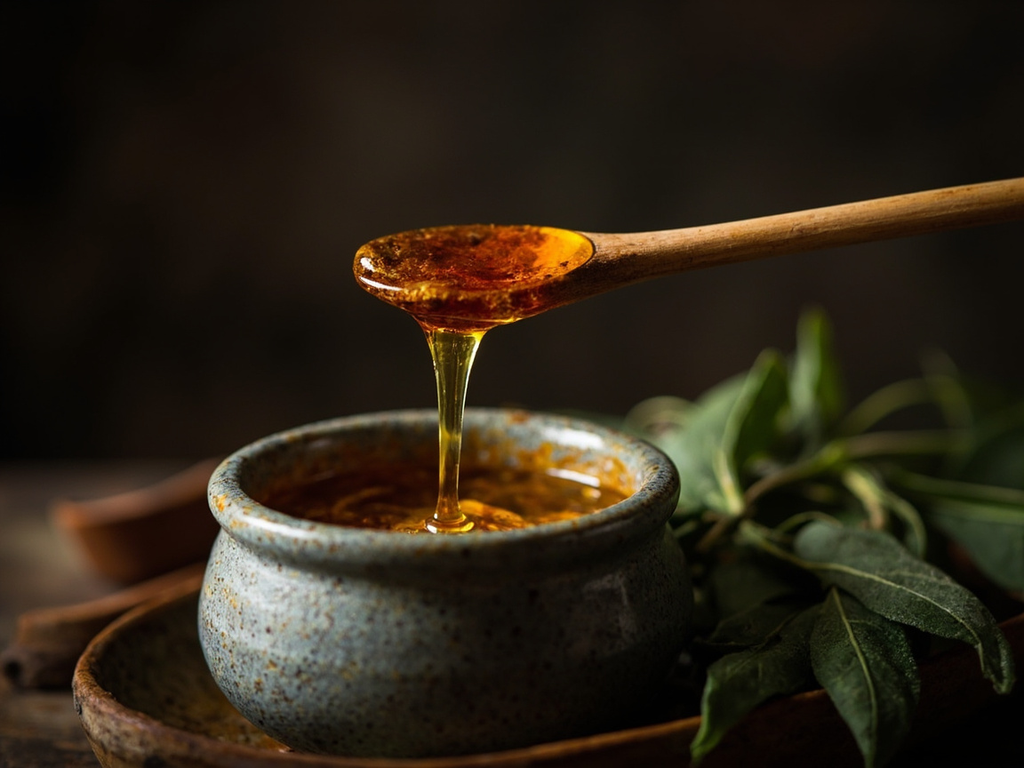
- •Honey — generous (sweet glaze)
- •Dried hyssop (ezov) — a pinch, crumbled (bitter fragrance)
- •Sesame seeds — a pinch (optional) (crunch)
Honey Cakes with Hyssop for Breaking the Fast
Thin unleavened flour cakes, fried or baked on stone, dipped in warm honey and sprinkled with crumbled hyssop. Tender and sweet at heart, with a bitter, resinous edge that prevents cloying.
Why this dish? After the fast of the Day of Atonement, the exhausted body craves quick, gentle sugar. These small unleavened cakes, drizzled with honey and scented with hyssop, are the first bite of the evening — light, comforting, almost medicinal. They close the day when the goat of Azazel has carried away sins to the desert: sweetness returns when the burden departs.
The fast has emptied you, and here you are trembling like a reed? Eat gently, mortal, but eat little. Cook the thin cake on the stone, plunge it into warm honey, and dust it with ezov so that the bitterness reminds the sweetness that it does not reign alone. It is the remedy of evenings of great hunger — even a fallen one knows pity for an empty belly.
Ingredients (period version)
- Wheat flour — two measures (base)
- Olive oil — a drizzle (softness)
- Water — as needed (binder)
- Honey — generous (sweet glaze)
- Dried hyssop (ezov) — a pinch, crumbled (bitter fragrance)
- Sesame seeds — a pinch (optional) (crunch)
Ingredients
- Wheat flour — 200 g (base)
- Olive oil — 2 tbsp (softness)
- Water — about 100 ml (binder)
- Honey — 4 tbsp (glaze)
- Dried oregano or za'atar (if hyssop unavailable) — 1 pinch (herbaceous note)
- Sesame seeds — 1 tbsp (crunch)
Method
- Mix flour, oil and water into a smooth, firm dough; rest 20 min.
- Roll out very thinly and cut into small rounds.
- Cook on a lightly oiled hot pan or stone, 1–2 min per side, until golden.
- Warm honey without boiling.
- Dip each cake in honey, arrange, then sprinkle with crumbled herb and sesame.
How it was made : Sweet treats in ancient Hebrew cuisine relied on honey and fruits, never sugar. Thin cakes were fried or baked on stone (close to the 'tsapi'hit' with honey mentioned for manna) and drizzled with honey for feast days. The bitterness of an herb traditionally counterbalanced the excess of sweetness.
The contemporary twist : Stacked in a small tower and drizzled with flowing honey at serving time, they become a sharing dessert — the ancient version of honey cakes from the Mediterranean.
Sources : Exodus 16:31 (honey cakes, comparison with manna) · Mishnah Yoma (breaking the fast) · Nathan MacDonald, What Did the Ancient Israelites Eat?
Azazel · Charactorium