 flip
flipSage and Honey Electuary
Sage and Honey Electuary
Why this dish? Albert the Great was one of the greatest plant observers of his time. In Dominican convents, the apothecary adjoined the kitchen, and the 'simples' from the garden were used to make electuaries — pastes of honey and herbs taken by the spoonful to warm the body and soothe the throat.
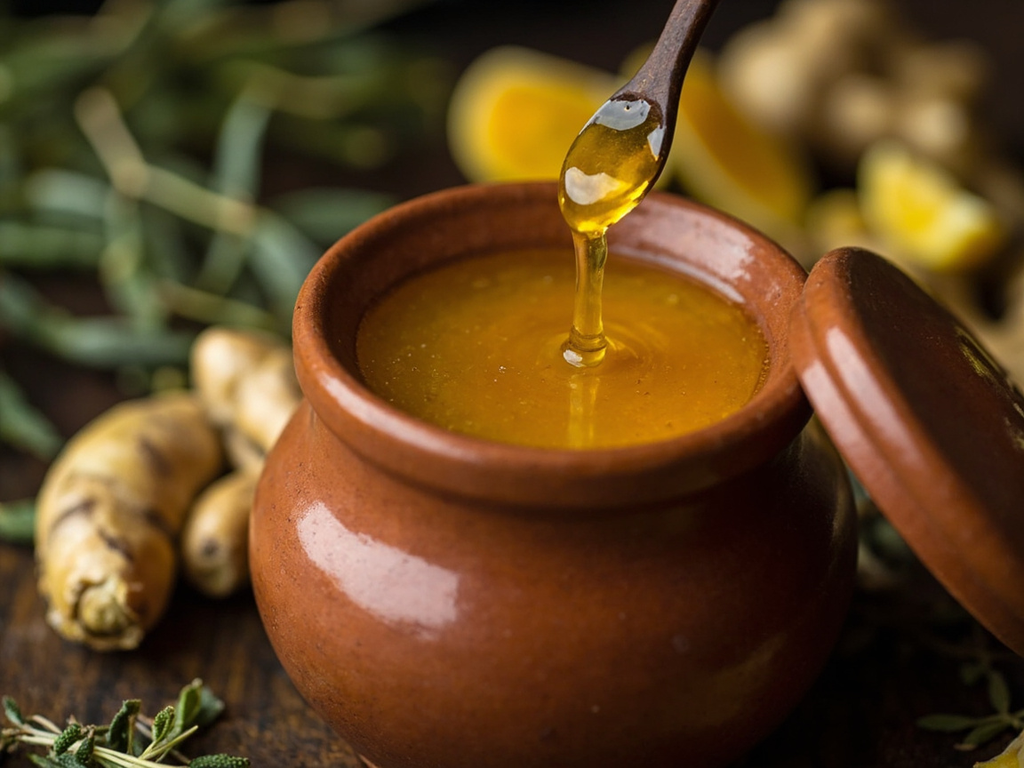
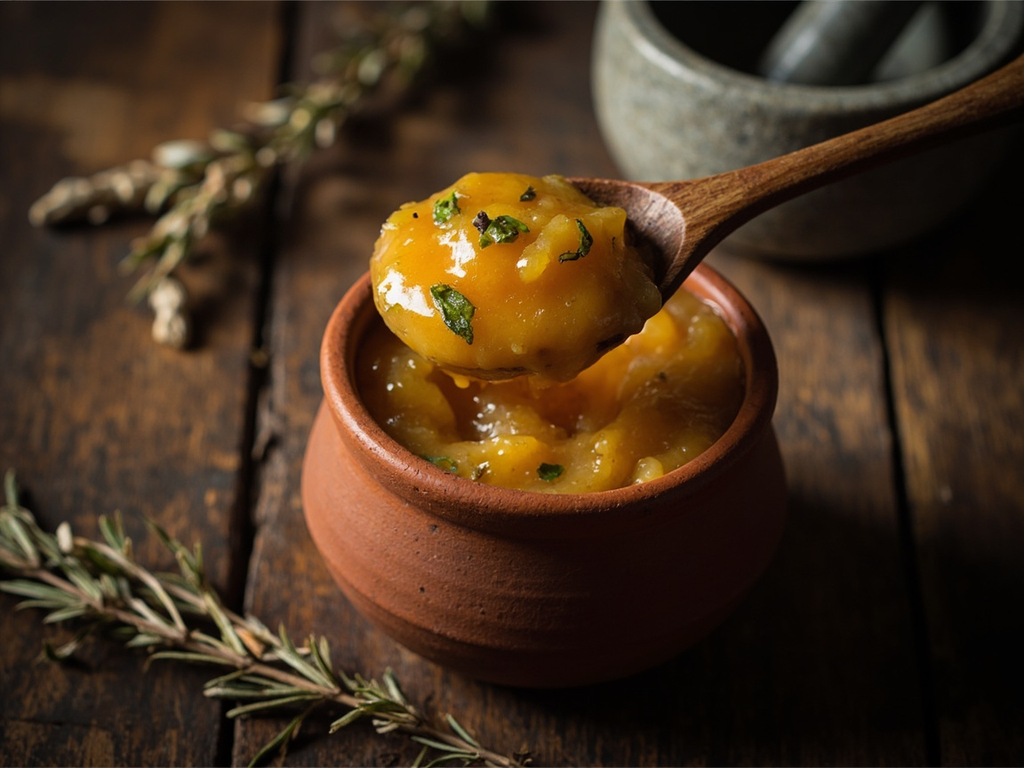
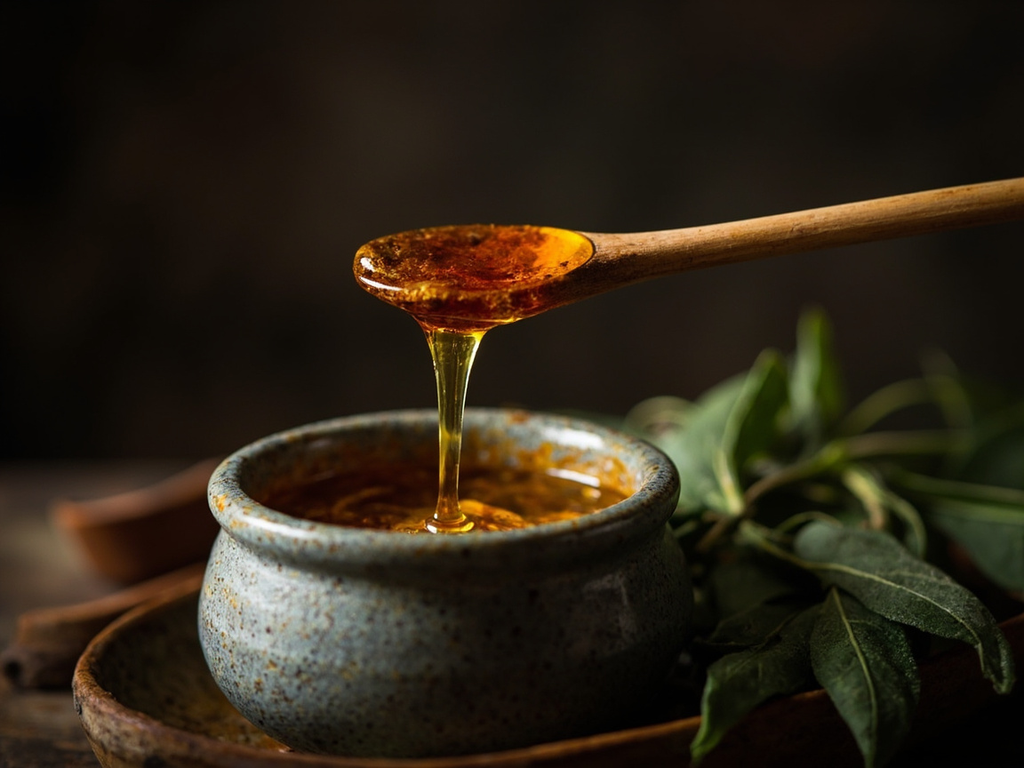
A thick, fragrant paste of cooked honey mixed with pounded sage, ginger, and a hint of cinnamon. To be taken in small spoonfuls: it was said to warm the stomach and clear the voice — very useful for one who teaches all day.
Here is something that belongs both to the table and to the apothecary, for feeding and healing proceed from the same wisdom. Sage — *salvia*, that which saves — is of a hot and dry nature; married to honey, which is sweet and purifies, it comforts the cold stomach and loosens the tongue of him who must speak long in the schools. Melt the honey over a low fire, cast in the ground sage and a little ginger, and keep this paste in an earthen pot. A spoonful in the morning suffices: use the gifts of creation with measure, for virtue lies in the just mean, not in excess.
- •Honey — a good pot (base and preservative)
- •Fresh sage — a large handful (main simple)
- •Ginger — a little, grated (warm spice)
- •Cinnamon — a pinch (flavor)
- •Hyssop or fennel (optional) — a few sprigs (complementary simple)
Sage and Honey Electuary
A thick, fragrant paste of cooked honey mixed with pounded sage, ginger, and a hint of cinnamon. To be taken in small spoonfuls: it was said to warm the stomach and clear the voice — very useful for one who teaches all day.
Why this dish? Albert the Great was one of the greatest plant observers of his time. In Dominican convents, the apothecary adjoined the kitchen, and the 'simples' from the garden were used to make electuaries — pastes of honey and herbs taken by the spoonful to warm the body and soothe the throat.
Here is something that belongs both to the table and to the apothecary, for feeding and healing proceed from the same wisdom. Sage — *salvia*, that which saves — is of a hot and dry nature; married to honey, which is sweet and purifies, it comforts the cold stomach and loosens the tongue of him who must speak long in the schools. Melt the honey over a low fire, cast in the ground sage and a little ginger, and keep this paste in an earthen pot. A spoonful in the morning suffices: use the gifts of creation with measure, for virtue lies in the just mean, not in excess.
Ingredients (period version)
- Honey — a good pot (base and preservative)
- Fresh sage — a large handful (main simple)
- Ginger — a little, grated (warm spice)
- Cinnamon — a pinch (flavor)
- Hyssop or fennel (optional) — a few sprigs (complementary simple)
Ingredients
- Liquid honey (preferably chestnut or forest) — 300 g (base and preservative)
- Fresh sage — 15 leaves (main simple)
- Freshly grated ginger — 1 tsp (warm spice)
- Ground cinnamon — 1 pinch (flavor)
- Fennel seeds (optional) — 1/2 tsp (complementary simple)
Method
- Finely chop the sage (and crush the fennel seeds in a mortar if using).
- Heat the honey over very low heat, without boiling, until it becomes fluid.
- Stir in the sage, ginger, and cinnamon. Let infuse off the heat for 15 min, stirring.
- Reheat very gently for 2 min to blend well, then pour into a small scalded glass or stoneware jar.
- Let set as it cools. Store in a cool place and take by the small spoon.
- Note: a historically evocative preparation, to be enjoyed as a treat — it is not a medicine.
How it was made : Electuaries (from Latin *electuarium*) were medicinal pastes bound with honey, halfway between confectionery and remedy. Hildegard of Bingen and monastic apothecaries composed dozens of them, classified according to the hot/cold/dry/wet 'complexions' of humoral medicine inherited from Galen — a framework that Albert shared.
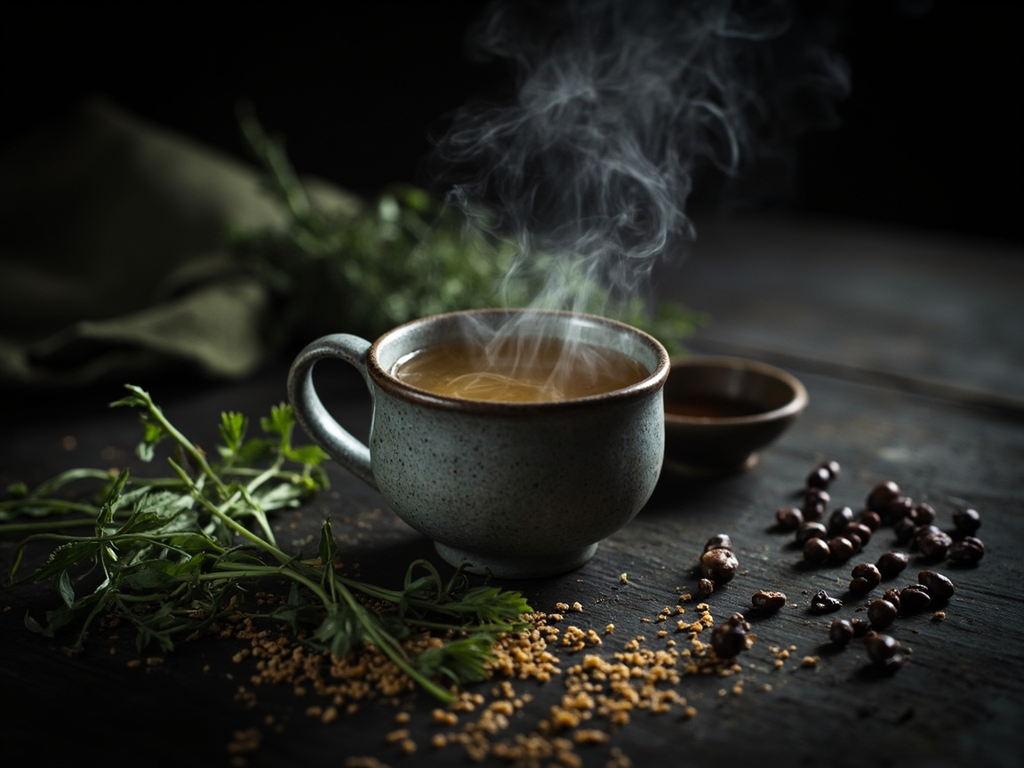
The contemporary twist : Spread on a slice of toast or dissolved in a hot herbal tea, this honey-sage paste becomes a very current 'herbalist's honey,' perfect for the cold season.
Sources : Hildegarde de Bingen, Physica, chapter on sage ('salvia') (12th c.) · Albert le Grand, De vegetabilibus et plantis (ca. 1260)
Albert the Great · Charactorium