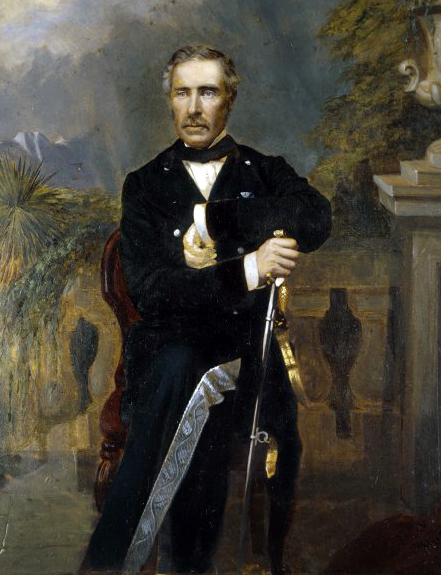
Bahá'u'lláh(1817 — 1892)
Mirza Husayn Ali Nuri
Perse qadjare
6 min read
Iranian founder of the Bahá'í Faith, a monotheistic religion advocating the unity of humanity and of all religions. Proclaiming himself a messenger of God in 1863, he spent the greater part of his life in exile and captivity within the Ottoman Empire.
Frequently asked questions
Famous Quotes
« The earth is but one country, and mankind its citizens. »
Key Facts
- Born in 1817 in Tehran (Persia) into a family of notables
- Became a follower of the Báb, founder of Bábism, in the 1840s
- Proclaimed his mission as a divine messenger in 1863 in Baghdad, founding the Bahá'í Faith
- Spent the end of his life in exile and imprisoned in Acre (Ottoman Palestine)
- Died in 1892 at Bahji, near Acre, leaving behind an abundant body of writings
Works & Achievements
A collection of short ethical and spiritual aphorisms, regarded as a jewel of Baháʼí literature on the morality of the heart.
His principal doctrinal work, explaining the unity of religions and the nature of the divine messengers.
The founding proclamation of his mission as a messenger of God, the origin of the most important Baháʼí festival.
A series of letters addressed to the world's rulers, calling them to justice, disarmament, and peace.
The book of the laws and institutions of the Baháʼí Faith, the central text of the religion.
One of his last works, summarizing his teachings and quoting his earlier writings.
Mystical treatises describing the soul's journey toward God, in the Persian Sufi tradition.
Anecdotes
In 1852, Bahá'u'lláh was thrown into an underground pit in Tehran known as the "Síyáh-Chál
(the Black Pit)
a former cistern devoid of light where he wore heavy chains for four months. It was there
according to Bahá
ís
that he received the first intimation of his divine mission.
Born into a noble family of the Qajar court, Bahá'u'lláh could have become a minister like his father. He declined the official posts offered to him, preferring to help the poor to such an extent that he became known as "the Father of the Dispossessed" in his native region.
In 1863, in a garden near Baghdad that he named the "Garden of Riḍván
Bahá'u'lláh announced to his companions that he was the messenger promised by the Báb. Bahá'ís still commemorate these twelve days today as their most joyful festival.
During his exile, Bahá'u'lláh wrote letters to the great sovereigns of his time — including Napoleon III, Queen Victoria, and the Ottoman sultan — calling on them to uphold justice and world peace. Many of them ignored him.
Although an official prisoner of the Ottoman Empire in Acre, Bahá'u'lláh gradually became so respected that the local authorities relaxed their surveillance and allowed him to spend his final years in a mansion outside the city walls, at Bahjí.
Primary Sources
O peoples of the earth! Know in truth that My command is to cleanse the world from the defilement of discord and the enmity of hearts.
No man shall attain the shores of the ocean of true understanding except he be detached from all that is in heaven and on earth.
O Son of Spirit! My first counsel is this: Possess a pure, kindly and radiant heart, that thine may be a sovereignty ancient, imperishable and everlasting.
O kings of the earth! He Who is the sovereign Lord of all is come. Compose your differences, and reduce your armaments, that the burden of your expenditures may be lightened.
Key Places
Birthplace of Bahá'u'lláh and the site of his imprisonment in the Síyáh-Chál pit in 1852.
First place of exile where, in 1863, he made the Riḍván declaration proclaiming his divine mission.
Capital of the Ottoman Empire where he was transferred in 1863 before a further, more distant exile.
Prison city in Ottoman Palestine where he was held from 1868 onward as a prisoner of state.
Residence near Acre where Bahá'u'lláh spent his final years and died in 1892; his tomb there is today a Bahá'í holy place.
Region where he lived for two years in solitary ascetic retreat around 1854-1856, before returning to Baghdad.