
Beatrice Tinsley is a New Zealand astronomer and cosmologist of British origin, a pioneer in the study of galaxy evolution. Her work transformed our understanding of how galaxies form and age over the course of the Universe's history.
Beatrice Tinsley(1941 — 1981)
Beatrice Tinsley
États-Unis
6 min read
Frequently asked questions
Key Facts
- Born in England in 1941, she grew up in New Zealand
- In 1967, she defended a pioneering doctoral thesis on galaxy evolution at the University of Texas
- Demonstrated that galaxies evolve over time, overturning their use as cosmological reference points
- In 1978, she became the first woman professor of astronomy at Yale University
- Died prematurely of cancer in 1981, at the age of 40
Works & Achievements
Groundbreaking doctoral thesis establishing that the evolution of galaxies must be taken into account to measure the Universe correctly.
Foundational paper laying the groundwork for modern models of galaxy evolution, still used today.
A series of works showing how the color and brightness of galaxies change with the age of their stars, a key tool of cosmology.
Research on how chemical elements become enriched in galaxies over successive generations of stars.
Proceedings of a landmark conference held at Yale, bringing together the world's leading specialists in a field she had helped create.
By correcting measurements for the evolution of galaxies, her work fueled the debate over the future of the Universe: will it keep expanding forever?
Anecdotes
To prepare her doctorate, Beatrice Tinsley had to travel nearly 320 kilometers round-trip between Dallas, where her family lived, and the University of Texas at Austin. Despite these exhausting journeys and raising her two adopted children, she completed her thesis in barely two years, in 1967. The committee considered it one of the most brilliant they had ever had to assess.
Before Tinsley, many astronomers believed that distant galaxies could serve as unchanging “beacons” for measuring the Universe. She demonstrated that galaxies age: their stars are born, shine, then fade away, which changes their brightness over billions of years. This discovery forced cosmologists to correct their measurements of the Universe's expansion.
Although she was recognized around the world, the university where her husband worked never offered her a genuine research position: she was expected above all to remain “a professor's wife.” Weary of this injustice, in 1975 she accepted a post at Yale University, where she became a professor of astronomy.
Diagnosed with a melanoma (a skin cancer) in 1978, Beatrice Tinsley kept working until the very end. She wrote her last scientific papers from her bed, shortly before her death in 1981, at only 40 years old.
A passionate mountaineer and an excellent violinist, Beatrice Tinsley loved to roam the peaks of New Zealand. After her death, her country honored her by naming a mountain after her, Mount Tinsley, and an asteroid was christened “3087 Beatrice Tinsley” in her honor.
Primary Sources
In it, Tinsley establishes that galaxies are not fixed objects: a galaxy's brightness and color change as its populations of stars form, evolve, and die out — an effect that must be taken into account when measuring the geometry and age of the Universe.
The paper computes models of galaxy evolution in which stars form, evolve, and then die, and from these deduces how a galaxy's color and brightness transform over cosmic time.
This volume gathers the contributions from a conference held at Yale, taking stock of how stellar populations shape the evolution of galaxies — a field that Tinsley had founded.
In it, Beatrice Tinsley's father publishes many of his daughter's personal letters, bearing witness to her passion for research and to the obstacles she faced as a woman in the scientific world of the 1960s and 1970s.
Key Places
Town in England where Beatrice Hill was born in 1941, during the Second World War.
Coastal town where her family settled after emigrating in 1946, and where she grew up.
University where Beatrice Tinsley pursued her advanced studies in physics before leaving for the United States.
University where she earned her doctorate on the evolution of galaxies in 1967, after long commutes from Dallas.
University where she became a professor of astronomy from 1975 and where she died in 1981.
New Zealand peak named in her honour after her death, as a tribute to the scientist and her love of the mountains.
Typical Objects
An instrument that collects light from celestial bodies to observe distant objects such as galaxies. In Tinsley's time, the large telescopes of the United States provided the images she analyzed.

Light-sensitive glass plates used to record the images and spectra of galaxies before the arrival of electronic sensors. They made it possible to measure the brightness of celestial bodies.

A large central computer (mainframe) that Tinsley used to run her numerical models of galaxy evolution, calculations impossible to carry out by hand.

Cardboard cards with holes used to program the computers of the 1960s and 1970s and to feed them data. Each hole represented an instruction or a digit.
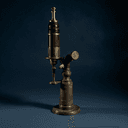
A device that breaks down the light of a celestial body into a spectrum of colors. It makes it possible to measure the redshift and to determine the composition of galaxies.

Beatrice Tinsley was an accomplished violinist, and music held a great place in her life. Her violin symbolizes this artistic passion alongside her scientific career.
School Curriculum
Vocabulary & Tags
Key Vocabulary
Tags
Daily Life
Morning
Beatrice Tinsley often begins her day early, divided between her family and her work. She heads to the university or the computing center, where she prepares the long series of calculations for her galaxy models.
Afternoon
The afternoon is devoted to research, to writing articles and, at Yale, to teaching and mentoring students. She talks at length with fellow astronomers from all over the world.
Evening
In the evening, she rejoins her children, plays the violin and reads. She also writes many letters, particularly to her father back in New Zealand, and often keeps thinking about her research.
Food
Her diet is that of a middle-class family in the mid-20th century, in New Zealand and later the United States: simple meals, everyday products from American supermarkets of the 1960s and 1970s.
Clothing
She wears practical, understated clothing, typical of academics of the 1960s and 1970s: skirts, blouses and suits in town, sturdy outfits for the mountain hiking she is fond of.
Housing
She lives in suburban houses, first near Dallas in Texas, then in New Haven, Connecticut, close to Yale University.
Historical Timeline
Period Vocabulary
Liens externes & ressources
Références
Œuvres
Thèse « Evolution of Galaxies and Its Significance for Cosmology »
1967
« Evolution of the Stars and Gas in Galaxies » (The Astrophysical Journal)
1968
Modèles d'évolution photométrique des galaxies
1970-1978
Travaux sur l'évolution chimique des galaxies
années 1970
« The Evolution of Galaxies and Stellar Populations » (codirection avec Richard Larson)
1977
Étude sur l'Univers ouvert ou fermé
années 1970