 flip
flipPotage à la Reine
Potage à la Reine
Why this dish? Soup opened every meal in a bourgeois household like Beaumarchais's on rue du Pas-de-la-Mule. The 'Potage à la Reine,' a velvet of almonds and poultry, was a classic of good Parisian tables, refined enough for supper and nourishing enough for everyday.
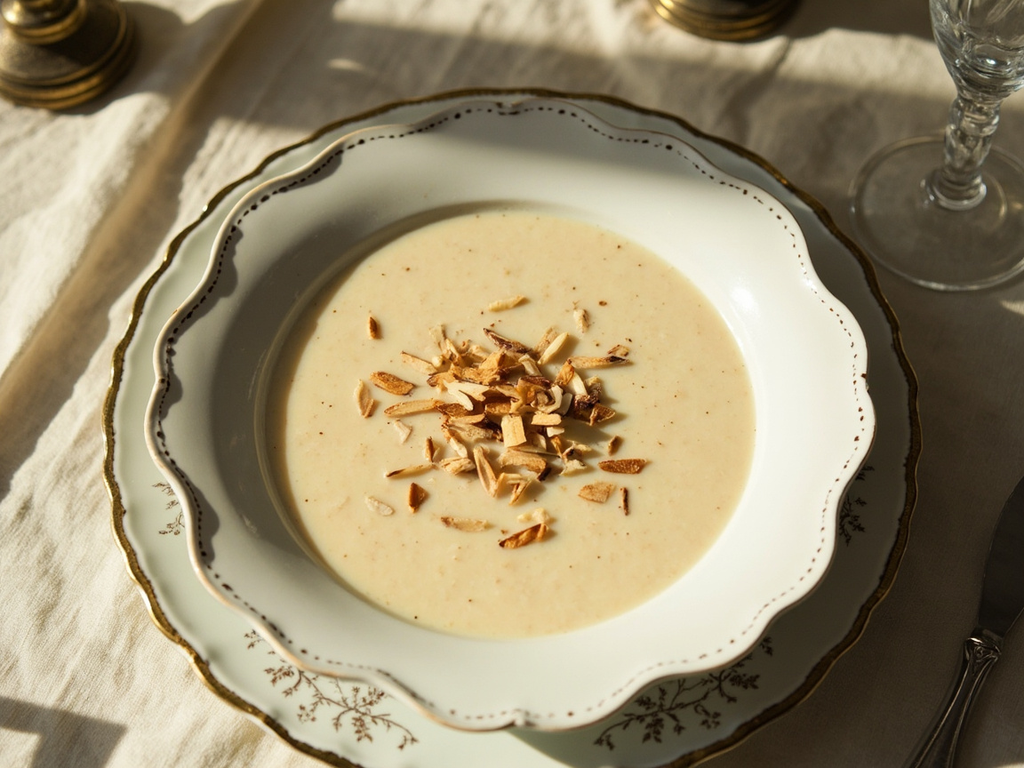
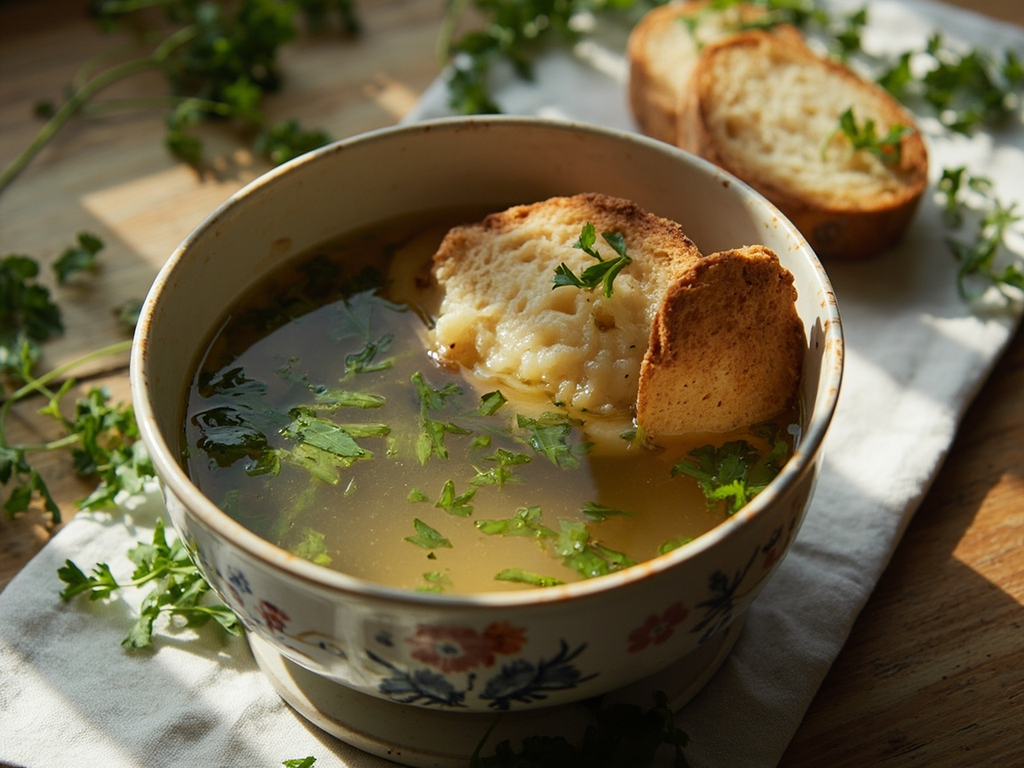
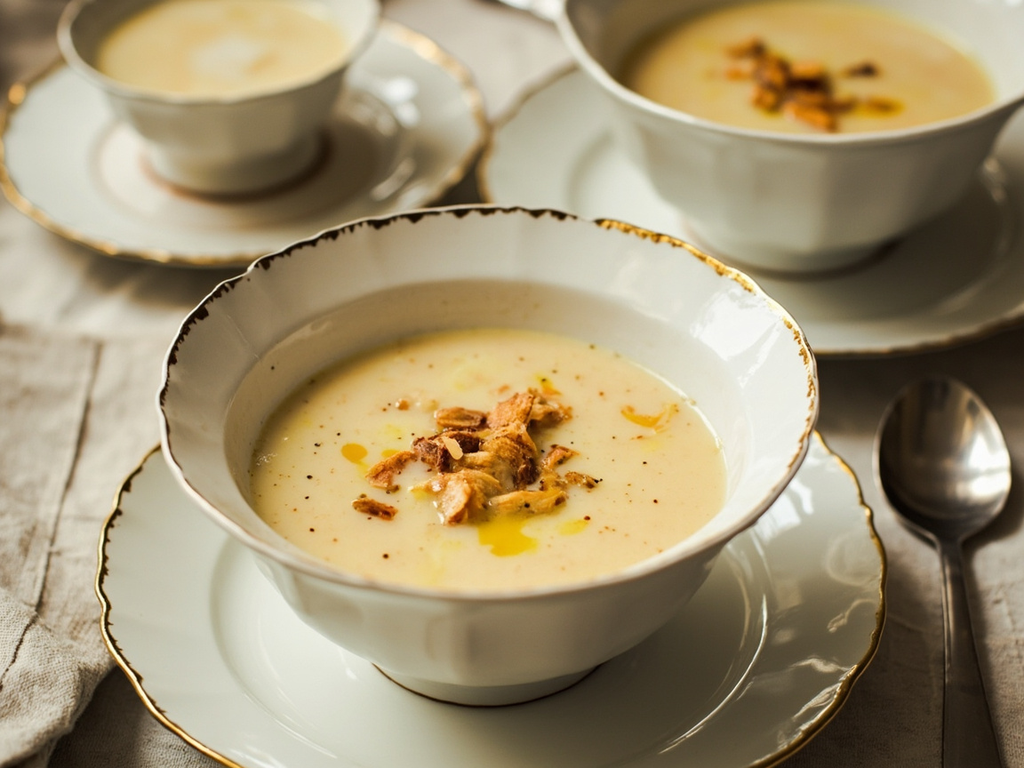
A white, silky velouté of pounded chicken breast with almonds, bound with egg yolks and cream, poured over bread croutons. Mild, comforting, elegant without ostentation.
Come, bring your bowl, I serve you the first service! This soup, Madame de Beaumarchais wants it white as a powdered wig: we pound the pullet flesh in a mortar with blanched almonds, thin with good broth, and stir over low heat without ever letting it boil, for a soup that boils is a soup lost. A dash of cream, two yolks for binding, and there you have something to put wit into a head before putting it into conversation.
- •Cooked pullet breast — the flesh of half a fowl (base of the velouté)
- •Blanched almonds — a good handful (binder and sweetness)
- •Stale bread crumbs — a few pieces (thickener)
- •Good chicken broth — full pot (liquid)
- •Egg yolks — two (binder)
- •Fresh cream — half a glass (creaminess)
Potage à la Reine
A white, silky velouté of pounded chicken breast with almonds, bound with egg yolks and cream, poured over bread croutons. Mild, comforting, elegant without ostentation.
Why this dish? Soup opened every meal in a bourgeois household like Beaumarchais's on rue du Pas-de-la-Mule. The 'Potage à la Reine,' a velvet of almonds and poultry, was a classic of good Parisian tables, refined enough for supper and nourishing enough for everyday.
Come, bring your bowl, I serve you the first service! This soup, Madame de Beaumarchais wants it white as a powdered wig: we pound the pullet flesh in a mortar with blanched almonds, thin with good broth, and stir over low heat without ever letting it boil, for a soup that boils is a soup lost. A dash of cream, two yolks for binding, and there you have something to put wit into a head before putting it into conversation.
Ingredients (period version)
- Cooked pullet breast — the flesh of half a fowl (base of the velouté)
- Blanched almonds — a good handful (binder and sweetness)
- Stale bread crumbs — a few pieces (thickener)
- Good chicken broth — full pot (liquid)
- Egg yolks — two (binder)
- Fresh cream — half a glass (creaminess)
Ingredients
- Poached chicken breasts — 300 g (base of the velouté)
- Almond flour — 80 g (binder and sweetness)
- Bread crumbs — 50 g (thickener)
- Chicken broth — 1 liter (liquid)
- Egg yolks — 2 (binder)
- Heavy cream — 10 cl (creaminess)
- Bread for croutons — 2 slices (garnish)
- Salt and nutmeg — to taste (seasoning)
Method
- Finely blend the chicken breasts with almond flour and bread crumbs soaked in a little broth.
- Thin this paste with the remaining warm broth and pass through a sieve for a smooth velouté.
- Heat gently without boiling, season with salt and a grating of nutmeg.
- Off the heat, whisk the yolks with the cream, add a ladle of soup to temper, then pour back into the pot.
- Return to very low heat, stirring until lightly thickened, without boiling.
- Brown the croutons in a pan and place them at the bottom of bowls before pouring the soup.
How it was made : In the 18th century, binding with pounded almonds and finishing with egg yolks was typical of 'white' soups. Boiling after binding was carefully avoided, lest the eggs curdle. Bread, ubiquitous, served both as garnish and thickener.
The contemporary twist : A few toasted slivered almonds and a drizzle of hazelnut oil on the surface, to wake up the velouté with a crunchy note.
Sources : François Massialot, *Le Cuisinier roïal et bourgeois* (1691, reissued 18th c.) · Menon, *La Cuisinière bourgeoise* (1746)
Beaumarchais · Charactorium