 flip
flipPotée champenoise
Potée champenoise
Why this dish? Staple dish of the Champagne countryside from which Danton came: a single pot where salted meats and winter vegetables simmer, feeding an entire household. It is the honest, unpretentious food of his youth in Arcis-sur-Aube, before the splendors of Paris.
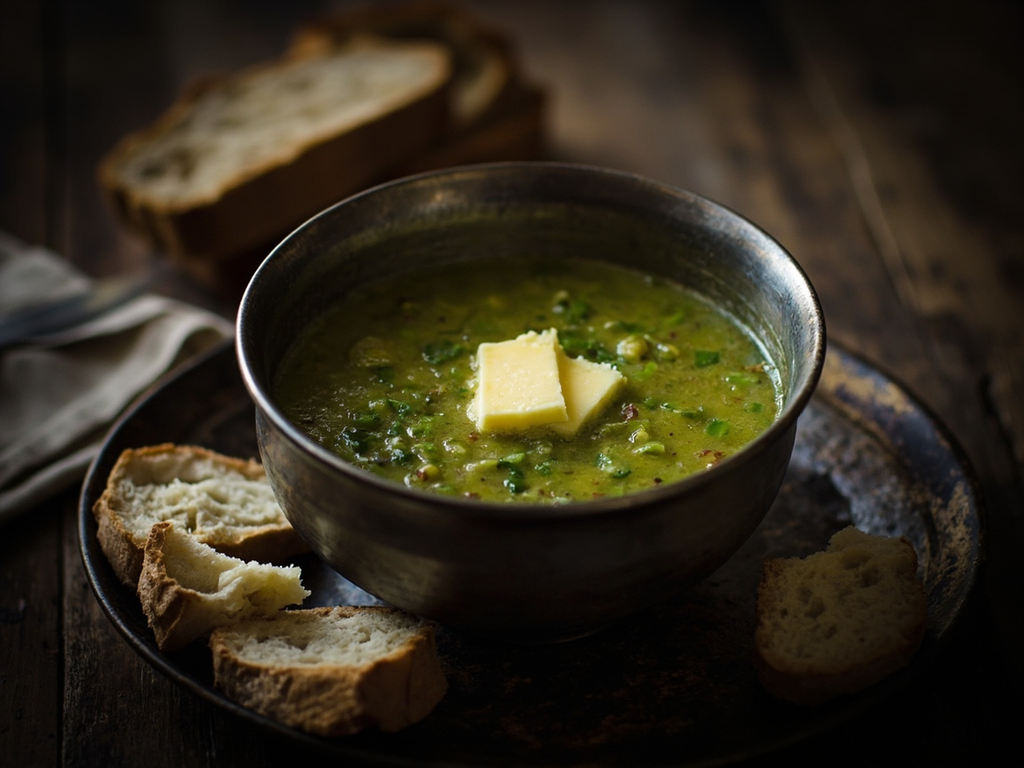
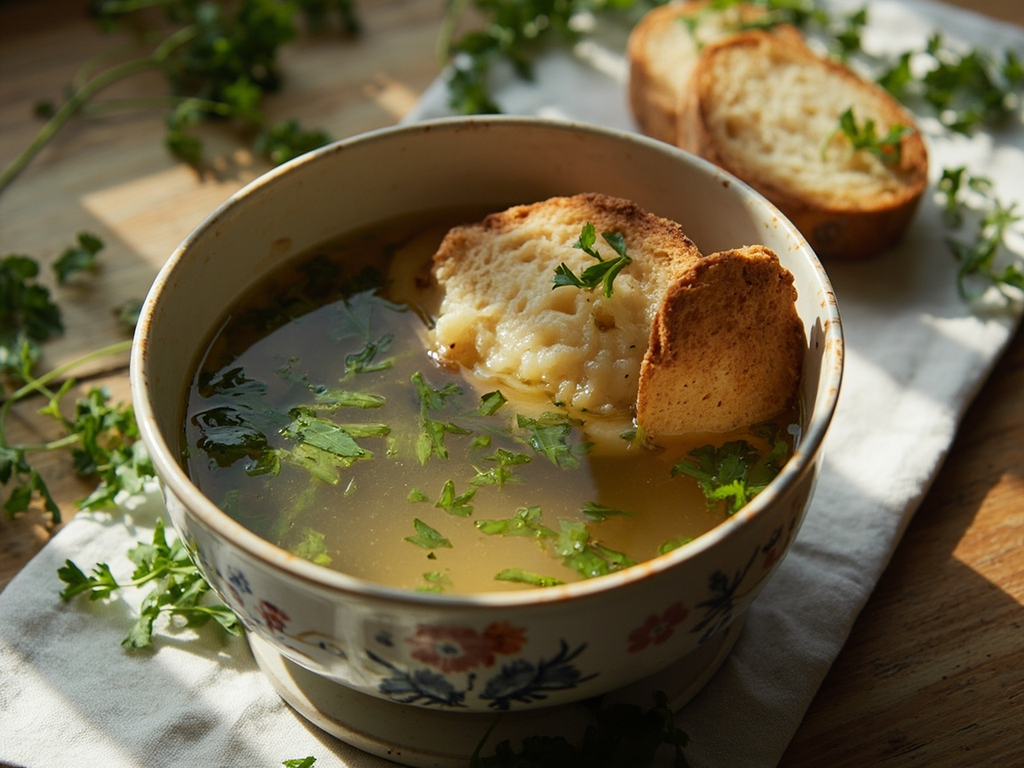
A generous pot of salted pork, cabbage, leeks, and root vegetables, cooked together until they meld into a comforting broth. The everyday cuisine of a peasant and winegrowing province.
Here, citizen, is the true daily bread of my Champagne! A single pot on the fire, you throw in salted bacon, cabbage, leeks, whatever the garden yields, and let time do its work. At home, no court cook's fuss: we eat what sticks to the ribs and warms the worker as well as the lawyer. It was on this broth that I built my chest and my voice! Help yourself generously, there is enough for everyone, that's how we do it at home.
- •Half-salted pork belly and shoulder — a good piece of each (meats)
- •Green cabbage — 1 (base vegetable)
- •Leeks — a bunch (vegetable)
- •Turnips and carrots — a few (root vegetables)
- •Onion — 1 (flavor)
- •Pepper, thyme, bay leaf — to taste (seasoning)
Potée champenoise
A generous pot of salted pork, cabbage, leeks, and root vegetables, cooked together until they meld into a comforting broth. The everyday cuisine of a peasant and winegrowing province.
Why this dish? Staple dish of the Champagne countryside from which Danton came: a single pot where salted meats and winter vegetables simmer, feeding an entire household. It is the honest, unpretentious food of his youth in Arcis-sur-Aube, before the splendors of Paris.
Here, citizen, is the true daily bread of my Champagne! A single pot on the fire, you throw in salted bacon, cabbage, leeks, whatever the garden yields, and let time do its work. At home, no court cook's fuss: we eat what sticks to the ribs and warms the worker as well as the lawyer. It was on this broth that I built my chest and my voice! Help yourself generously, there is enough for everyone, that's how we do it at home.
Ingredients (period version)
- Half-salted pork belly and shoulder — a good piece of each (meats)
- Green cabbage — 1 (base vegetable)
- Leeks — a bunch (vegetable)
- Turnips and carrots — a few (root vegetables)
- Onion — 1 (flavor)
- Pepper, thyme, bay leaf — to taste (seasoning)
Ingredients
- Half-salted pork shoulder — 800 g (meat)
- Smoked bacon or half-salted belly — 300 g (meat)
- Smoked sausage (e.g., Montbéliard) — 2 (meat)
- Curly green cabbage — 1 (base vegetable)
- Leeks — 3 (vegetable)
- Carrots — 4 (root vegetables)
- Turnips — 3 (root vegetables)
- Onion studded with cloves — 1 (flavor)
- Bouquet garni — 1 (seasoning)
- Pepper — to taste (seasoning)
Method
- Desalt the shoulder and bacon for 2 to 3 hours in cold water if necessary.
- Put the meats (except sausages) in a large pot, cover with cold water, add the clove-studded onion and bouquet garni. Bring to a simmer, skim.
- Cook for 1 hour 30 minutes over low heat.
- Blanch the cabbage for 5 minutes in boiling water to soften, drain.
- Add the cabbage, carrots, turnips, and leeks to the pot, then the sausages.
- Continue cooking for 45 minutes to 1 hour, until everything is tender. Season with pepper (the salt from the meats is often enough).
- Serve the broth first, then the sliced meats surrounded by their vegetables.
How it was made : The potée was the staple meal of Champagne families: a single pot hung from the chimney hook, replenished throughout the week. Salted and smoked meats allowed pork from the autumn to be preserved all winter, long before refrigeration.
The contemporary twist : Serve the broth in cups as an aperitif, then arrange the meats and vegetables on a large central platter as a “communal pot” — a nod to the fraternal spirit of 1793.
Danton · Charactorium