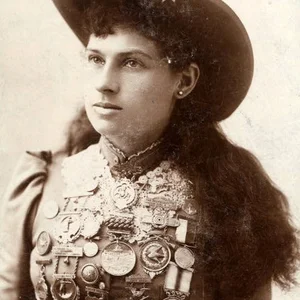

Billie Jean King is an American tennis player, one of the greatest champions in the history of the sport. A pioneer of gender equality in sports, she won 39 Grand Slam titles and founded the first professional women players' association.
Billie Jean King(1943 — ?)
Billie Jean King
États-Unis
6 min read
Frequently asked questions
Famous Quotes
« Champions keep playing until they get it right.»
Key Facts
- Won a total of 39 Grand Slam titles (singles, doubles, and mixed doubles) over the course of her career
- Defeated Bobby Riggs on September 20, 1973 in the widely publicized “Battle of the Sexes” match in front of millions of television viewers
- Founded the Women's Tennis Association (WTA) in 1973, the first professional women players' association
- Secured equal prize money for men and women at the US Open in 1973, a first for a Grand Slam tournament
- Received the Presidential Medal of Freedom in 2009, the highest civilian honor in the United States
Works & Achievements
Twelve singles titles, sixteen in women's doubles and eleven in mixed doubles, one of the greatest records in tennis.
She dominated the world's most prestigious tournament for a decade.
The governing body of women's professional tennis, of which she was the first president; it still shapes the tour today.
Her win over Bobby Riggs became a global symbol of equality between women and men.
An organization dedicated to girls' and women's access to sport and to equal opportunity.
Her campaign led to the first Grand Slam tournament offering the same prize money to both sexes.
An account of her life, her struggles and her personal journey, praised by critics.
Anecdotes
On September 20, 1973, before more than 30,000 spectators at the Houston Astrodome and 90 million television viewers, Billie Jean King faced Bobby Riggs, a 55-year-old former champion who claimed that no woman could beat him. Carried onto the court by men dressed as ancient slaves, she crushed Riggs in three sets (6-4, 6-3, 6-3). This “Battle of the Sexes” became a global symbol of equality.
In 1970, outraged by the gaps in prize money (one tournament offered men eight times more than women), Billie Jean King and eight other players signed a symbolic one-dollar contract with publisher Gladys Heldman to create their own tour. These “Original 9” laid the foundations of professional women's tennis.
In 1973, King threatened to boycott the US Open if women did not receive the same earnings as men. Thanks to her, the US Open became that year the first Grand Slam tournament to offer equal prize money for both sexes.
In 1981, King was publicly “outed” as gay following a lawsuit filed by a former partner. She lost almost all of her advertising contracts within 24 hours, but gradually became a pioneering figure for LGBT visibility in sport.
In 2006, the United States' national tennis center, where the US Open is played in New York, was renamed the “USTA Billie Jean King National Tennis Center”: she is the first woman to have a major American sports complex named after her.
Primary Sources
I thought it would set us back 50 years if I didn't win that match. It would ruin the women's tour and affect all women's self-esteem.
Everyone thinks women should be thrilled when we get crumbs, and I want women to have the cake, the icing and the cherry on top too.
In it, Billie Jean King reflects on her career, her fight for equal pay and her personal journey, including her relationship with her sexual orientation and with eating disorders.
Key Places
Birthplace of Billie Jean King, where she learned tennis on the city's public courts.
Indoor stadium where the “Battle of the Sexes” against Bobby Riggs took place on September 20, 1973, before more than 30,000 spectators.
The setting for King's greatest triumphs, where she won twenty titles in all, including six in women's singles.
The US Open complex in the Flushing Meadows neighborhood, renamed in her honor in 2006.
The historic home of the US Open until 1977, where in 1972 King won the first Grand Slam title to come with equal prize money the following year.
Typical Objects

Early in her career, King played with rackets featuring a wooden frame and a gut-strung head. Heavy and with a small sweet spot, they demanded great technical precision.

Nearsighted, Billie Jean King wore dark-framed glasses on the court, which became part of her recognizable image.

King lifted 39 Grand Slam trophies (singles, doubles, and mixed doubles combined), including the Wimbledon cup, which she won six times in singles.
The one-dollar bill signed in 1970 by the “Original 9” sealed the creation of an independent tour for women players. A modest object that became a symbol of the emancipation of women's tennis.

The highest civilian honor in the United States, awarded to King in 2009 for her role in gender equality and civil rights.

King wore the white dresses and skirts typical of tennis in her era, sometimes adorned with colorful patterns, popularizing a modern and dynamic image of the female player.
School Curriculum
Vocabulary & Tags
Key Vocabulary
Tags
Daily Life
Morning
At the peak of her career, Billie Jean King's mornings are shaped by training: jogging, weight workouts, and long hitting sessions on the courts. Physical discipline structures each of her days.
Afternoon
The afternoon is devoted to matches or tactical practice, but also to meetings with players and officials to champion the cause of women's tennis. King pursues competition and activism at the same time.
Evening
In the evening, she often travels from one city to the next to follow the circuit, gives interviews, or prepares for her upcoming tournaments. She also maintains a network of contacts to advance her organizational projects.
Food
A top-level athlete, she follows a diet suited to her physical demands. In her autobiography, King spoke about her struggles with eating disorders, a subject long considered taboo among female athletes.
Clothing
On the court, she wears the regulation white dresses and skirts of the era, sometimes brightened with touches of color. Off the court, her dark-framed glasses are part of her recognizable look.
Housing
A traveling player, King spends much of the year in hotels, moving from one international tournament to the next, between the United States, Europe, and Australia.
Historical Timeline
Period Vocabulary
Liens externes & ressources
Références
Œuvres
39 titres du Grand Chelem
1961-1980
Six victoires en simple à Wimbledon
1966-1975
Fondation de la Women's Tennis Association (WTA)
1973
Victoire dans la « Bataille des sexes »
1973
Création de la Women's Sports Foundation
1974
Égalité des gains à l'US Open
1973
Autobiographie « All In »
2021