 flip
flipHverabrauð — rye bread baked in hot earth
Hverabrauð — rye bread baked in hot earth
Why this dish? Björk has filmed in the Icelandic Highlands and constantly sings about the volcanic earth of her island. Hverabrauð, rye bread buried near a hot spring and cooked by the earth's own heat, embodies her ecological fascination: cooking without fire, offered by the volcano, sustainable and magical.
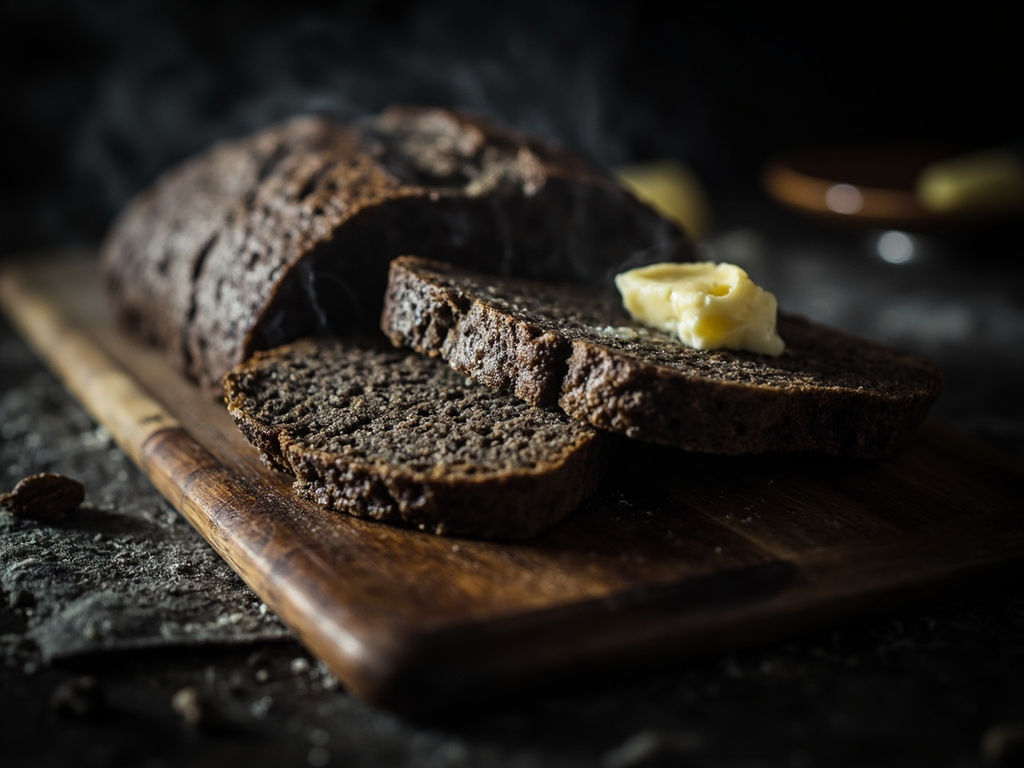
A dense, dark, oddly sweet rye bread, slowly cooked for 24 hours in a container buried at the edge of a geothermal spring. Its compact crumb keeps well and goes with fish, butter, and cheese alike.
Imagine: you put your dough in a pot, dig the steaming earth near a boiling spring, bury it — and walk away! The earth does all the work, all night long, like a volcano mother brooding her egg. The next day you dig up a black, tender, almost sweet bread that smells of mineral and patience. I find that incredible — cooking without flame, just with the heat of my island's heart. You see, Iceland gives us everything, you just have to listen to the ground breathe.
- •Rye flour — a lot (bread base)
- •A little wheat flour — a handful (structure)
- •Buttermilk or sour milk — enough to form the dough (liquid and acidity)
- •Syrup or sugar — a ladle (sweetness and color)
- •Salt and bicarbonate — a little (leavening and flavor)
- •Geothermal heat — 24 h (fireless cooking)
Hverabrauð — rye bread baked in hot earth
A dense, dark, oddly sweet rye bread, slowly cooked for 24 hours in a container buried at the edge of a geothermal spring. Its compact crumb keeps well and goes with fish, butter, and cheese alike.
Why this dish? Björk has filmed in the Icelandic Highlands and constantly sings about the volcanic earth of her island. Hverabrauð, rye bread buried near a hot spring and cooked by the earth's own heat, embodies her ecological fascination: cooking without fire, offered by the volcano, sustainable and magical.
Imagine: you put your dough in a pot, dig the steaming earth near a boiling spring, bury it — and walk away! The earth does all the work, all night long, like a volcano mother brooding her egg. The next day you dig up a black, tender, almost sweet bread that smells of mineral and patience. I find that incredible — cooking without flame, just with the heat of my island's heart. You see, Iceland gives us everything, you just have to listen to the ground breathe.
Ingredients (period version)
- Rye flour — a lot (bread base)
- A little wheat flour — a handful (structure)
- Buttermilk or sour milk — enough to form the dough (liquid and acidity)
- Syrup or sugar — a ladle (sweetness and color)
- Salt and bicarbonate — a little (leavening and flavor)
- Geothermal heat — 24 h (fireless cooking)
Ingredients
- Rye flour — 500 g (base)
- Wheat flour — 150 g (structure)
- Buttermilk — 500 ml (liquid and acidity)
- Cane syrup or light molasses — 150 ml (sweetness and dark color)
- Baking soda — 2 tsp (leavening)
- Salt — 1 tsp (flavor)
Method
- Mix the flours, baking soda, and salt in a large bowl.
- Add buttermilk and syrup, mix into a thick, sticky dough.
- Pour into a buttered loaf pan, cover tightly with parchment paper and aluminum foil (since you don't have a hot spring!).
- Cook in a bain-marie in the oven at 100 °C for 8 to 12 hours, or in a heavy pot over very low heat, to mimic the long, gentle geothermal cooking.
- Cool completely before unmolding: the crumb should be dense and moist.
- Slice thinly and serve with plenty of butter, herring, or cheese.
How it was made : In Iceland's geothermal regions — like around Lake Laugarvatn — generations have buried pots of rye dough in the hot sand near springs for a 24-hour bake without a single log of wood, a scarce resource on a nearly treeless island. The low, steady heat caramelizes the rye sugars, giving it its black color and sweet taste.
The contemporary twist : At Laugarvatn, bakers still unearth the bread in front of visitors and serve it warm with melted butter and smoked trout — a geological spectacle as much as a gourmet one.
Sources : Nanna Rögnvaldardóttir, Icelandic Food and Cookery, Hippocrene Books, 2002
Björk · Charactorium