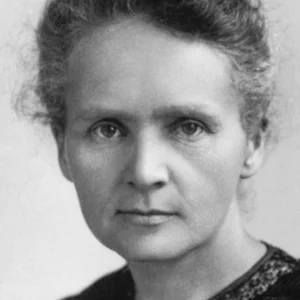
Polish physician (1865-1939), elder sister of Marie Curie, she funded her sister's studies in Paris. A pioneer of women's medicine in Poland, she ran a clinic in Zakopane and campaigned for women's emancipation.
Frequently asked questions
Key Facts
- Born on 7 October 1865 in Warsaw, into a Polish intellectual family living under Russian rule
- Earned her medical degree in Paris in 1894, among the first Polish women to become physicians
- Welcomed her sister Maria (the future Marie Curie) to Paris and funded her studies at the Sorbonne in the 1890s
- Founded and directed a clinic in Zakopane dedicated to tuberculosis patients
- Died on 17 April 1939 in Warsaw
Works & Achievements
The defining work of her life, this clinic in the Tatra Mountains welcomed thousands of tuberculosis patients and became a landmark in Polish medicine for treating the disease, combining rigorous care with deep social commitment.
Her medical doctorate, earned in Paris at great mutual sacrifice with her sister, made her one of the first Polish women to become a doctor, opening the way for an entire generation.
Active participation in this clandestine women's educational network in Warsaw, which allowed dozens of young Polish women to access knowledge despite the restrictions imposed by the Russian occupiers.
By honoring the pact she had made with her sister, Bronisława funded Maria's move to Paris — a decisive act without which the future Marie Curie might never have been able to pursue the studies that would lead her to the Nobel Prize.
Throughout her career, Bronisława actively championed women's access to medical education and healthcare professions in Poland, participating in various feminist associations and speaking out publicly on the issue.
Anecdotes
Bronisława and her younger sister Maria made a secret pact: the elder would leave first to study medicine in Paris, while Maria worked as a governess in Poland and sent part of her meager wages. In return, Bronisława would then fund her sister's Parisian studies. This pact of solidarity between two determined women, in a Russian-dominated Poland that barred them from universities, would go on to change the course of scientific history.
When Maria Skłodowska arrived in Paris in 1891, she found refuge with Bronisława and her husband Kazimierz Dłuski, a physician like herself. The couple welcomed her warmly into their Parisian apartment. It was from this family home that the future Marie Curie would begin her studies at the Sorbonne, before moving on her own to a garret in the Latin Quarter to focus entirely on her work.
Settled in Zakopane, a major mountain resort in the Tatras, Bronisława and her husband established a clinic specializing in the treatment of tuberculosis. At a time when this disease was ravaging Europe and mountain air was one of the few remedies available, their institution welcomed thousands of patients. Bronisława developed a pioneering approach there, combining rigorous medical care with a social commitment to the most disadvantaged patients.
In her youth in Warsaw, Bronisława had taken part in the Flying University (Latający Uniwersytet), a clandestine network of home-based lessons designed to circumvent the ban on women accessing higher education in Russian-controlled Poland. This experience deeply shaped her convictions: throughout her life, she worked to ensure that women could freely pursue intellectual and medical careers.
After the tragic death of Pierre Curie in 1906, Bronisława regularly invited Marie to come and rest in Zakopane, in the Tatra Mountains that both sisters had loved since childhood. The two sisters kept up a devoted correspondence until Marie's death in 1934; Bronisława, then sixty-nine years old, outlived her by five years — a living witness to an entire era.
Primary Sources
My elder sister Bronya had already left Warsaw to study medicine in Paris. I worked as a governess to send her a portion of my salary each month, in accordance with our agreement.
It was with Bronya and Casimir Dłuski that Maria spent her first weeks in Paris. Her sister, a doctor, cheerful and courageous, was both a role model and a constant source of support in this unfamiliar city.
My dear Bronya, I will send you this month what I have managed to save. It is less than expected, but hold on — your degree will come soon, and then it will be my turn to leave for Paris.
Dłuska (née Skłodowska), Bronisława — Doctoral thesis in medicine defended and passed. Was among the first foreign women to receive a medical degree from the Paris Faculty.
Key Places
Bronisława Skłodowska's birthplace, where she grew up in a family of teachers and secretly attended the Flying University before leaving to study medicine in Paris.
It was in Paris that Bronisława earned her medical doctorate in the early 1890s, becoming one of the first Polish women to receive a medical degree in France, and where she later took in her sister Maria.
A mountain resort town where Bronisława and her husband Kazimierz founded and ran an anti-tuberculosis clinic that became a leading medical institution in Poland, set amid pine forests and snow-capped peaks.
A major city in Galicia under Austro-Hungarian rule, culturally more liberal than Russian-controlled Poland, where Bronisława practised medicine and where the Polish medical and intellectual community was especially active.
Typical Objects

An indispensable tool for physicians of the era, Bronisława used it daily to auscultate her tuberculosis patients at her clinic in Zakopane, monitoring the progression of their lung condition.

Having graduated from the Paris Faculty of Medicine, Bronisława built a medical library consisting largely of French-language works — the language in which she had received her entire training.

These clinical diagnostic instruments were at the heart of Bronisława's daily practice, as she treated patients who were often at advanced stages of tuberculosis requiring rigorous monitoring.

Bronisława and Marie Curie maintained an extensive exchange of letters; these letters, preserved in the Curie archives, constitute a major historical source on their pact of solidarity and their lives.

The Zakopane clinic was equipped according to the standards of the time for treating tuberculosis: prolonged rest in the open air, the pure mountain air, and daily care supervised by Bronisława.

Like all physicians, Bronisława recorded her clinical observations in notebooks — an essential document for tracking the progress of chronic patients and coordinating their care.
School Curriculum
Vocabulary & Tags
Key Vocabulary
Tags
Daily Life
Morning
Bronisława rose early in Zakopane, often before sunrise in winter. She began her day with a visit to the patients hospitalized in her clinic, auscultating tuberculosis patients and noting the progress of their condition in her medical notebook. Breakfast was taken quickly with her husband Kazimierz, also a physician, before resuming consultations.
Afternoon
The afternoon was devoted to outpatient consultations and the administrative management of the clinic. Bronisława received patients who had come from all over Poland, sometimes very poor, whom she often treated free of charge or at reduced rates. She also replied to letters from her sister Marie in Paris and corresponded with medical colleagues and women's associations.
Evening
Evenings at the Dłuskis' often brought together intellectuals, doctors, writers, and Polish activists: Zakopane was at that time a hub of Polish cultural and patriotic life. Bronisława read the latest French and Polish medical journals, sometimes played the piano, or engaged in long conversations with her husband about the day's difficult cases.
Food
Bronisława's table in Zakopane reflected the cuisine of the Polish mountains: thick soups (żurek with rye bread, barszcz with beetroot), smoked meats, dark bread, and sheep's cheeses from the Tatras (oscypek). For special occasions, dishes from the Warsaw bourgeois cuisine inherited from her family were prepared, sometimes with French touches acquired during her Parisian years.
Clothing
As a doctor and woman of the intellectual bourgeoisie, Bronisława wore long, dark dresses with white collars — practical yet befitting her professional standing. In her clinic, she put on a white apron over her work dress. Her appearance was sober and functional, a reflection of a woman who had chosen commitment over social representation.
Housing
The Dłuskis lived in a wooden villa in the style of the Tatra chalets (styl zakopiański), a folk architectural style developed by Stanisław Witkiewicz at the same period. The house served both as their home and as part of the clinic's medical premises, surrounded by pine forests with views of snow-capped peaks.
Historical Timeline
Period Vocabulary
Visual Style
Réalisme polonais fin XIXe siècle : tons sépia, verts forêt et gris ardoise, lumière ambrée de lampe à pétrole dans un intérieur médical en bois des Tatras — portrait de femme intellectuelle et déterminée.
Sound Ambience
Ambiance d'un sanatorium de montagne polonais à la fin du XIXe siècle : vent dans les pins des Tatras, couloirs de clinique en bois, poêle en faïence, et atmosphère feutrée d'une maison d'intellectuels polonais.
Liens externes & ressources
Références
Œuvres
Clinique antituberculeuse de Zakopane
fondée vers 1895-1901
Doctorat en médecine (Faculté de Médecine de Paris)
1891
Engagement dans l'Université volante (Latający Uniwersytet)
vers 1882-1886
Financement des études parisiennes de Marie Curie
1891
Militantisme pour l'émancipation des femmes en médecine
1890-1930