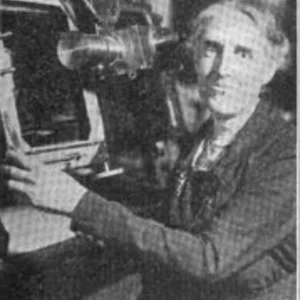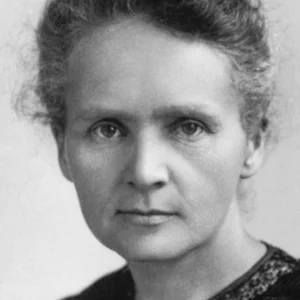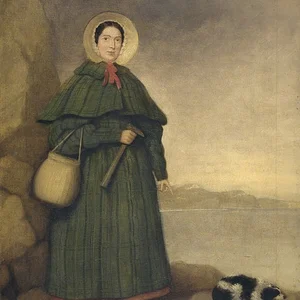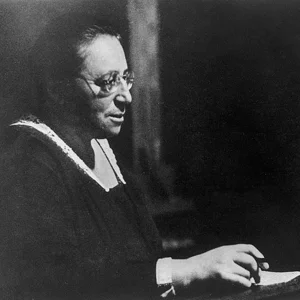

German mathematician (1882–1935) considered one of the greatest mathematicians of the 20th century. She revolutionized abstract algebra, and her landmark theorem established the deep connection between symmetries and conservation laws in physics.
Frequently asked questions
Famous Quotes
« Logic is the hygiene of the mathematician, not the source of nourishment.»
« I could at least predict what people would say about the new theory: first, that they would not understand it.»
Key Facts
- 1907: Earns her doctorate in mathematics from the University of Erlangen despite the barriers imposed by her gender
- 1915: Proves the fundamental theorem linking the symmetries of physical laws to conservation laws
- 1921: Publishes her work on ring and ideal theory, founding modern abstract algebra
- 1933: Flees Nazi Germany and takes refuge in the United States
- 1935: Dies at Bryn Mawr (Pennsylvania) from a tumor
Works & Achievements
Landmark paper demonstrating that every continuous symmetry of a physical system corresponds to a conserved quantity. This theorem has become a cornerstone of modern theoretical physics.
Founding text of modern commutative algebra, introducing the ascending chain condition and the concept of a Noetherian ring.
Unification of the representation theory of finite groups and the theory of algebras, opening an entire field of research.
Extension of ideal theory to algebraic number fields and function fields, generalizing the work of Dedekind.
Synthesis of her work on non-commutative algebras, completing the construction of abstract algebra as an autonomous discipline.
Anecdotes
In 1915, Emmy Noether was invited to the University of Göttingen by David Hilbert and Felix Klein, but the philosophy faculty refused to allow a woman to teach. Hilbert, furious, delivered his famous retort: "I do not see how a candidate's sex can be an argument against their admission as Privatdozent. After all, we are a university, not a bathing establishment!"
For several years at Göttingen, Emmy Noether was not allowed to teach under her own name. Her courses were officially announced under Hilbert's name, who let her occupy his chair. Yet students came in droves to listen to the woman they affectionately nicknamed "der Noether", using the masculine form as a mark of mathematical respect.
Emmy Noether was known for her passionate and sometimes chaotic teaching style. She spoke very quickly, gesticulated, dropped her chalk, and forgot to erase the blackboard. Her students, known as the "Noether Boys", followed her with devotion despite these eccentricities, for the depth of her thinking was unmatched.
When the Nazis enacted antisemitic laws in 1933, Emmy Noether was immediately dismissed from the University of Göttingen. She accepted the situation with remarkable composure and organized clandestine seminars at her home for several weeks before going into exile in the United States, at Bryn Mawr College in Pennsylvania.
Albert Einstein, in a letter to the New York Times published on May 4, 1935 following Noether's death, wrote that she was "the most significant creative mathematical genius thus far produced since the higher education of women began." This moving tribute helped bring her work to the attention of the general public.
Primary Sources
In this foundational paper, Noether proves that every continuous symmetry of a physical system corresponds to a conservation law. This result establishes a fundamental bridge between mathematics and theoretical physics.
Noether develops the theory of ideals in commutative rings, introducing the ascending chain conditions that now bear her name (Noetherian rings).
« In the judgment of the most competent living mathematicians, Fräulein Noether was the most significant creative mathematical genius thus far produced since the higher education of women began. »
In this major paper, Noether unifies the representation theory of groups and the theory of non-commutative algebras, paving the way for modern algebra.
Key Places
Emmy Noether's hometown, where she grew up in an academic environment and earned her doctorate at the Friedrich-Alexander University.
A world-leading center of mathematics where Noether produced her most important work from 1915 to 1933, within a brilliant circle including Hilbert, Klein, and Weyl.
A prestigious American women's college where Noether found refuge after her expulsion from Germany in 1933, and where she taught until her death.
Noether regularly gave lectures there during her American exile, reuniting with Einstein and other émigré scientists.
Noether traveled there in 1928–1929 to teach and collaborate with the Soviet algebraic school, notably Pavel Alexandrov.
Typical Objects

Noether's indispensable tools: she would spend hours at the board developing her proofs in front of her students, often filling several blackboards in succession.

Noether wrote down her thoughts and proofs in notebooks that she generously shared with her students and colleagues.

Her personal library contained treatises on algebra and invariant theory that had nourished her training under her father, Max Noether.

Noether wore the round glasses characteristic of the era, which became a distinctive feature of her appearance in photographs.

She carried her documents and manuscripts in a worn satchel as she walked to the university, in all weathers.

Used to produce clean copies of her articles before submission to mathematical journals such as the Mathematische Annalen.
School Curriculum
Vocabulary & Tags
Key Vocabulary
Daily Life
Morning
Emmy Noether rose early in her modest apartment in Göttingen. She had a simple breakfast — dark bread, butter, and coffee — while reviewing her notes from the previous day. She then walked to the university, often so absorbed in her mathematical thoughts that she would lose her way.
Afternoon
The afternoon was devoted to seminars and discussions with her students, the "Noether Boys". These informal exchanges often continued during long walks in the countryside around Göttingen. She enjoyed walking in groups while debating algebraic problems.
Evening
In the evenings, Noether frequently welcomed students and colleagues at her home for lively mathematical discussions, accompanied by tea and cakes. She would then work late into the night on her papers, scribbling proofs in her notebooks.
Food
Emmy Noether had simple tastes and paid little attention to food. She ate mainly bread, soups, cheese, and traditional Franconian dishes. She gladly served pudding and cakes at her informal mathematical gatherings.
Clothing
Noether dressed practically and without vanity, wearing loose, dark dresses, a wool coat, and comfortable shoes. She cared little for her appearance and prioritized comfort for her long working days and walks.
Housing
In Göttingen, she occupied a modest apartment cluttered with books and papers. The simply furnished lodging served as much as a workspace as a living space. In the United States, she lived in a residence on the Bryn Mawr campus, furnished just as simply.
Historical Timeline
Period Vocabulary
Visual Style
Un style visuel évoquant l'Allemagne universitaire du début du XXe siècle, mêlant tons sépia chaleureux, motifs géométriques abstraits inspirés de l'algèbre et l'atmosphère studieuse des amphithéâtres de Göttingen.
Sound Ambience
L'ambiance sonore d'un amphithéâtre de l'université de Göttingen dans les années 1920, avec le rythme de la craie sur le tableau et la voix passionnée d'Emmy Noether donnant son cours d'algèbre.
Liens externes & ressources
Références
Œuvres
Invariante Variationsprobleme (Théorème de Noether)
1918
Idealtheorie in Ringbereichen
1921
Hyperkomplexe Größen und Darstellungstheorie
1929
Abstrakter Aufbau der Idealtheorie in algebraischen Zahl- und Funktionenkörpern
1927
Nichtkommutative Algebra
1933