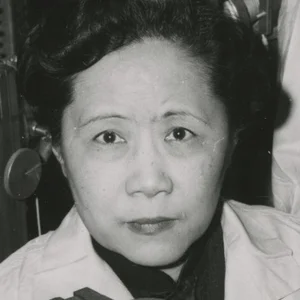

Henrietta Swan Leavitt (1868-1921) was an American astronomer who discovered the period-luminosity relationship of Cepheid stars, giving humanity a tool to measure distances across the universe. Working as a "human computer" at the Harvard Observatory, she transformed astronomy despite the discrimination she faced because of her gender.
Henrietta Leavitt(1868 — 1921)
Henrietta Swan Leavitt
États-Unis
7 min read
Frequently asked questions
Key Facts
- 1893: joins the Harvard College Observatory as a human "computer
- tasked with analyzing photographic plates
- 1908: publishes her first observations on Cepheid stars in the Small Magellanic Cloud
- 1912: establishes the period-luminosity law for Cepheids, making it possible to measure astronomical distances
- Her discovery enabled Edwin Hubble to prove in 1924 that the Milky Way is not the only galaxy
- 1921: dies of cancer at the age of 53, shortly before being nominated for the Nobel Prize in Physics
Works & Achievements
First major catalogue of variable stars in the Magellanic Clouds, published in the Harvard Annals. This systematic survey laid the groundwork for the discovery to come.
Landmark paper in which Leavitt established the period-luminosity law for Cepheid variables, a cornerstone of modern cosmology and a tool for measuring extragalactic distances.
Reference work on stellar photometry, establishing luminosity standards for thousands of stars, used by astronomers worldwide.
Over the course of her career, Leavitt identified and catalogued more than 2,400 variable stars, accounting for roughly half of all those known at the time.
Anecdotes
Henrietta Leavitt worked at the Harvard College Observatory as a 'computer' — a term designating women tasked with analyzing thousands of photographic plates. Despite this subordinate role and a salary of 25 cents an hour, she accomplished one of the most important discoveries in 20th-century astronomy.
While studying stars in the Small Magellanic Cloud, Leavitt noticed in 1912 a remarkable relationship: the brighter a Cepheid star, the longer its pulsation period. This period-luminosity law made it possible for the first time to accurately measure distances within and beyond our galaxy.
Henrietta Leavitt suffered from progressive deafness that worsened over the years. Far from hindering her career, she continued to catalog hundreds of variable stars with a rigor and precision that commanded the admiration of her male colleagues, including Edward Pickering, her director.
In 1924, Swedish astronomer Gösta Mittag-Leffler wished to nominate Henrietta Leavitt for the Nobel Prize in Physics — considering her discovery fundamental. He was unaware that she had died three years earlier, in 1921, of cancer. The Nobel Prize cannot be awarded posthumously, and her name remained long in the shadows.
Leavitt's work on Cepheids was used directly by Edwin Hubble in 1924 to prove that the Andromeda Nebula was a galaxy external to the Milky Way. Without Leavitt's law, the cosmological revolution of the 20th century would have been delayed by several decades.
Primary Sources
A straight line can readily be drawn among each of the two series of points corresponding to maxima and minima, thus showing that there is a simple relation between the brightness of the variables and their periods.
The list contains the positions, magnitudes at maximum and minimum, and notes on the light curves of 1777 variable stars discovered on photographs of the Magellanic Clouds.
I congratulate you on the excellent work you have done in this investigation. It is a most important piece of work and will be of great service to astronomy.
Key Places
The site of Leavitt's entire scientific career, where she worked among the 'Harvard Computers' and made her discoveries on Cepheid variables.
A dwarf satellite galaxy of the Milky Way whose photographic plates Leavitt analyzed, discovering there the period-luminosity relationship of Cepheid variables.
Harvard's southern observation station, whose photographic plates of the southern sky constituted the primary source of Leavitt's data.
Henrietta Leavitt's hometown, where she was born in 1868 into a cultivated Protestant family.
A women's higher education institution affiliated with Harvard, where Leavitt earned her degree in 1892 and discovered her passion for astronomy.
Typical Objects

The main working medium of the Harvard computers: thousands of glass sky photographs that Leavitt examined through a magnifying glass to detect variations in stellar brightness.

An optical instrument used to rapidly compare two photographs of the same star field in order to detect stars whose brightness had changed between exposures.

An essential mechanical calculation tool for the computers, who performed magnitude conversions and period calculations by hand.

A stellar brightness reference compiled under Pickering's direction, to which Leavitt made major contributions by establishing photometric standards.

The photographic telescope at the Arequipa Observatory (Peru), a Harvard outstation, whose plates of the Magellanic Clouds provided the raw material for Leavitt's discovery.

A handwritten logbook in which Leavitt meticulously recorded the positions, periods, and magnitudes of the variable stars she identified on the plates.
School Curriculum
Vocabulary & Tags
Key Vocabulary
Tags
Daily Life
Morning
Henrietta Leavitt arrived early at the Harvard Observatory, located a few minutes' walk from her home. She put on a work smock over her dark dress and took her seat in the large computing room, where the previous night's photographic plates were already sorted and waiting for her.
Afternoon
The afternoon was devoted to methodically examining the plates with a magnifying glass or a blink comparator, searching for stars whose brightness had varied. Each discovery was carefully recorded in her notebooks with position, estimated magnitude, and date. She sometimes corresponded by letter with European astronomers to cross-reference data.
Evening
In the evenings, Leavitt wrote up her notes and performed calculations of periods and magnitudes using a slide rule. Affected by progressive hearing loss, she particularly appreciated the quiet of the end of the day to concentrate. She returned to her lodgings in Cambridge where she lived simply, often in the company of family members.
Food
Like most Protestant middle-class women of New England, Leavitt had a simple and frugal diet: porridge and toast in the morning, soup and a sandwich at noon brought in a lunch box, and a hot dinner in the evening with meat, vegetables, and potatoes. Strong coffee was essential for the long hours of work.
Clothing
Leavitt wore the austere and functional attire typical of women scientists of the late Victorian era: dark dresses with high collars, long skirts, white starched blouses fastened with a cameo or a plain brooch. A work smock protected her clothes when handling chemical plates.
Housing
Henrietta Leavitt lived in modest lodgings in Cambridge, often in a boarding house or with relatives, a few minutes from the Observatory. Her interior reflected the Protestant sobriety of her family: simple furniture, a bookshelf filled with scientific works, and few decorations apart from some family portraits.
Historical Timeline
Period Vocabulary
Visual Style
Style Belle Époque scientifique : atmosphère sombre et précise des observatoires victoriens, éclairés à la lampe à gaz, avec des femmes en tenue austère penchées sur des plaques de verre révélant l'immensité du cosmos.
Sound Ambience
Ambiance feutrée et studieuse des salles de travail du Harvard College Observatory à la Belle Époque, où les 'computrices' analysaient des plaques photographiques dans un silence concentré.
Liens externes & ressources
Références
Œuvres
1777 Variables in the Magellanic Clouds
1908
Periods of 25 Variable Stars in the Small Magellanic Cloud
1912
Catalogue Harvard Standard Photographic Magnitudes
1912-1921
Détection de plus de 2 400 étoiles variables
1893-1921