 flip
flipCafé de olla
Café de olla
Why this dish? Coffee brewed in a clay pot with cinnamon and piloncillo, café de olla closes the Mexican comida and accompanies long conversations. For Fuentes, a writer of speech and the table, whose meals were "moments of sociability and discussion," this spiced drink is the fuel of intellectual evenings and the very aroma of Mexican memory.
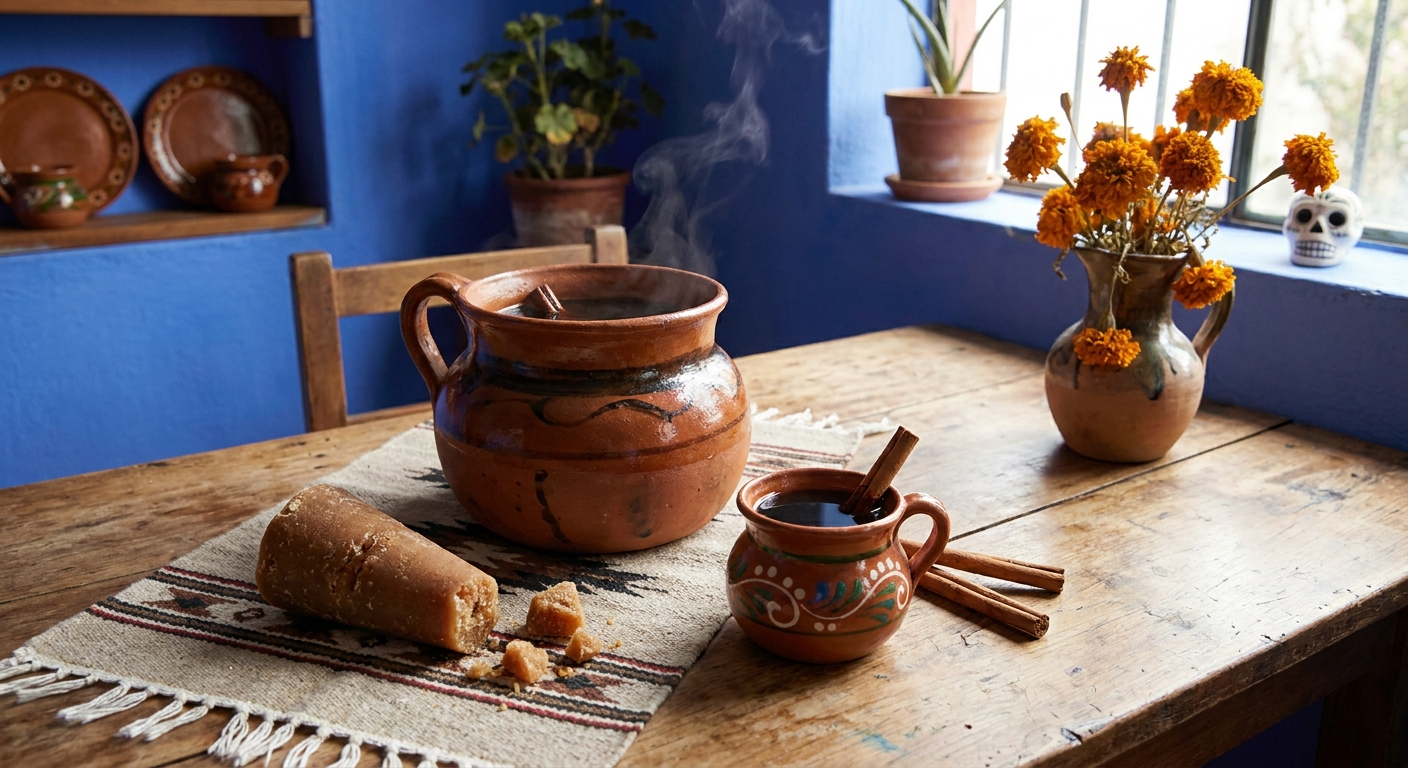
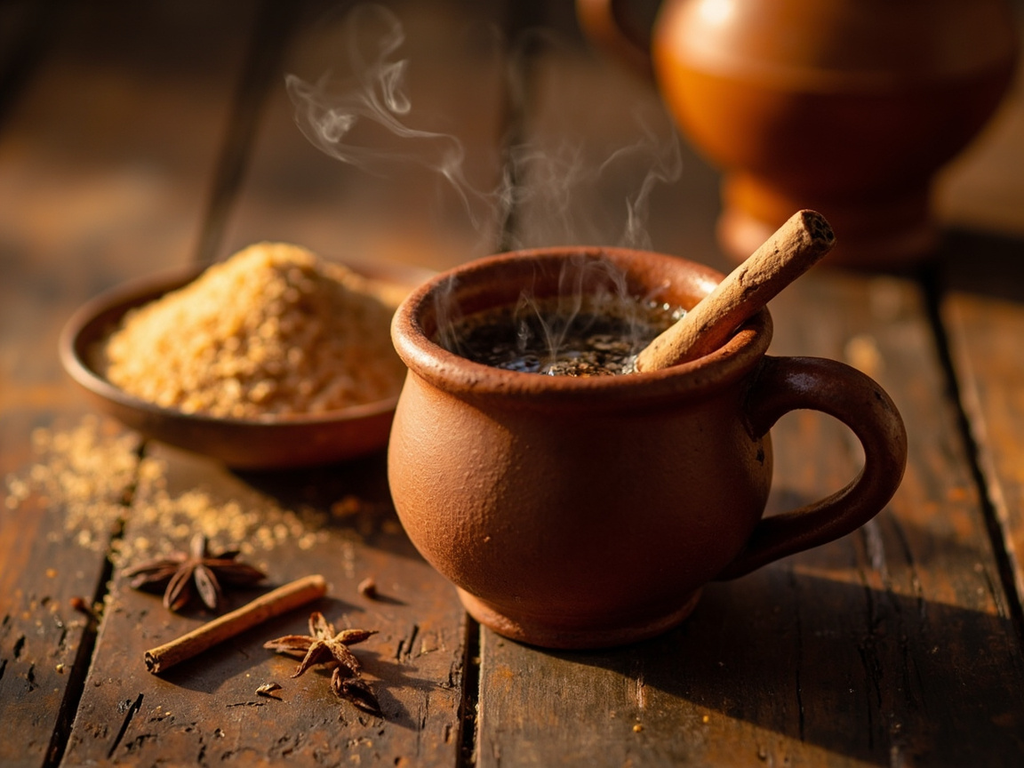
Black coffee simmered in a clay olla with cinnamon, clove, and unrefined cane sugar (piloncillo), served piping hot in a clay cup.
Stay a little longer—coffee is not just a drink, it is an invitation to continue the conversation. We make it the old way, in the clay olla, where the earth holds the taste of all the coffees before. The piloncillo melts slowly, the cinnamon perfumes, the clove pricks just a little—and the coffee turns black as the ink with which I cover my pages. Drink it scalding hot from the barro cup: at this table, it is the hour when ideas, like steam, rise and mingle.
- •Coarsely ground coffee — several spoonfuls (base)
- •Piloncillo (unrefined cane sugar) — one cone, to taste (caramelized sweetness)
- •Ceylon cinnamon stick — 1 (flavor)
- •Clove — 1 or 2 (spicy note)
- •Water — enough to fill the olla (infusion)
Café de olla
Black coffee simmered in a clay olla with cinnamon, clove, and unrefined cane sugar (piloncillo), served piping hot in a clay cup.
Why this dish? Coffee brewed in a clay pot with cinnamon and piloncillo, café de olla closes the Mexican comida and accompanies long conversations. For Fuentes, a writer of speech and the table, whose meals were "moments of sociability and discussion," this spiced drink is the fuel of intellectual evenings and the very aroma of Mexican memory.
Stay a little longer—coffee is not just a drink, it is an invitation to continue the conversation. We make it the old way, in the clay olla, where the earth holds the taste of all the coffees before. The piloncillo melts slowly, the cinnamon perfumes, the clove pricks just a little—and the coffee turns black as the ink with which I cover my pages. Drink it scalding hot from the barro cup: at this table, it is the hour when ideas, like steam, rise and mingle.
Ingredients (period version)
- Coarsely ground coffee — several spoonfuls (base)
- Piloncillo (unrefined cane sugar) — one cone, to taste (caramelized sweetness)
- Ceylon cinnamon stick — 1 (flavor)
- Clove — 1 or 2 (spicy note)
- Water — enough to fill the olla (infusion)
Ingredients
- Coarsely ground coffee — 6 tbsp (base)
- Piloncillo (or dark brown sugar/rapadura) — 60-80 g (sweetness)
- Cinnamon stick — 1 (flavor)
- Clove — 2 (spice)
- Water — 1 L (infusion)
- Orange zest (optional) — 1 strip (freshness (variation))
Method
- In a saucepan (ideally a clay olla), bring the water to a simmer with the piloncillo, cinnamon, and clove. Stir until the sugar dissolves.
- Add the ground coffee, remove from heat, cover, and let steep for 5 minutes.
- Strain through a fine-mesh sieve or cloth.
- Serve piping hot in clay cups (jarritos), with a cinnamon stick as a stirrer if desired.
- For a fragrant variation, add a strip of orange zest during steeping.
How it was made : Café de olla takes its name and flavor from the olla, a porous clay pot that infuses the drink. Piloncillo, unrefined cane sugar molded into cones, has been used since colonial times; cinnamon and clove, spices introduced by Spanish trade, made this drink a *mestizo* emblem. It was kept warm on the *brasero* during gatherings and evening vigils.
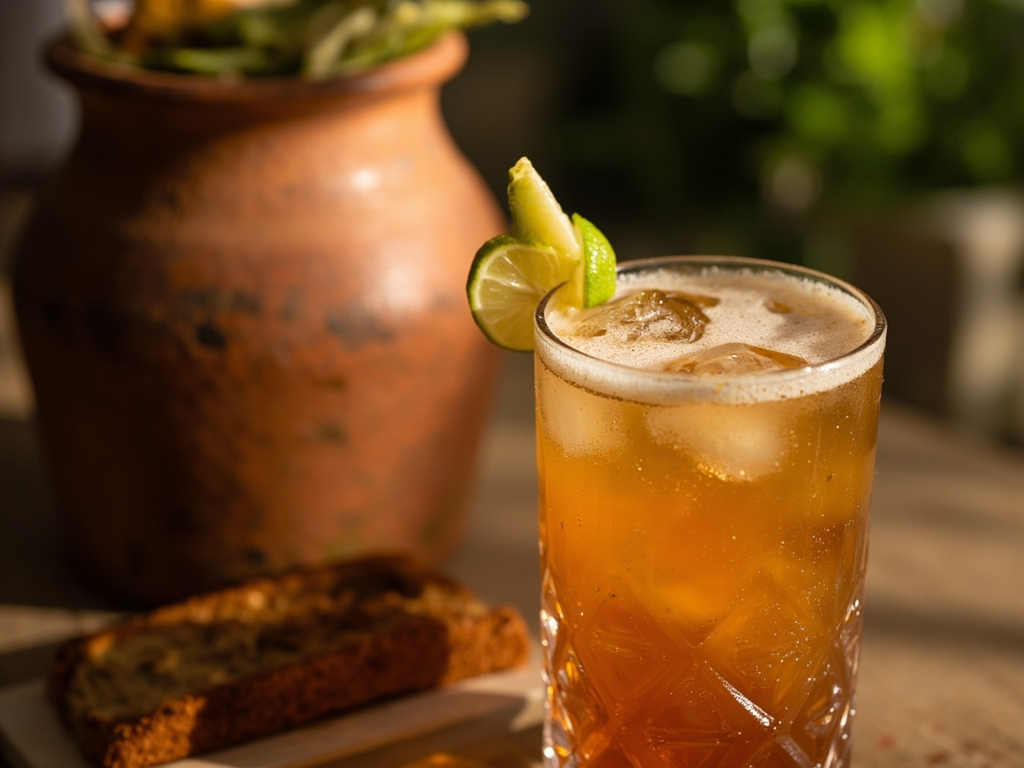
The contemporary twist : An iced "café de olla frappé" over crushed ice for hot summers, or lengthened with a splash of almond milk for a sweet afternoon treat.
Sources : Ricardo Muñoz Zurita, Diccionario enciclopédico de la gastronomía mexicana · Diana Kennedy, My Mexico
Carlos Fuentes · Charactorium