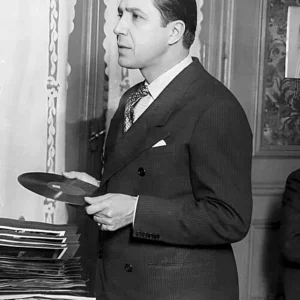

Carlos Gardel was a singer, composer and actor, an iconic figure of Argentine tango. Regarded as the creator of sung tango (“tango canción”), he brought the genre to international fame in the 1920s and 1930s.
Carlos Gardel(1890 — 1935)
Carlos Gardel
Uruguay, France, Argentine
6 min read
Frequently asked questions
Key Facts
- Around 1890: birth, disputed between Toulouse (France) and Tacuarembó (Uruguay), before he settled in Argentina
- 1917: records “Mi noche triste”, often cited as the birth certificate of sung tango
- 1920s-1930s: triumphant tours across Latin America, Europe and the United States
- 1935: dies in a plane crash in Medellín (Colombia), at the height of his fame
Works & Achievements
The first sung tango in history; it founded the genre of the tango canción.
One of his first talking pictures, shot in Paris, which launched his film career.
A musical film shot in Paris, famous for its title tango.
A film and song among Gardel's most beloved, which became classics of the repertoire.
A major tango (lyrics by Alfredo Le Pera) about nostalgia and homecoming, from the film El día que me quieras.
A film and tango shot in New York, about ruin and the memory of love.
A tango composed with Le Pera, known worldwide and later featured in many films.
Gardel's last film, released the year of his death, shot in the United States.
Anecdotes
Carlos Gardel's birthplace remains a debated mystery: the best-documented version has him born in Toulouse, France, in 1890, under the name Charles Romuald Gardès, before his mother took him to Buenos Aires. Some in Uruguay, however, claim he was born in Tacuarembó, and the dispute between the two countries continues to this day.
In 1917, Gardel recorded “Mi noche triste,” considered the first true sung tango in history. With this song, which tells of the heartbreak of a man who has been abandoned, he transformed the tango — until then mostly a dance — into a genre where the voice and the story take center stage.
Gardel became a huge movie star in the era of talkies: he made films in Paris and then at the Paramount studios in New York, where his Spanish-language features were shown throughout Latin America. His fame extended far beyond an Argentine audience alone.
On 24 June 1935, Gardel died at the age of 44 in a collision between two airplanes on the runway of Medellín airport, in Colombia, during a tour. His sudden death, at the height of his fame, sparked a wave of popular grief and fed his legend.
A famous saying in Argentina holds that “he sings better every day” (“cada día canta mejor”): proof that over the decades his aura has only grown. His smiling face and his soft felt hat (gacho) remain instantly recognizable symbols of Argentine culture.
Primary Sources
Percanta que me amuraste / en lo mejor de mi vida... (“My darling, you abandoned me in the best part of my life”)
Volver, con la frente marchita... Sentir que es un soplo la vida, que veinte años no es nada (“To return, with a withered brow... To feel that life is but a breath, that twenty years is nothing”).
El día que me quieras / la rosa que engalana / se vestirá de fiesta / con su mejor color.
Key Places
According to the best-documented version, Gardel was born here in 1890 under the name Charles Romuald Gardès before emigrating to Argentina as a child.
The city where Gardel grew up, trained, and became the great figure of tango. The Abasto neighborhood is closely associated with him.
Gardel triumphed here during his tours in the 1920s and shot his first talking films here in the early 1930s.
He moved here in 1934 to shoot Spanish-language films at the Paramount studios, expanding his fame throughout Latin America.
Gardel died here on June 24, 1935, in a collision between two planes on the airport runway, during a Latin American tour.
His grave, topped with a statue, is a place of pilgrimage where admirers still come to pay their respects.