 flip
flipKid Goat with Honey and Thyme from Heracles' Triumph
Kid Goat with Honey and Thyme from Heracles' Triumph
Why this dish? Heracles accomplished his twelfth and final labor by bringing Cerberus up alive from the Underworld—the ultimate feat that led him to immortality. Such a triumph is celebrated with a sacrifice and a banquet of roasted meat, the heroic feast par excellence, in the image of Heracles' legendary appetite.
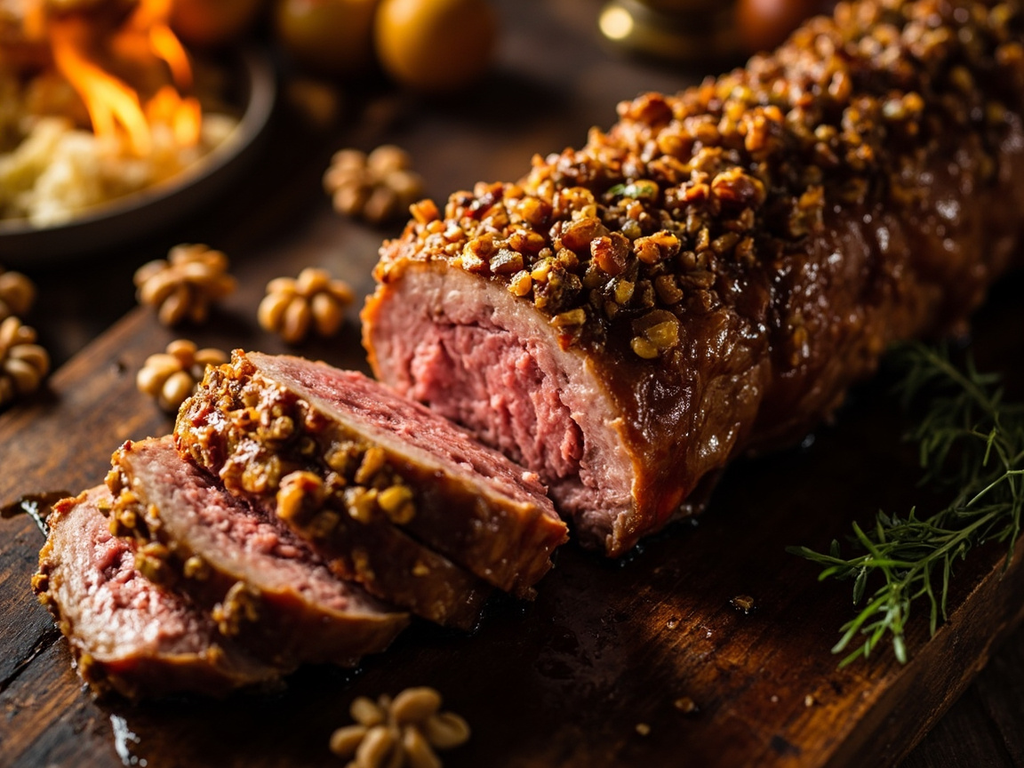
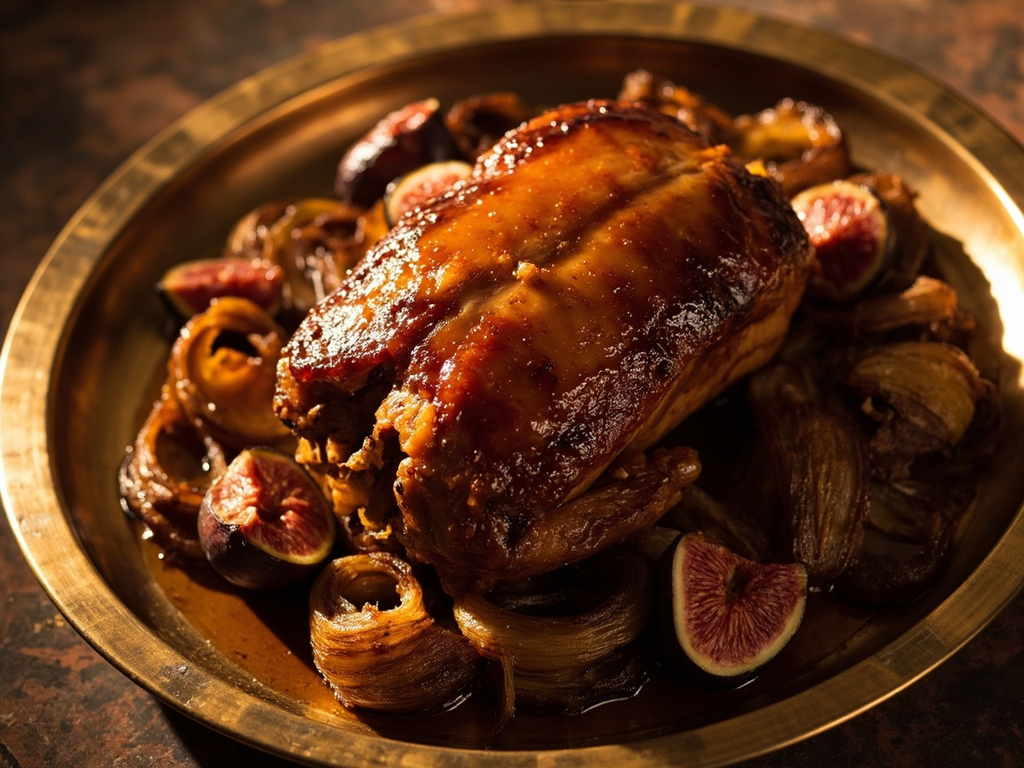
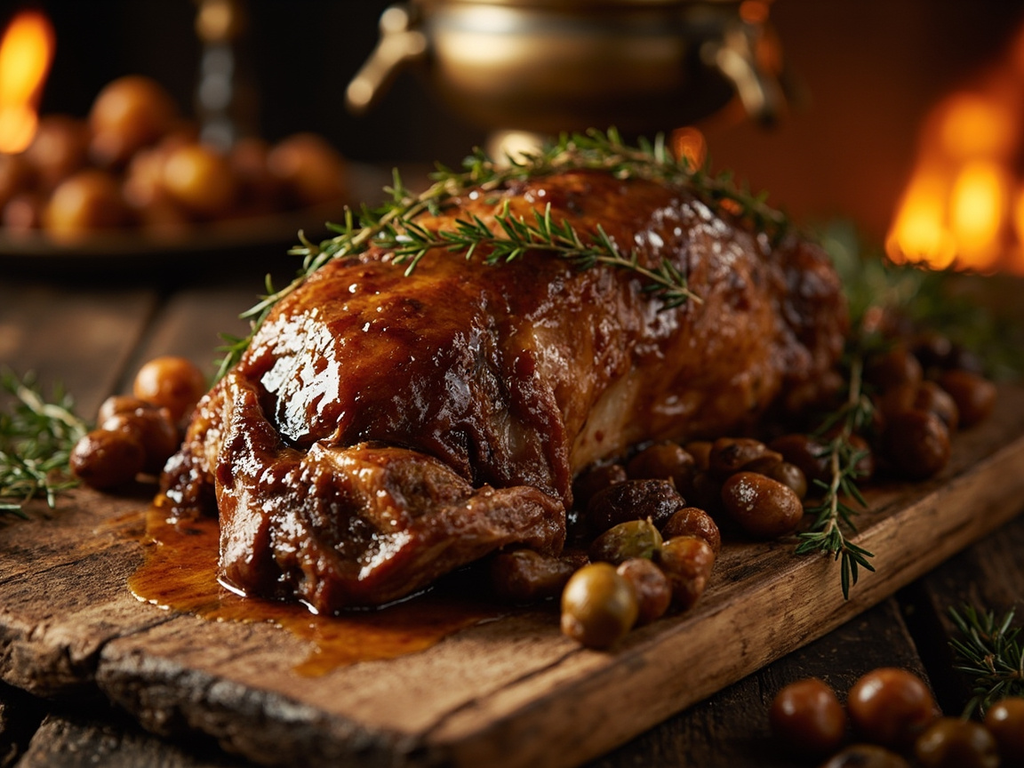
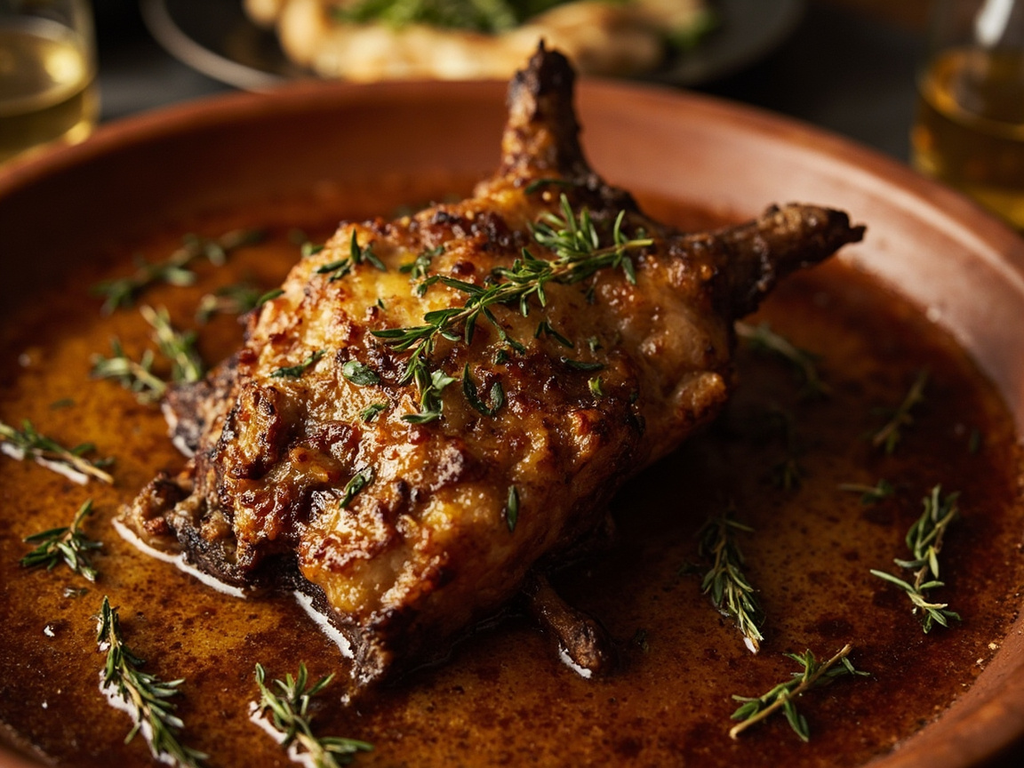
A slow-roasted kid goat, brushed with honey and rubbed with thyme and oregano, golden on the outside, tender within. The dish of great victories, perfumed with the herbs of the Greek hills.
He alone defeated me without weapon or trick: the son of Alcmene, who seized me by the throat and dragged me alive to the light I had never seen. When that glutton Heracles triumphs, they do not offer cakes—they bleed the beast, rub it with mountain thyme and honey, turn it over the coals until the fat sings. I returned to my door. But he, that night, ate for ten.
- •Kid goat (shoulder or leg) — a fine piece (festival meat)
- •Honey — generous (glaze)
- •Wild thyme and oregano — by the handful (scent of the hills)
- •Olive oil — generous (cooking)
- •Wine — a splash (deglazing and marinade)
- •Salt — to taste (seasoning)
Kid Goat with Honey and Thyme from Heracles' Triumph
A slow-roasted kid goat, brushed with honey and rubbed with thyme and oregano, golden on the outside, tender within. The dish of great victories, perfumed with the herbs of the Greek hills.
Why this dish? Heracles accomplished his twelfth and final labor by bringing Cerberus up alive from the Underworld—the ultimate feat that led him to immortality. Such a triumph is celebrated with a sacrifice and a banquet of roasted meat, the heroic feast par excellence, in the image of Heracles' legendary appetite.
He alone defeated me without weapon or trick: the son of Alcmene, who seized me by the throat and dragged me alive to the light I had never seen. When that glutton Heracles triumphs, they do not offer cakes—they bleed the beast, rub it with mountain thyme and honey, turn it over the coals until the fat sings. I returned to my door. But he, that night, ate for ten.
Ingredients (period version)
- Kid goat (shoulder or leg) — a fine piece (festival meat)
- Honey — generous (glaze)
- Wild thyme and oregano — by the handful (scent of the hills)
- Olive oil — generous (cooking)
- Wine — a splash (deglazing and marinade)
- Salt — to taste (seasoning)
Ingredients
- Shoulder or leg of kid goat (or lamb) — 1.2 kg (main meat)
- Honey — 3 tbsp (caramelizing glaze)
- Fresh thyme — 1 bunch (master herb)
- Dried oregano — 2 tbsp (Greek perfume)
- Olive oil — 5 tbsp (marinade and cooking)
- Dry white wine — 150 ml (deglazing)
- Salt, garlic — to taste (seasoning)
Method
- Rub the meat with olive oil, salt, oregano, and crushed garlic; marinate for 1 hour with thyme.
- Sear the piece on all sides in a Dutch oven or in a very hot oven (220°C) for 15 min.
- Reduce to 160°C, pour wine at the bottom, cover and roast slowly for 2 hours, basting regularly.
- In the last quarter hour, brush with honey and uncover to let caramelize and brown.
- Let rest for 10 min, then serve the shredded meat with its juices, accompanied by maza flatbreads.
How it was made : The Greek sacrifice (thysia) burned the bones and fat for the gods, while the men shared the roasted or boiled meat at the banquet. Heroic banquet meats were simply grilled on spits, seasoned with wild herbs, oil, and sometimes honey. Kid goat and lamb dominated; beef was reserved for great occasions.
The contemporary twist : Serve in 'twelve portions' for the twelve labors, each portion stuck with a sprig of thyme—and name the dish 'The Last Labor'.
Sources : Apollodorus, Library, Book II (the capture of Cerberus, twelfth labor of Heracles) · Homer, Iliad and Odyssey (descriptions of meat roasting at heroic banquets) · Marcel Detienne & Jean-Pierre Vernant, The Cuisine of Sacrifice among the Greeks
Cerberus · Charactorium