 flip
flipMelitoutta, the Cake That Lulls the Guardian
Melitoutta, the Cake That Lulls the Guardian
Why this dish? This is THE dish for Cerberus: to pass his guard, one throws him a cake kneaded with honey and poppy, whose soporific virtues weigh down his three jaws. Virgil describes the Sibyl lulling the monster with an 'offa' of honey and sleep-inducing herbs; the same trick serves Psyche and Orpheus.
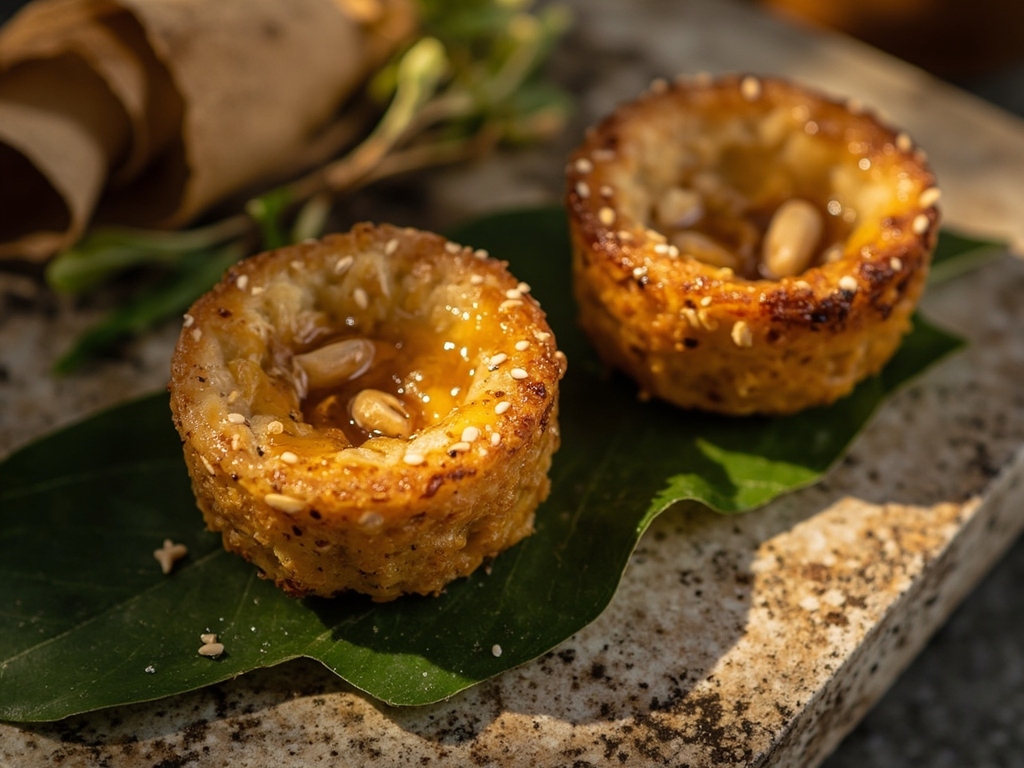
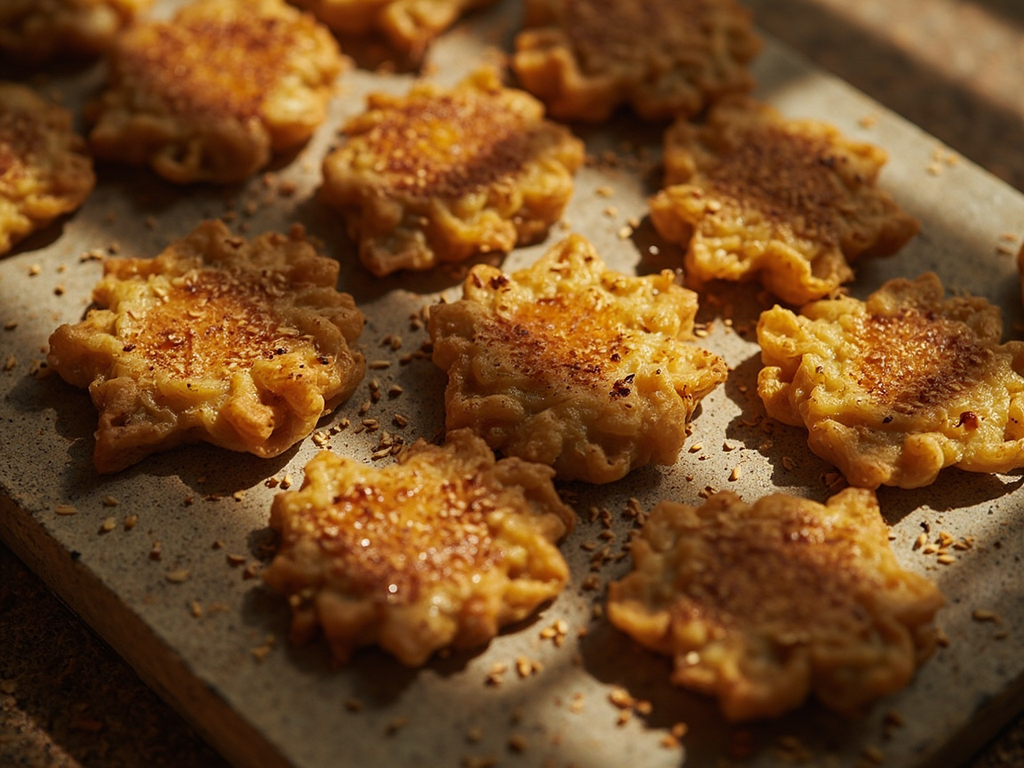
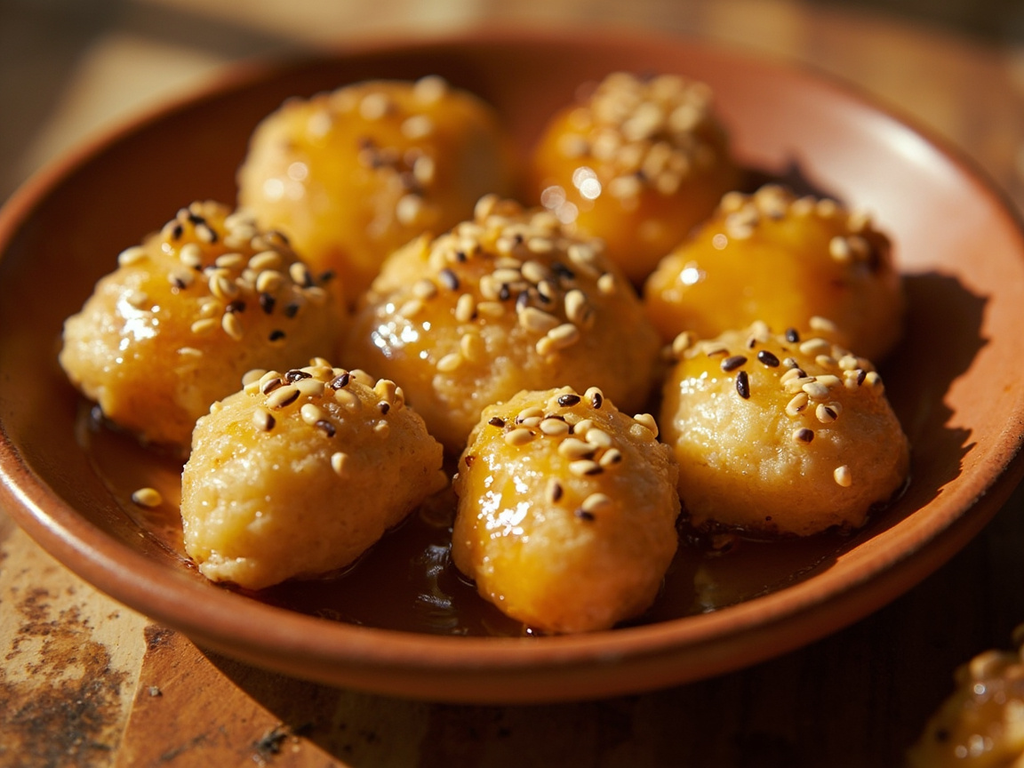
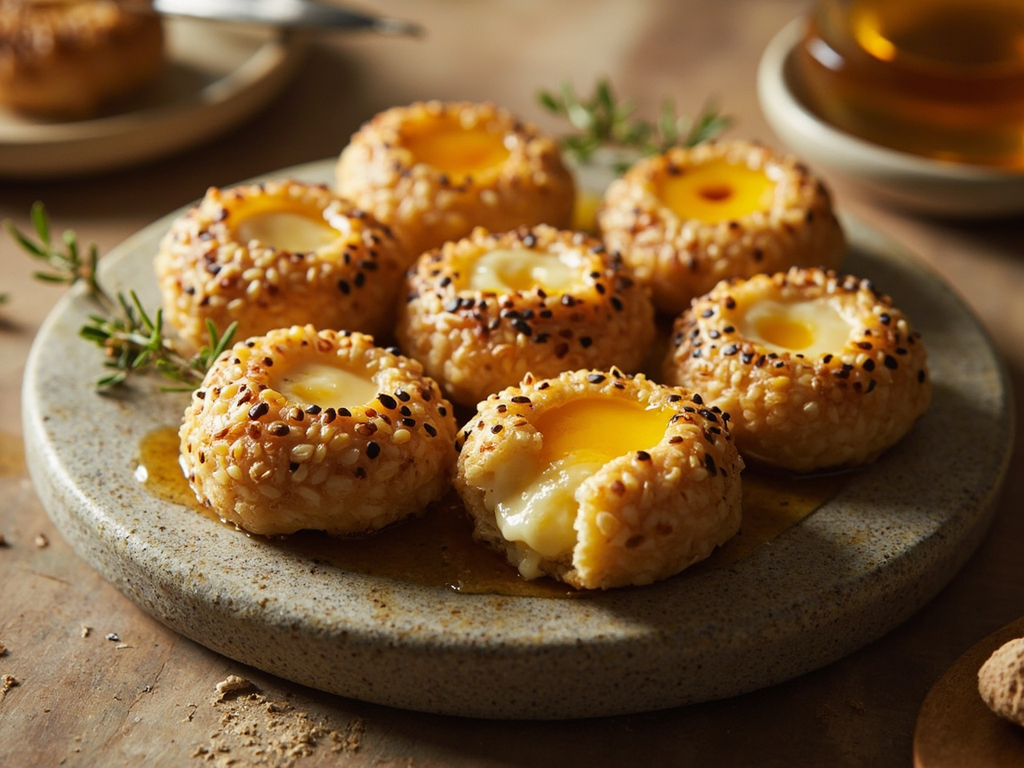
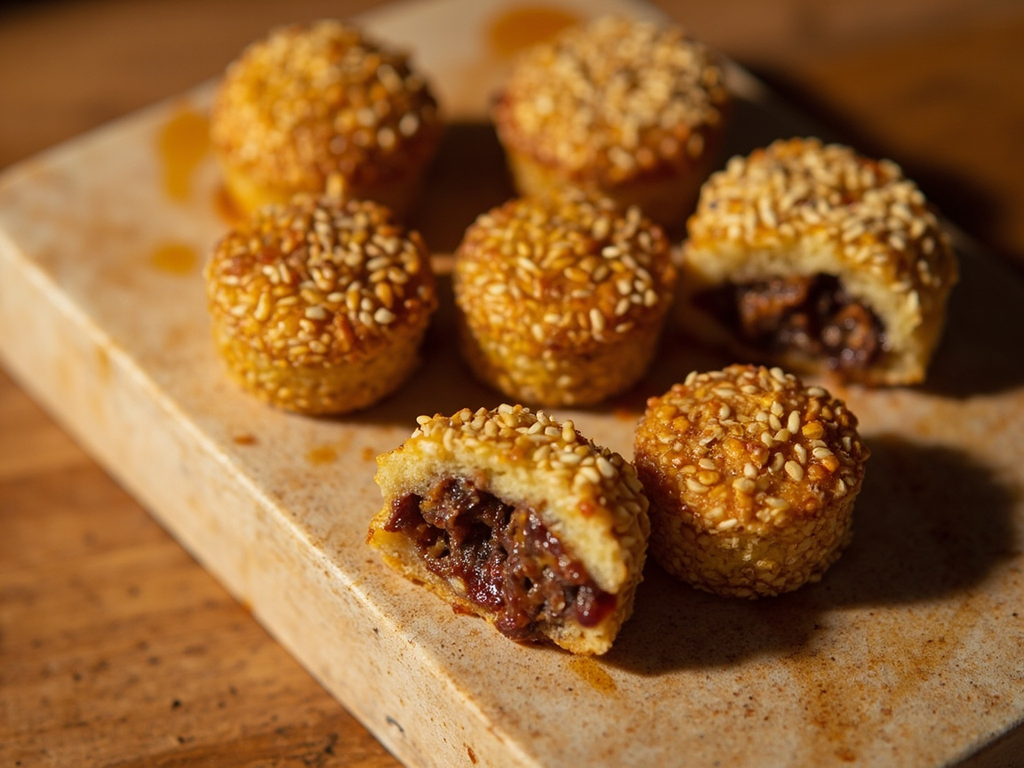
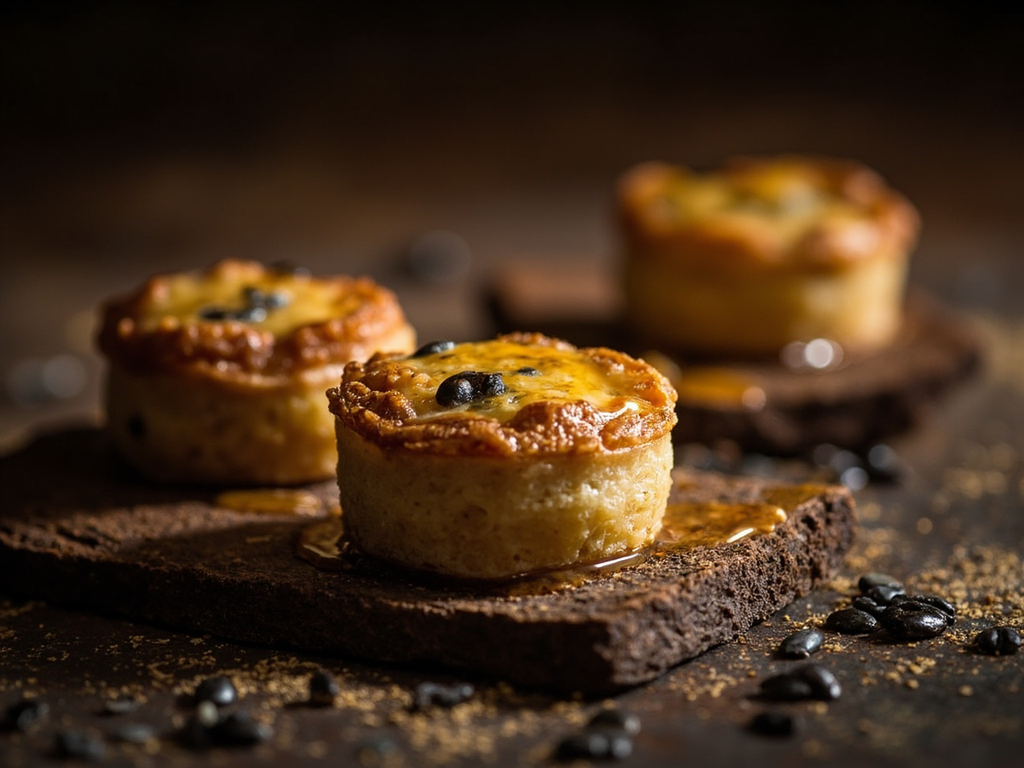
A small dense cake of barley and wheat, bound with honey and studded with blue poppy seeds. Soft, fragrant, almost sticky—made to melt in a muzzle rather than be savored at table.
Approach, mortal, but heed this: none pass my three jaws without tribute. Throw me this cake kneaded with golden honey and poppy tears, and my eyelids grow heavy as the night of the Styx. All have understood before you—the priestess of Cumae, the singer Orpheus, the mortal Psyche—honey to draw me, poppy to lay me down. It is the only gift that bends the guardian of shadows.
- •Barley and wheat flour mixed — two good handfuls (base of the cake)
- •Honey from Mount Hymettus — as needed, until bound (sweet binder)
- •Poppy seeds — a generous pinch (soporific virtue, crunch)
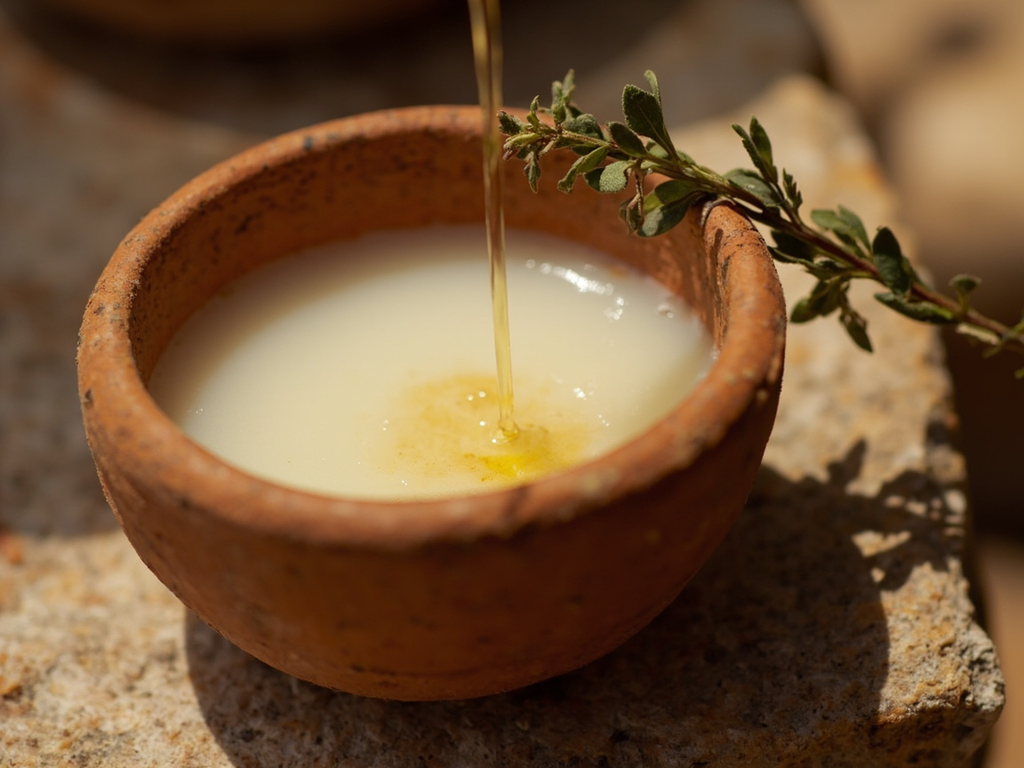
- •Olive oil — a drizzle (softness)
- •Sweet wine — a few drops (flavor)
Melitoutta, the Cake That Lulls the Guardian
A small dense cake of barley and wheat, bound with honey and studded with blue poppy seeds. Soft, fragrant, almost sticky—made to melt in a muzzle rather than be savored at table.
Why this dish? This is THE dish for Cerberus: to pass his guard, one throws him a cake kneaded with honey and poppy, whose soporific virtues weigh down his three jaws. Virgil describes the Sibyl lulling the monster with an 'offa' of honey and sleep-inducing herbs; the same trick serves Psyche and Orpheus.
Approach, mortal, but heed this: none pass my three jaws without tribute. Throw me this cake kneaded with golden honey and poppy tears, and my eyelids grow heavy as the night of the Styx. All have understood before you—the priestess of Cumae, the singer Orpheus, the mortal Psyche—honey to draw me, poppy to lay me down. It is the only gift that bends the guardian of shadows.
Ingredients (period version)
- Barley and wheat flour mixed — two good handfuls (base of the cake)
- Honey from Mount Hymettus — as needed, until bound (sweet binder)
- Poppy seeds — a generous pinch (soporific virtue, crunch)
- Olive oil — a drizzle (softness)
- Sweet wine — a few drops (flavor)
Ingredients
- Barley flour — 100 g (rustic base)
- Wheat flour — 100 g (structure)
- Liquid honey (acacia or wildflower) — 120 g (binder and sweetener)
- Blue poppy seeds — 2 tbsp (crunch and signature)
- Olive oil — 3 tbsp (softness)
- Warm water — 4 to 6 tbsp (adjust dough)
Method
- Mix the two flours and poppy seeds in a bowl.
- Add honey, olive oil, then warm water little by little until you get a soft, sticky dough.
- Shape small domes or thick patties in the palm of your hand.
- Bake for 18-20 min at 180°C, until the edges are golden and the honey caramelizes slightly.
- Let cool slightly: the cake hardens a bit as it cools but remains soft in the center.
How it was made : The Greeks made many offering cakes (pelanos, popana, melitoutta) from flour, honey, and oil, baked on the hearth or on hot sherds. Poppy, cultivated since the Neolithic in the Mediterranean, was associated with sleep and chthonic goddesses like Demeter. Honey was also used as a libation to the dead.
The contemporary twist : For a wink, shape three small cakes linked together—one bite per head—and sprinkle with a fine rain of poppy seeds, like a starry night of the Underworld.
Sources : Virgil, Aeneid, Book VI (the soporific cake of the Sibyl for Cerberus) · Apuleius, The Golden Ass, Book VI (Psyche lulls Cerberus with honey barley cakes) · Hesiod, Theogony (description of Cerberus, son of Typhon and Echidna)
Cerberus · Charactorium