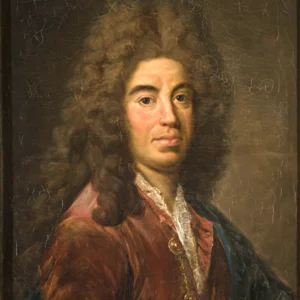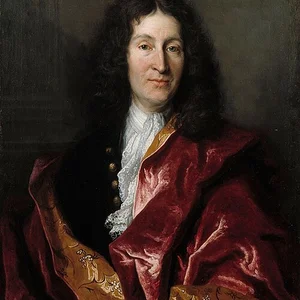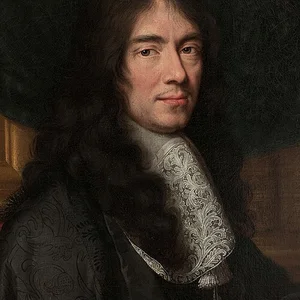

A French writer of the 17th century, Charles Perrault is famous for having collected and transcribed folk tales. He gave literary form to traditional stories such as Little Red Riding Hood and Cinderella, thus laying the foundations of modern children's literature.
Charles Perrault(1628 — 1703)
Charles Perrault
royaume de France
7 min read
Frequently asked questions
Famous Quotes
« O time, suspend your flight»
Key Facts
- 1628: Born in Paris on January 12
- 1697: Publication of 'Histoires ou contes du temps passé', containing Cinderella, Little Red Riding Hood, and other tales
- Collected and transcribed French folk tales, adapting them for a courtly and children's audience
- 1703: Died in Paris on May 16
- Created the first literary form of the modern French fairy tale
Works & Achievements
A collection of eight prose tales including Little Red Riding Hood, Cinderella, and Sleeping Beauty. A foundational work of children's literature and the literary fairy tale in Europe.
A poem read before the Académie française that sparked the Quarrel of the Ancients and the Moderns by asserting the superiority of the age of Louis XIV over Antiquity.
A four-volume work in dialogue form, systematically defending the thesis that modern arts and sciences surpass those of Antiquity.
A collection of three verse tales, a precursor to the Tales of Past Times, which inaugurates Perrault's return to the genre of the fairy tale.
A collection of one hundred and four biographical portraits of French personalities of the 17th century, accompanied by engravings, celebrating the greatness of the age of Louis XIV.
An autobiography that remained in manuscript form, a valuable source on the intellectual and administrative life of France under Louis XIV.
Anecdotes
Charles Perrault led a famous literary debate known as the 'Quarrel of the Ancients and the Moderns'. In 1687, he read before the Académie française his poem The Century of Louis the Great, in which he argued that the authors of his time surpassed those of Antiquity. Boileau, furious, nearly rose from his seat to protest in the middle of the session.
Perrault held for twenty years the position of Controller General of the Superintendence of the King's Buildings under Colbert. In this role, he supervised the construction of numerous royal buildings and contributed to the development of the Tuileries Garden, which he had opened to the public against Colbert's wishes.
Tales of My Mother Goose was published in 1697 under the name of his son, Pierre Darmancour, who was then nineteen years old. Some historians believe Perrault wanted to protect his reputation as a serious academician, while others think he wished to help further his son's career at court.
Perrault was a father of a large family and had been a widower since 1678. He then devoted himself to the education of his children, which undoubtedly brought him closer to the world of childhood and inspired his tales. He had a habit of telling stories to his sons before putting them to bed.
Elected to the Académie française in 1671, Perrault played a major role in drafting the first Dictionnaire de l'Académie française. He defended the use of modern French against those who sought to impose archaic forms, consistent with his position as a 'Modern'.
Primary Sources
Once upon a time there was a little village girl, the prettiest that had ever been seen; her mother was excessively fond of her, and her grandmother doted on her still more. This good woman made her a little red hood, which suited her so well that everywhere she went by the name of Little Red Riding Hood.
Beautiful Antiquity was always venerable, But I never believed it was adorable. I see the Ancients without bending my knees, They are great, it is true, but men like us.
One must not imagine that because a man lived two thousand years ago, he had more wit than those who live today. The centuries change nothing in the reach of the human mind.
I was born on January 12, 1628. My father was Pierre Perrault, a barrister at the Parliament of Paris. My mother, Paquette Le Clerc, came from a family equally distinguished in the legal profession.
Key Places
Perrault's birth neighborhood, in the heart of 17th-century Paris, near the Louvre and the centers of power.
Perrault contributed as controller of buildings to the embellishment of the royal estate under the direction of Colbert.
Perrault participated in the project for the Louvre colonnade, of which his brother Claude Perrault was the principal architect.
Perrault contributed to the redesign of this royal garden and persuaded Colbert to open it to the Parisian public.
Institution where Perrault sat as a member from 1671 and where he delivered his famous poem that sparked the Quarrel of the Ancients and the Moderns.
Typical Objects

Perrault's everyday writing instrument, with which he drafted both his tales and his administrative memoranda for Colbert.

The Histoires ou contes du temps passé were published as small bound volumes, adorned with engravings illustrating each story.

An indispensable accessory for any gentleman of quality at court. Perrault, as an academician and courtier, wore an imposing curly wig.

Symbol of his election to the Académie française in 1671, this armchair represents the official literary recognition bestowed upon Perrault.

As Superintendent of the King's Buildings, Perrault regularly handled plans for royal projects, most notably the colonnade of the Louvre.

An essential lighting object for the long evenings of work and reading in 17th-century Parisian interiors.
School Curriculum
Vocabulary & Tags
Key Vocabulary
Tags
Mouvement
Daily Life
Morning
Perrault rose early in his Parisian home, beginning his day with a prayer and a frugal breakfast of bread, broth, and sometimes fruit. He then devoted his morning to reading and correspondence, writing letters to fellow academicians or to those under his patronage.
Afternoon
The afternoon was often occupied by visits to the Académie française or by meetings related to his administrative duties. He frequented the Parisian literary salons where the latest publications and intellectual quarrels of the day were discussed. He might also visit the Louvre or the Tuileries to inspect ongoing works.
Evening
Evenings were spent with family or in social circles. Perrault enjoyed telling stories to his children, drawing from the repertoire of folk tales passed down by nursemaids. He also worked on his writings by candlelight, composing his tales or his polemical works.
Food
The diet of a prosperous Parisian bourgeois in the 17th century included white bread, soups, roasted or stewed meats, fish on lean days, and seasonal fruit. Wine was the common beverage, sometimes diluted with water. Spices and sugar, still costly, were markers of social distinction.
Clothing
Perrault wore the dress of a gentleman of the robe: a dark fine-cloth justaucorps, a shirt with a lace jabot, fitted breeches, and silk stockings. He wore an impressive curled wig in the fashion of Louis XIV's court, and donned a broad-brimmed hat when going out.
Housing
Perrault lived in a comfortable Parisian bourgeois house with several rooms featuring fireplaces, carved wooden furniture, and tapestries. His study was lined with books and manuscripts. The small-paned windows let in a soft light, supplemented in the evening by candlesticks.
Historical Timeline
Period Vocabulary
Visual Style
Un style baroque français mêlant l'opulence dorée de la cour de Louis XIV aux atmosphères mystérieuses des contes de fées, dans des tons bleu royal, or et ambre.
Sound Ambience
L'atmosphère sonore d'un salon parisien du Grand Siècle, entre le crépitement du feu, le grattement de la plume et les bruits de la ville au-dehors, où l'on raconte des histoires aux enfants.
Liens externes & ressources
Références
Œuvres
Histoires ou contes du temps passé, avec des moralités
1697
Le Siècle de Louis le Grand
1687
Parallèle des Anciens et des Modernes
1688-1697
Griselidis, nouvelle, avec le conte de Peau d'Âne et celui des Souhaits ridicules
1694
Les Hommes illustres qui ont paru en France pendant ce siècle
1696-1700
Mémoires de ma vie
rédigés vers 1702