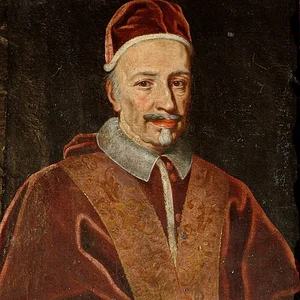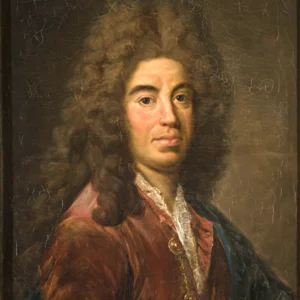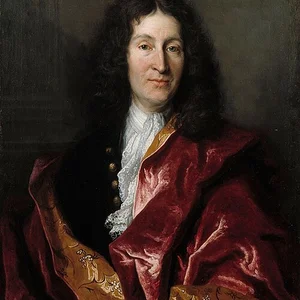
Portrait de Jean de La Fontaine

Jean de La Fontaine

Jean de La Fontaine

1621 — 1695

France

LiteraturePoète(sse)Écrivain(e)Early Modern17th century (1621–1695), the Classical period in France under Louis XIV

A French poet and fabulist of the 17th century, Jean de La Fontaine is celebrated for his Fables, collections of short verse tales featuring animals to illustrate moral lessons. His works, imbued with humor and wisdom, remain major classics of French literature.

Émotions disponibles (6)

N

Neutre

par défaut

I

Inspiré

P

Pensif

S

Surpris

T

Triste

F

Fier

Famous Quotes

« Patience and time do more than strength or passion. »
« Help yourself, and Heaven will help you. »
« The reason of the strongest is always the best. »

Key Facts

  • Publication of the first collection of Fables in 1668, containing 124 fables in six books
  • Publication of the New Collections between 1671 and 1694, expanding his body of work with 91 additional fables
  • Appointed member of the Académie française in 1684
  • Created a poetic style blending regular verse with metrical freedoms to suit each individual fable
  • Adapted fables from ancient sources (Aesop) and Eastern sources (Bidpai) to 17th-century French society

Works & Achievements

Fables (Books I-VI) (1668)

First collection of verse fables, dedicated to the young Dauphin. These one hundred and twenty-four fables established La Fontaine's reputation and profoundly renewed the genre inherited from Aesop.

Fables (Books VII-XI) (1678-1679)

Second collection, broader and more philosophical, dedicated to Madame de Montespan. In it he deepens the psychology of the characters and the moral reflection on human nature.

Fables (Book XII) (1694)

Last book of the Fables, dedicated to the Duke of Burgundy, grandson of Louis XIV. It bears witness to a more melancholic wisdom and an accomplished formal mastery.

Tales and Short Stories in Verse (1664-1685)

A collection of often bawdy and licentious tales inspired by Boccaccio, Ariosto, and Rabelais. These texts, condemned by the Church, were renounced by the author on his deathbed.

Adonis (1658)

A long mythological poem dedicated to Nicolas Fouquet, which reveals La Fontaine's talent for lyric poetry and his admiration for ancient authors such as Ovid.

Le Songe de Vaux (1661)

Unfinished poem celebrating the château de Vaux-le-Vicomte, composed for Fouquet before his arrest. A precious testament to literary patronage in the 17th century.

Anecdotes

La Fontaine was famous for his legendary absent-mindedness. It is said that he once attended the funeral of a friend without recognizing the deceased, then returned home declaring that he had spent a pleasant afternoon. His mind was constantly elsewhere, lost in his poetic thoughts.

A protégé of Nicolas Fouquet, Louis XIV's superintendent of finances, La Fontaine remained loyal to him after his arrest in 1661. He composed an Elegy in his honor, which greatly displeased the king. This loyalty cost him royal favor for a long time and delayed his admission to the Académie française.

La Fontaine was elected to the Académie française in 1683, but Louis XIV initially refused to validate his election, preferring another candidate. He had to wait for another seat to become available before being officially received in 1684 — a testament to the king's lasting resentment toward him.

On his deathbed, La Fontaine underwent a sincere religious conversion. He renounced his Contes et nouvelles en vers, deemed too licentious, and received the last rites. According to contemporary accounts, he died in a state of deep piety, which surprised many of his contemporaries who were accustomed to his libertine spirit.

La Fontaine maintained an unwavering friendship with Molière, Racine, and Boileau, forming a literary quartet that met regularly. Boileau recounted that La Fontaine was the only one among them who never revised his verse, composing it in a single flow with a disconcerting ease.

Primary Sources

Fables, Book I, dedication To Monseigneur the Dauphin (1668)
I use animals to instruct men. […] The appearance is puerile, I confess; but these puerilities serve as a wrapper for important truths.
Elegy to the Nymphs of Vaux (1661)
Nymphs who owe him your most charming charms, / If along your banks Louis should walk, / Try to soften him, bend his courage.
Letter to his wife (account of the journey from Paris to Limousin) (1663)
I am writing to you from Château-Thierry, where I have arrived with great fatigue. The countryside is beautiful, but I prefer my room to all the roads in the world.
Fables, Book VI, preface (1668)
The apologue is composed of two parts, one of which may be called the body, the other the soul. The body is the fable; the soul, the moral.
Address to Madame de La Sablière (1674)
Iris, I would praise you, it is all too easy; / But you have a hundred times refused our incense.

Key Places

Château-Thierry, Champagne

La Fontaine's birthplace, where he was born in 1621 and spent his childhood. The family home, now a museum, bears witness to his bourgeois origins.

Château de Vaux-le-Vicomte

The lavish residence of his patron Nicolas Fouquet, where La Fontaine stayed and flourished as a writer before Fouquet's arrest in 1661.

Hôtel de Madame de La Sablière, Paris

La Fontaine lived for twenty years under the roof of Marguerite de La Sablière, a woman of wit and letters, on the rue Neuve-des-Petits-Champs. This salon was his most lasting home.

Académie française, Paris

The institution of which La Fontaine became a member in 1684, following a controversial election. He represented the Ancients' camp in the Quarrel of the Ancients and the Moderns.

Versailles

The court of the Sun King, which La Fontaine seldom visited, owing to Louis XIV's coldness toward him. This palace symbolizes the world he brushed against without ever truly belonging to it.

Typical Objects

Goose quill

The writing instrument of every literate person in the 17th century, the trimmed goose quill allowed La Fontaine to set his verses down on paper with the lightness and spontaneity that characterized him.

Collection of Aesop and Phaedrus

La Fontaine drew directly from Greek and Latin fabulists, notably Aesop and Phaedrus, whose collections he kept within reach to draw his subjects from before rewriting them in his own style.

Candle holder

An indispensable light source for literary evenings and nights spent reading or writing in the Parisian salons frequented by La Fontaine.

Book of ancient moral philosophy

An avid reader of the Ancients, La Fontaine owned works of Stoic and Epicurean philosophy that nourished his moral thinking and shone through in his fables.

Embroidered court attire

To appear in aristocratic salons, notably at the home of his patron Madame de La Sablière, La Fontaine would don the elaborate dress of the gentleman of letters, often reluctantly according to contemporary accounts.

Carafe of water and glass of wine

La Fontaine was renowned for his simple lifestyle and frugal meals, yet appreciated the fine Champagne wine from his native region, a symbol of conviviality at dinners among friends.

School Curriculum

Cycle 3 (CM1-6e)FrançaisÉvolution de la langue française au XVIIe siècle
Cycle 4 (5e-3e)FrançaisÉvolution de la langue française au XVIIe siècle
LycéeFrançaisÉvolution de la langue française au XVIIe siècle
LycéeFrançaisAnalyse des fables et morales implicites
LycéeFrançaisÉtude de la versification et des procédés poétiques
LycéeFrançaisCritique sociale et satire dans la littérature classique
LycéeFrançaisGenres littéraires : la fable
LycéeFrançaisPersonnages allégoriques et symbolisme animalier

Vocabulary & Tags

Key Vocabulary

fablemoralallegoryversificationsatirequintainapologuefree verse

Tags

Mouvement

Jean de La FontaineAbsolutismefablemoraleallégorieversificationsatirequintaineapologueversification libreXVIIe siècle (1621-1695), période classique en France sous Louis XIV

Daily Life

Morning

La Fontaine rose without great haste, little concerned with rigid schedules. He would read the Ancients — Aesop, Phaedrus, Horace — in his room before coming down for a frugal meal. His mornings were often devoted to composing verses, which he would declaim in a low voice while pacing about.

Afternoon

In the afternoon, he would venture into the gardens or the streets of Paris, strolling and observing passersby with that distracted yet keen gaze that fed his fables. He might visit his friends Molière, Racine, or Boileau, or head to Madame de La Sablière's salon for conversation.

Evening

Evenings were spent in literary salons where verses were read aloud, and philosophy and theatre discussed. La Fontaine was appreciated there for his wit and good-natured charm, even if he could sink into long, silent reveries in the middle of the gathering.

Food

His diet was simple and unpretentious for a man of letters of his standing. He enjoyed bread, cheese, and fruit, washed down with a good Champagne wine that recalled his origins. He is described as having little appetite, sometimes forgetting to eat, so absorbed was he in his thoughts.

Clothing

La Fontaine wore the bourgeois and aristocratic dress of his time: breeches, doublet, silk stockings, and a powdered wig for social occasions. In daily life, he was known for his disheveled appearance and his little interest in sartorial elegance.

Housing

He lived successively under the protection of several patrons. His most stable residence was the townhouse of Madame de La Sablière, on the rue Neuve-des-Petits-Champs in Paris, where he had a room for twenty years. He presided there in a benevolent disorder of books and manuscripts.

Historical Timeline

1621Naissance de Jean de La Fontaine à Château-Thierry, en Champagne.
1641La Fontaine entre à l'Oratoire de Paris pour y étudier la théologie, qu'il abandonne rapidement.
1647Mariage avec Marie Héricart, union peu heureuse dont naîtra un fils, Charles.
1654Publication de sa première œuvre, une adaptation de L'Eunuque de Térence.
1658La Fontaine entre dans la clientèle de Nicolas Fouquet, surintendant des finances, qui devient son mécène.
1661Arrestation de Fouquet par Louis XIV ; La Fontaine lui reste fidèle et compose une Élégie en sa faveur.
1665Publication des premières Contes et nouvelles en vers, récits souvent grivois inspirés de Boccace et de l'Arioste.
1668Publication des six premiers livres des Fables, dédiés au jeune Dauphin, fils de Louis XIV.
1678Publication des livres VII à XI des Fables, dédiés à Madame de Montespan, favorite du roi.
1683Élection à l'Académie française, d'abord refusée par Louis XIV avant d'être confirmée en 1684.
1684La Fontaine est officiellement reçu à l'Académie française après validation royale.
1693Grave maladie ; La Fontaine se convertit, renie ses Contes et se met à rédiger des cantiques spirituels.
1694Publication du douzième et dernier livre des Fables, dédié au duc de Bourgogne.
1695Mort de Jean de La Fontaine à Paris, le 13 avril, à l'âge de 73 ans.

Period Vocabulary

ApologueA short allegorical tale, often featuring animals, from which a moral is drawn. This is the term La Fontaine used to refer to his fables.
MécèneA wealthy and influential figure who finances and protects an artist or writer. Fouquet and then Madame de La Sablière were La Fontaine's principal patrons.
Honnête hommeThe social ideal of the 17th century designating a cultivated, polished, measured, and socially agreeable man. La Fontaine embodied this ideal despite his proverbial absent-mindedness.
GalanterieThe art of pleasing with refinement and elegance, particularly in relations between men and women. La Fontaine's Tales bear witness to this culture of précieux and libertine gallantry.
Querelle des Anciens et des ModernesThe great literary debate of the late 17th century pitting those who admired Greek and Latin authors against those who championed the superiority of contemporary writers. La Fontaine sided with the Ancients.
FabulisteAn author of fables, that is, short tales with a moral purpose. La Fontaine is considered the great fabulist of classical French literature.
ÉpicurismeGreek philosophy advocating the pursuit of happiness through simple pleasures and tranquility of the soul. La Fontaine frequently invoked it in his works and in his way of life.
Libertinage éruditAn intellectual current of the 17th century combining free thought, philosophical curiosity, and a taste for pleasures. La Fontaine was a discreet representative of it, particularly through his Tales.
PatronageThe system by which a great lord granted his protection to an artist in exchange for dedications and works in his honour. La Fontaine's entire life was shaped by this system.
Vers libresA poetic form freely mixing lines of different lengths, with no fixed scheme. La Fontaine made masterly use of it in his Fables, lending the narrative a remarkable fluidity and naturalness.

Gallery


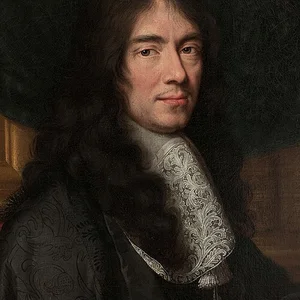
Portrait of Jean de la Fontaine

Portrait of Jean de la Fontaine

Jean de la Fontaine, attributed to François de Troy

Jean de la Fontaine, attributed to François de Troy


Portrait of Jean de la Fontaine

Portrait of Jean de la Fontaine


French:  Portrait de Jean de La Fontaine (1621-1695), poète Portrait of Jean de la Fontainetitle QS:P1476,fr:"Portrait de Jean de La Fontaine (1621-1695), poète "label QS:Lfr,"Portrait de Jean de La

French: Portrait de Jean de La Fontaine (1621-1695), poète Portrait of Jean de la Fontainetitle QS:P1476,fr:"Portrait de Jean de La Fontaine (1621-1695), poète "label QS:Lfr,"Portrait de Jean de La

(Gaillac) Les Lunettes (conte de Jean de la Fontaine) 1892 - Jean-Baptiste Cariven - Musée des Beaux-Arts de Gaillac

(Gaillac) Les Lunettes (conte de Jean de la Fontaine) 1892 - Jean-Baptiste Cariven - Musée des Beaux-Arts de Gaillac


Jean de La Fontaine

Jean de La Fontaine

Gipsmodellen voor beeldhouwwerken op het Palais du Louvre links La Fontaine door Jean Louis Nicolas Jaleyen en rechts Pascal door François Lanno, RP-F-1999-142-25

Gipsmodellen voor beeldhouwwerken op het Palais du Louvre links La Fontaine door Jean Louis Nicolas Jaleyen en rechts Pascal door François Lanno, RP-F-1999-142-25


Quinze journées au Salon de peinture et de sculpture : (année 1883)

Quinze journées au Salon de peinture et de sculpture : (année 1883)

28 rue Thiers in Bellac

28 rue Thiers in Bellac

Panneau rue du Croissant

Panneau rue du Croissant

Visual Style

Le style visuel évoque la splendeur classique du règne de Louis XIV : intérieurs dorés aux boiseries sculptées, jardins à la française et portraits en clair-obscur caractéristiques de la peinture baroque française.

#8B6914
#2C3E6B
#8B1A1A
#F5E6C8
#3D5A3E
AI Prompt
17th century French Baroque and classical painting style, warm candlelight and golden tones, luxurious Versailles-era interiors with ornate woodwork and tapestries, lush formal gardens in the style of Le Nôtre, elegant court costumes in deep blues and burgundy with white lace collars, quill and parchment manuscripts, illustrated fable manuscripts with anthropomorphic animals in period dress, chiaroscuro lighting reminiscent of Philippe de Champaigne, rich velvet textures, formal portraiture aesthetic.

Sound Ambience

L'ambiance sonore du quotidien de La Fontaine mêle le crépitement du feu de cheminée dans les salons littéraires parisiens, le bruit des carrosses sur les pavés et la rumeur feutrée des conversations entre gens de lettres.

AI Prompt
Quiet Parisian salon of the 17th century, soft crackling of a fireplace, candlelight ambience, distant sound of horse-drawn carriages on cobblestone streets, quill scratching on parchment, murmur of polished conversation, occasional laughter of aristocratic guests, church bells ringing from a nearby parish, birdsong from a courtyard garden, rustle of silk garments, gentle clink of crystal glasses, subtle sound of pages turning in a leather-bound book.

Portrait Source

Wikimedia Commons — domaine public — Henri Millot — 1699