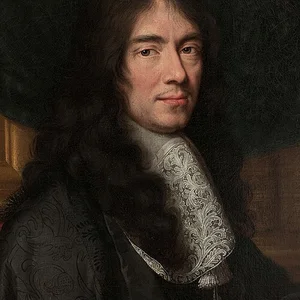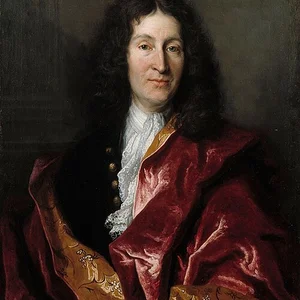

A French writer and moralist of the 17th century (1645–1696), Jean de La Bruyère is the author of The Characters, a major work of classical literature. His collection of satirical portraits and moral reflections offers a sharp critique of the society of his time.
Jean de La Bruyère(1645 — 1696)
Jean de La Bruyère
France
9 min read
Frequently asked questions
Famous Quotes
« Everything has been said, and we come too late, now that men have been thinking for more than seven thousand years.»
« Life is short and tedious, and is wholly spent in wishing; we lose health in seeking it, money in seeking health, and life in seeking money.»
« There are three events in a man's life: birth, life, and death. He is not conscious of being born, he dies in pain, and he forgets to live.»
Key Facts
- 1645: born in Paris on August 16
- 1684: publication of the first edition of The Characters, initially as an annotated translation of Theophrastus
- 1688–1696: successive new editions with progressive additions of new portraits and reflections
- 1696: died in Paris on May 10
- Growing influence of the collection, which became a classic of French moral literature
Works & Achievements
La Bruyère's masterpiece and a monument of classical French literature, this collection of satirical portraits, moral reflections, and observations on society is a sharp critique of 17th-century humanity. The work went through ten editions during the author's lifetime, each enriched with new texts.
La Bruyère himself translated the Characters of the Greek philosopher Theophrastus (4th century BC) and placed them at the beginning of his own collection. This translation reflects his attachment to Antiquity and his position in the Quarrel of the Ancients and the Moderns.
Delivered upon his election to the Académie française, this speech expresses La Bruyère's position in favor of the Ancients in the great literary quarrel between partisans of Antiquity and champions of modernity. Its polemical tone caused a genuine scandal.
Published after his death, these dialogues reflect La Bruyère's interest in the religious debates of his time, notably the Quietism controversy that set Bossuet against Fénelon.
Anecdotes
When La Bruyère published his Caractères in 1688, he prefaced them with a translation of Theophrastus's Characters, as if to hide behind Antiquity. The success was immediate and thunderous: the book went through ten editions during the author's lifetime, each enriched with new portraits. Contemporaries amused themselves by identifying the real individuals behind the fictional names, turning the reading into a fashionable game.
La Bruyère entered the service of the Condé family in 1684 as tutor to the Duke of Bourbon, grandson of the Grand Condé. He thus lived at Versailles and Chantilly, closely observing the courtiers, their meanness and their vanities. It was this direct experience of court life that fed the cruel precision of his portraits.
His election to the Académie française in 1693 was turbulent: he had to face the hostility of the partisans of the Ancients and especially of those he had slighted in his Caractères. His reception speech, in which he took the side of the Ancients against the Moderns, caused a genuine scandal and was hissed by part of the assembly.
La Bruyère died suddenly in May 1696, at the age of fifty, from a devastating stroke. It is said that he was still working on a new edition of his Caractères and on other literary projects. His premature death deprived French literature of a sharp pen that had not yet had its final say.
In his Caractères, La Bruyère describes with chilling irony the character of Giton, the rich and arrogant man, and of Phédon, the poor and self-effacing man. These two contrasting portraits constituted a social critique of striking modernity, denouncing inequality and the power of money in a society officially founded on nobility and virtue.
Primary Sources
Everything has been said, and we come too late, since more than seven thousand years have passed in which men have existed and have thought.
There is no more laborious trade in the world than that of making a great name for oneself: life comes to an end when one has barely begun one's work.
The court does not make one content; it prevents one from being so anywhere else.
The ancients have left us most of the finest ideas and the best rules of eloquence and poetry, and have enabled us to imitate them.
Giton has a fresh complexion, a full face and pendulous cheeks, a steady and assured eye, broad shoulders, a high chest, a firm and deliberate gait. He speaks with confidence; he makes those who speak to him repeat themselves, and he finds only moderate pleasure in what they say to him.
Key Places
La Bruyère was born and raised in Paris. He frequented Parisian intellectual and literary circles, sharpening his critical eye on the urban and bourgeois society of the 17th century.
The main residence of Louis XIV from 1682, Versailles was the stage for La Bruyère's sharpest observations. It was there that he rubbed shoulders with courtiers and great lords, from whom he drew the merciless portraits found in Les Caractères.
The main residence of the princes of Condé, Chantilly was La Bruyère's workplace as tutor to the Duke of Bourbon. This aristocratic setting provided him with a privileged vantage point for observing the customs of the high nobility.
La Bruyère was elected to the Académie française in 1693, after a difficult campaign. The institution, founded by Richelieu in 1635, was the official temple of French letters and the arena for the literary quarrels of the era.
Typical Objects

La Bruyère wrote his observations and portraits with a quill pen, constantly correcting and enriching his Characters from one edition to the next. The inkwell and trimmed quill were the daily instruments of his work as a writer and moralist.

La Bruyère drew directly on the Characters of the Greek philosopher Theophrastus to structure his own work. He translated this ancient text himself and placed it at the head of his collection, thereby acknowledging his debt to Antiquity.

To appear at Versailles and Chantilly in the service of the Condés, La Bruyère was required to wear the court dress dictated by Louis XIV's codes of dress. This attire was at once a constraint and a disguise, allowing him to observe the social comedy while participating in it.

Travel between Paris, Versailles, and Chantilly was made by carriage or sedan chair. These journeys allowed La Bruyère to observe society in motion, from great lords to common people encountered along the roads.

La Bruyère was a sincere Catholic, close to Jansenist circles. Devotional books were a constant presence in his daily life and influenced his reflections on the vanity of worldly greatness, a central theme of the Characters.

Working by candlelight at night was common practice for writers of the 17th century. La Bruyère composed and reworked his texts by the glow of candles, in a silence conducive to inner observation and moral reflection.
School Curriculum
Vocabulary & Tags
Key Vocabulary
Tags
Mouvement
Daily Life
Morning
La Bruyère rose early, in keeping with the customs of the court where days began with the King's rising. He attended the morning religious services, then devoted the first hours to reading and drafting his observations, filling pages with his small, tight handwriting.
Afternoon
The afternoon was occupied by his duties with the Duke of Bourbon — lessons in history, literature, and philosophy — followed by strolling through the galleries and gardens of Versailles or Chantilly. It was during these walks that he observed the courtiers, mentally noting their mannerisms, their habits, and their absurdities.
Evening
Evenings were often spent in the salons, where people conversed, played cards, and commented on the news of the day. La Bruyère, a discreet man and by temperament ill-suited to society life, preferred to listen rather than speak, accumulating material for his portraits. After supper, he would retire to put his day's observations into shape.
Food
The Condé table was sumptuous, featuring roasted meats, game, fish, and sweet side dishes in the French fashion of the 17th century. La Bruyère, a sober man little inclined to excess, ate more simply than the great lords he kept company with, drinking wine diluted with water and eating at regular hours.
Clothing
At Versailles, La Bruyère wore the obligatory court dress: an embroidered justaucorps, knee breeches, silk stockings, a powdered wig, and a sword at his side. In his private study, he allowed himself simpler attire — a dressing gown or bourgeois coat — far from the constraints of courtly appearances he described with such irony.
Housing
Lodged at the Château de Chantilly and later in a bourgeois house in Versailles, La Bruyère had a personal study furnished with books, manuscripts, and portraits of a few great men. His quarters, comfortable but without ostentatious luxury, reflected the middling position of a man of letters in the service of the high nobility.
Historical Timeline
Period Vocabulary
Visual Style
Le style visuel évoque la peinture de cour française du règne de Louis XIV : intérieurs dorés et sombres, lumière de bougie, habit de velours, mêlant le faste baroque à l'austérité du moraliste.
Sound Ambience
L'univers sonore de La Bruyère mêle le faste bruissant de la cour de Versailles — carrosses, soieries, harpsichorde — au silence studieux du cabinet de travail où la plume gratte le parchemin à la lueur des bougies.
Liens externes & ressources
Références
Œuvres
Les Caractères ou les Mœurs de ce siècle
1688 (10 éditions jusqu'en 1696)
Les Caractères de Théophraste traduits du grec
1688
Discours de réception à l'Académie française
1693
Dialogues posthumes sur le quiétisme
1699 (posthume)