 flip
flipGugelhupf for Kaffee und Kuchen
Gugelhupf for Kaffee und Kuchen
Why this dish? The coffee-cake ritual gathered Leipzig's musical elite. In the Schumanns' salon, Brahms, Mendelssohn, and Joachim visited. A soft Gugelhupf, the quintessential Central European bourgeois cake, accompanied these afternoons of music and conversation.
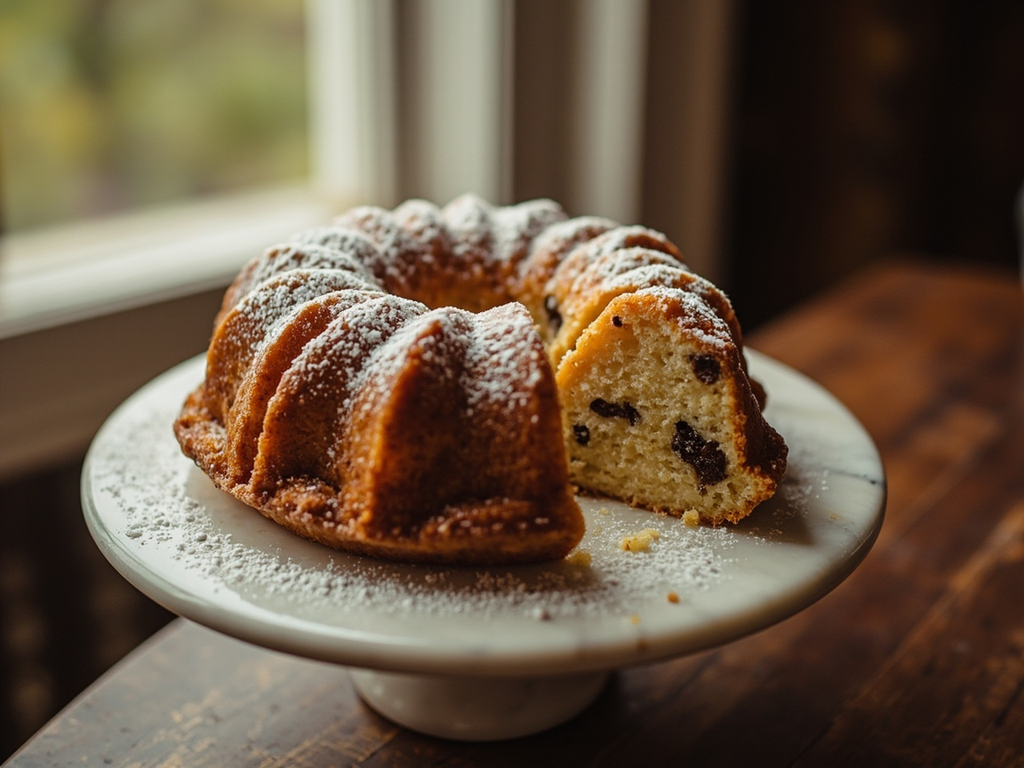
A yeast-risen brioche-cake flavored with lemon zest and studded with raisins and almonds, baked in a fluted ring mold and dusted with powdered sugar.
When Johannes or our musician friends come to the salon, I make sure a Gugelhupf waits on the marble table. The dough must rise slowly near the stove, without haste — a beautiful cake, like a beautiful musical phrase, requires patience. I tuck in macerated raisins and a few almonds at the bottom of the mold, then turn it out while still warm. Dusted with fine sugar, it is shared while talking of Robert, fugues, and tours.
- •Wheat flour — a lot (base)
- •Brewer's yeast — a little (leavening)
- •Butter — a good amount (softness)
- •Eggs — several (binder)
- •Raisins and almonds — a handful (filling)
- •Lemon zest — from one lemon (flavor)
Gugelhupf for Kaffee und Kuchen
A yeast-risen brioche-cake flavored with lemon zest and studded with raisins and almonds, baked in a fluted ring mold and dusted with powdered sugar.
Why this dish? The coffee-cake ritual gathered Leipzig's musical elite. In the Schumanns' salon, Brahms, Mendelssohn, and Joachim visited. A soft Gugelhupf, the quintessential Central European bourgeois cake, accompanied these afternoons of music and conversation.
When Johannes or our musician friends come to the salon, I make sure a Gugelhupf waits on the marble table. The dough must rise slowly near the stove, without haste — a beautiful cake, like a beautiful musical phrase, requires patience. I tuck in macerated raisins and a few almonds at the bottom of the mold, then turn it out while still warm. Dusted with fine sugar, it is shared while talking of Robert, fugues, and tours.
Ingredients (period version)
- Wheat flour — a lot (base)
- Brewer's yeast — a little (leavening)
- Butter — a good amount (softness)
- Eggs — several (binder)
- Raisins and almonds — a handful (filling)
- Lemon zest — from one lemon (flavor)
Ingredients
- All-purpose flour (T45) — 300 g (base)
- Fresh baker's yeast — 20 g (leavening)
- Soft butter — 120 g (softness)
- Eggs — 3 (binder)
- Sugar — 100 g (sweetener)
- Warm milk — 100 ml (hydration)
- Raisins — 80 g (filling)
- Sliced almonds — 30 g (bottom of mold)
- Lemon zest — 1 lemon (flavor)
- Powdered sugar — for decoration (finish)
Method
- Dissolve the yeast in warm milk, let it foam for 10 min.
- Mix flour, sugar, eggs, soft butter, zest, and yeast until a smooth dough forms.
- Fold in the raisins, cover, and let rise for 1 hour near a heat source.
- Butter a Gugelhupf mold, scatter sliced almonds on the bottom, pour in the dough.
- Let rise again for 30 min, then bake at 180 °C for about 40 min.
- Unmold while warm and dust with powdered sugar.
How it was made : The Gugelhupf (or Kugelhopf) was the festive cake of the Central European and Germanic bourgeoisie. Baked in its fluted ring mold, it symbolized salon hospitality. The rising was done near the tiled stove, the only stable heat source in the house.
The contemporary twist : A touch of orange blossom water in the dough and served with a specialty filter coffee, a nod to Leipzig's coffee tradition.
Clara Schumann · Charactorium