 flip
flipXocolatl, the Bitter Drink of Lords
Xocolatl, the Bitter Drink of Lords
Why this dish? Cacao beaten into foam was a prestige drink, poured at festivals and offered to the deities. Bitter, spicy, tinted blood-red with achiote, it evoked the sacrificial blood meant to nourish gods like Coatlicue, goddess of life and death.
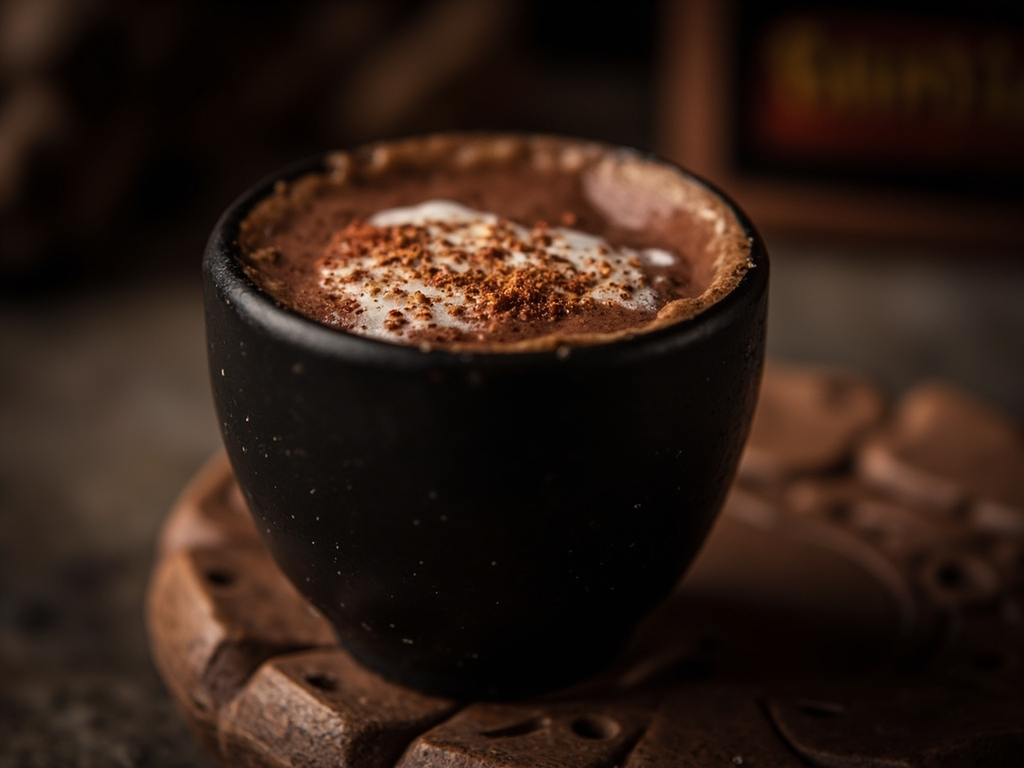
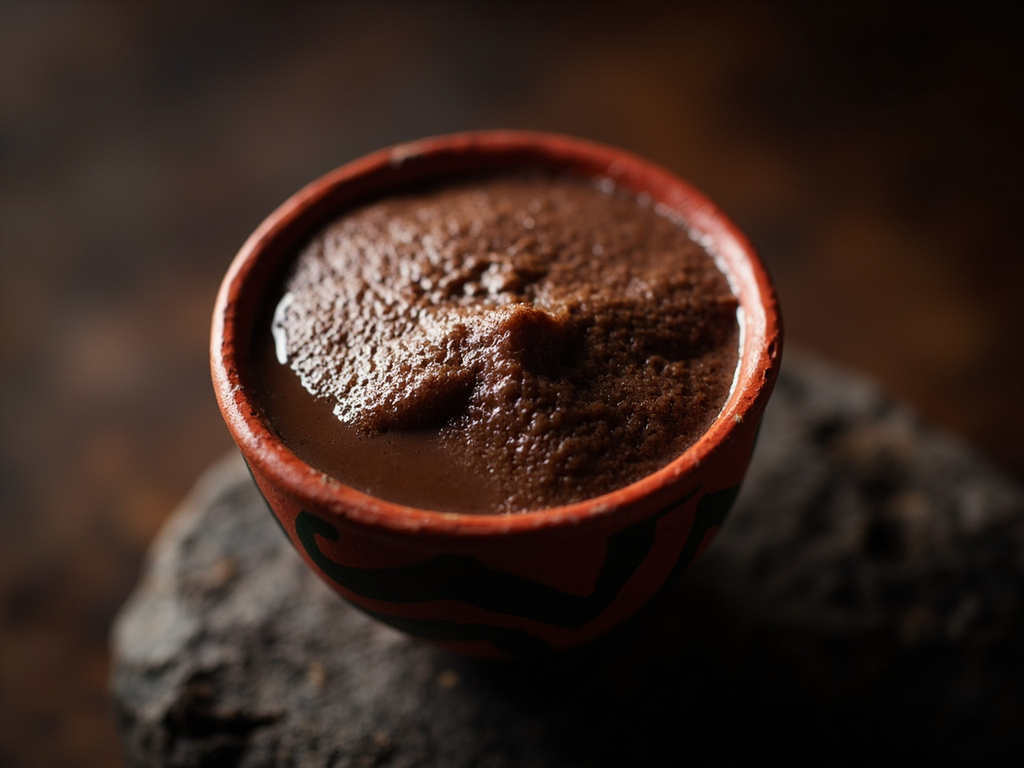
A cold drink of ground cacao beaten until thick foam forms, spiced with chili and colored with achiote. Neither sweet nor milky: powerful, bitter, almost solemn. You drink it in small sips, spooning up the foam.
This is no child's drink, but that of lords and gods. The precious cacao bean was roasted, ground on the stone, beaten in water from one vessel to another until a foam rose high as a cloud. I had them pour in the chili that burns and the red achiote like offered blood. Drink it bitter, without betraying it with sweetness: thus its taste keeps you awake before the altar, and you honor the fire that lives in all things.
- •Roasted and ground cacao beans — one portion per bowl (bitter base)
- •Ground chili — a pinch (heat)
- •Achiote (annatto) — a little (sacred red color)
- •Water — to dilute (liquid)
- •Ear flower (Cymbopetalum, hueinacaztli) — a trace (ceremonial fragrance)
Xocolatl, the Bitter Drink of Lords
A cold drink of ground cacao beaten until thick foam forms, spiced with chili and colored with achiote. Neither sweet nor milky: powerful, bitter, almost solemn. You drink it in small sips, spooning up the foam.
Why this dish? Cacao beaten into foam was a prestige drink, poured at festivals and offered to the deities. Bitter, spicy, tinted blood-red with achiote, it evoked the sacrificial blood meant to nourish gods like Coatlicue, goddess of life and death.
This is no child's drink, but that of lords and gods. The precious cacao bean was roasted, ground on the stone, beaten in water from one vessel to another until a foam rose high as a cloud. I had them pour in the chili that burns and the red achiote like offered blood. Drink it bitter, without betraying it with sweetness: thus its taste keeps you awake before the altar, and you honor the fire that lives in all things.
Ingredients (period version)
- Roasted and ground cacao beans — one portion per bowl (bitter base)
- Ground chili — a pinch (heat)
- Achiote (annatto) — a little (sacred red color)
- Water — to dilute (liquid)
- Ear flower (Cymbopetalum, hueinacaztli) — a trace (ceremonial fragrance)
Ingredients
- Pure unsweetened cacao (100% paste or powder) — 30 g (base)
- Water — 300 ml (liquid)
- Mild chili powder (tiny pinch of heat) — 1 small pinch (heat)
- Achiote (annatto) powder — a knife tip (color)
- Cinnamon or a trace of vanilla (optional, for fragrance) — 1 pinch (aroma)
Method
- Dissolve the pure cacao in a little hot (not boiling) water to form a smooth paste.
- Add the remaining water, chili, achiote, and chosen aroma; mix well.
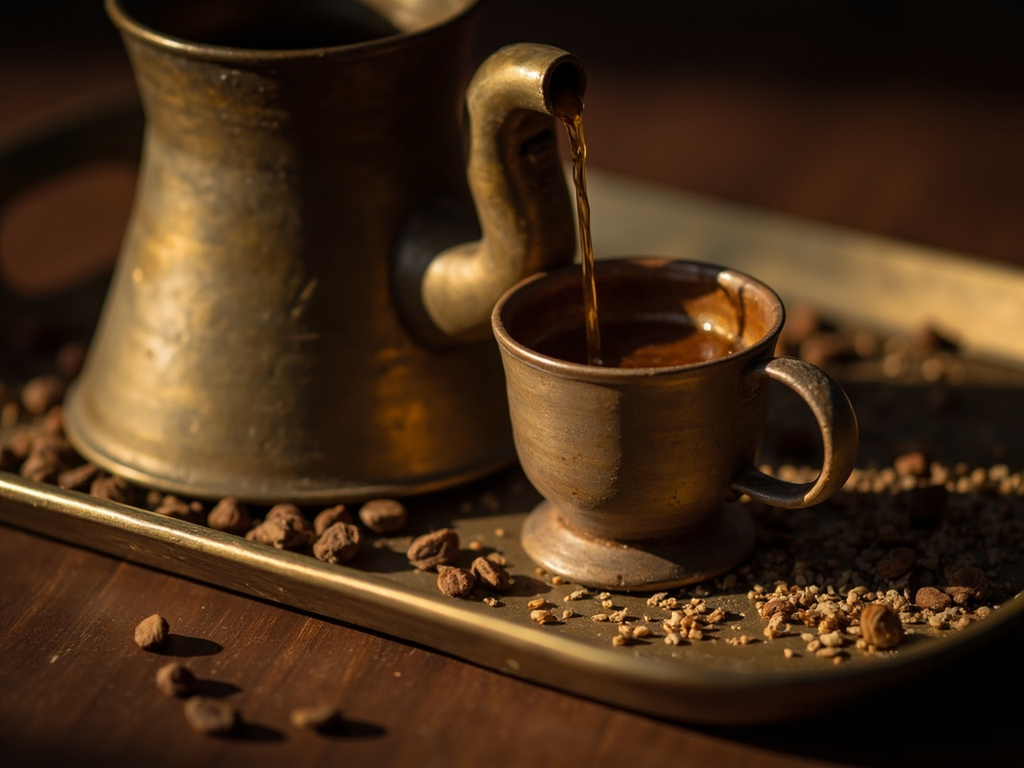
- Froth: pour the liquid from one tall vessel to another repeatedly (or whisk vigorously with a molinillo / whisk) until thick foam forms.
- Serve preferably at room temperature or chilled, scooping up the foam with a spoon. Without sugar, faithful to the original — or barely sweetened with agave for a modern palate.
How it was made : The Mexica drank cacao cold and unsweetened, flavored with chili, achiote, vanilla, and dried flowers like hueinacaztli. The foam, obtained by pouring the liquid from a height, was the most prized part. A drink of the elite and merchants, cacao also served as currency. Sugar, unknown before the arrival of Europeans, never sweetened it.
The contemporary twist : Serve it over ice in a small glass, topped with its foam and a dusting of chili: a 'Maya espresso' to discover bitter before any judgment.
Sources : Bernardino de Sahagún, Historia general de las cosas de Nueva España, XVIe s. · Sophie D. Coe & Michael D. Coe, The True History of Chocolate, Thames & Hudson, 1996
Coatlicue · Charactorium