 flip
flipDulce de Tamarindo
Dulce de Tamarindo
Why this dish? The tangy tropical fruits of her childhood, transformed into sweet candy to cross time and distance. A pocket-sized treat that Consuelo, a great traveler between El Salvador, Argentina, Paris, and New York, could have taken along to keep a taste of home.
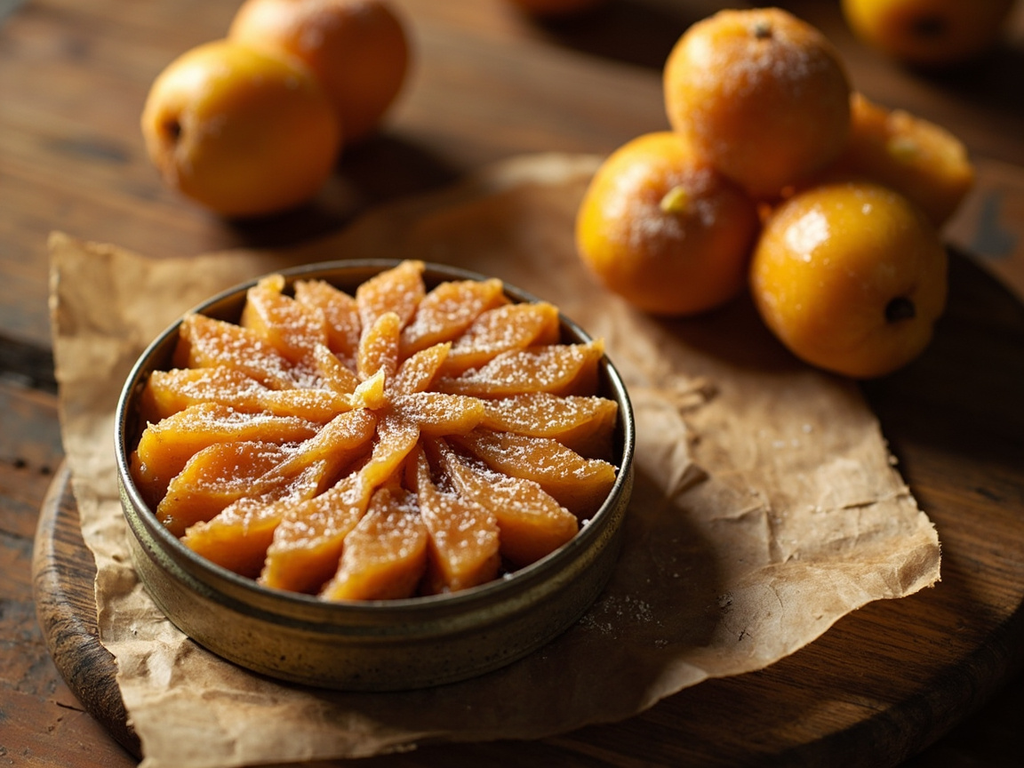
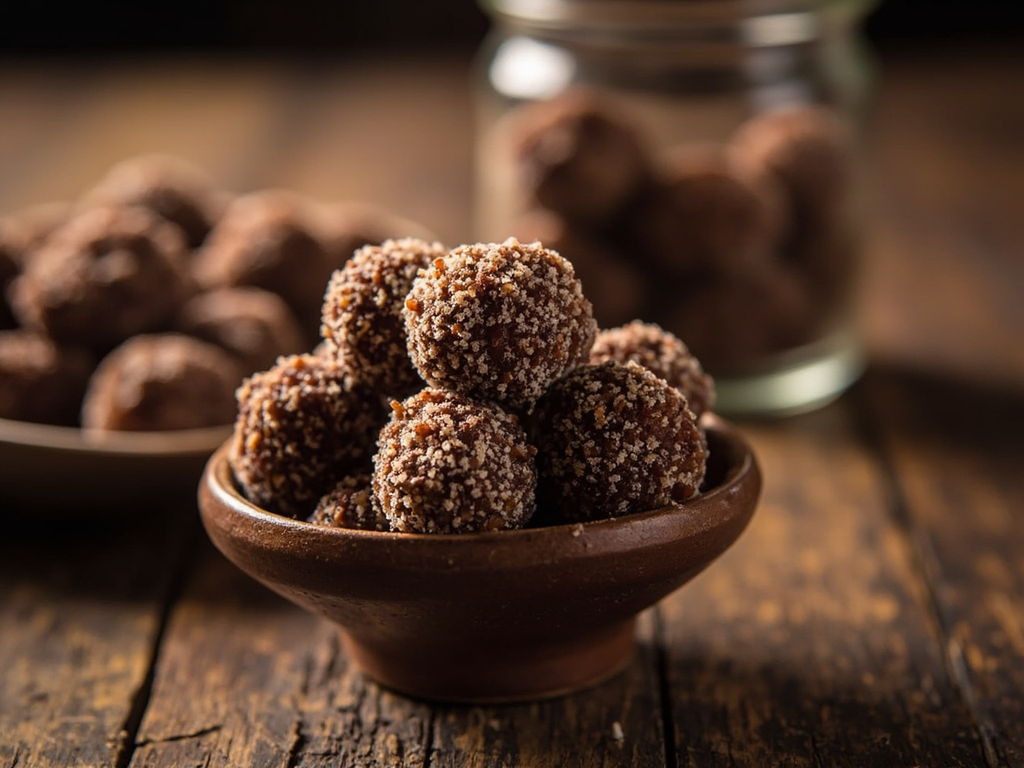
Tamarind pulp cooked with sugar and a pinch of salt, shaped into small balls rolled in sugar. Tangy, sweet, it keeps for a long time and can be nibbled anywhere.
Tamarind, my child, is the tang that wakes up the mouth and memory! We made little sweet balls from it, rolled in sugar, stored in a jar for days without fruit. I, who traveled so much, from Salvador to Buenos Aires, from Paris to New York, would gladly have slipped one into my bag: just one would have given me back, for a second, the warmth and colors of my country. That is the cuisine of travel: a little piece of home you can carry.
- •Tamarind pulp — a good amount (tangy fruit)
- •Sugar (or panela) — as much as pulp (sweetener and preservative)
- •Salt — a pinch (enhancer)
Dulce de Tamarindo
Tamarind pulp cooked with sugar and a pinch of salt, shaped into small balls rolled in sugar. Tangy, sweet, it keeps for a long time and can be nibbled anywhere.
Why this dish? The tangy tropical fruits of her childhood, transformed into sweet candy to cross time and distance. A pocket-sized treat that Consuelo, a great traveler between El Salvador, Argentina, Paris, and New York, could have taken along to keep a taste of home.
Tamarind, my child, is the tang that wakes up the mouth and memory! We made little sweet balls from it, rolled in sugar, stored in a jar for days without fruit. I, who traveled so much, from Salvador to Buenos Aires, from Paris to New York, would gladly have slipped one into my bag: just one would have given me back, for a second, the warmth and colors of my country. That is the cuisine of travel: a little piece of home you can carry.
Ingredients (period version)
- Tamarind pulp — a good amount (tangy fruit)
- Sugar (or panela) — as much as pulp (sweetener and preservative)
- Salt — a pinch (enhancer)
Ingredients
- Tamarind pulp (block or pitted) — 250 g (tangy fruit)
- Sugar — 250 g (+ 50 g for rolling) (sweetener and preservative)
- Salt — 1 generous pinch (enhancer)
- Water — a little if needed (soften pulp)
Method
- If using tamarind block, soften in a little hot water, then remove seeds and fibers, keeping only the pulp.
- In a saucepan, cook the pulp with sugar and salt over low heat, stirring constantly.
- Continue until the mixture thickens and pulls away from the sides (compact, sticky paste).
- Let cool slightly, then, with lightly oiled hands, shape into small balls.
- Roll in sugar and let dry for a few hours at room temperature.
- Store in an airtight jar: they keep for several weeks.
How it was made : Tamarind, brought from Asia and naturalized early in tropical America, yielded candies and popular drinks throughout El Salvador. The pulp, naturally rich in acid, kept well once cooked with plenty of sugar—a universal fruit preservation technique before modern refrigeration.
The contemporary twist : Roll some balls in sugar mixed with a pinch of mild chili for a tangy-spicy version, like market confectionery.
Consuelo Suncín · Charactorium