 flip
flipTzoalli — amaranth disk of the Moon
Tzoalli — amaranth disk of the Moon
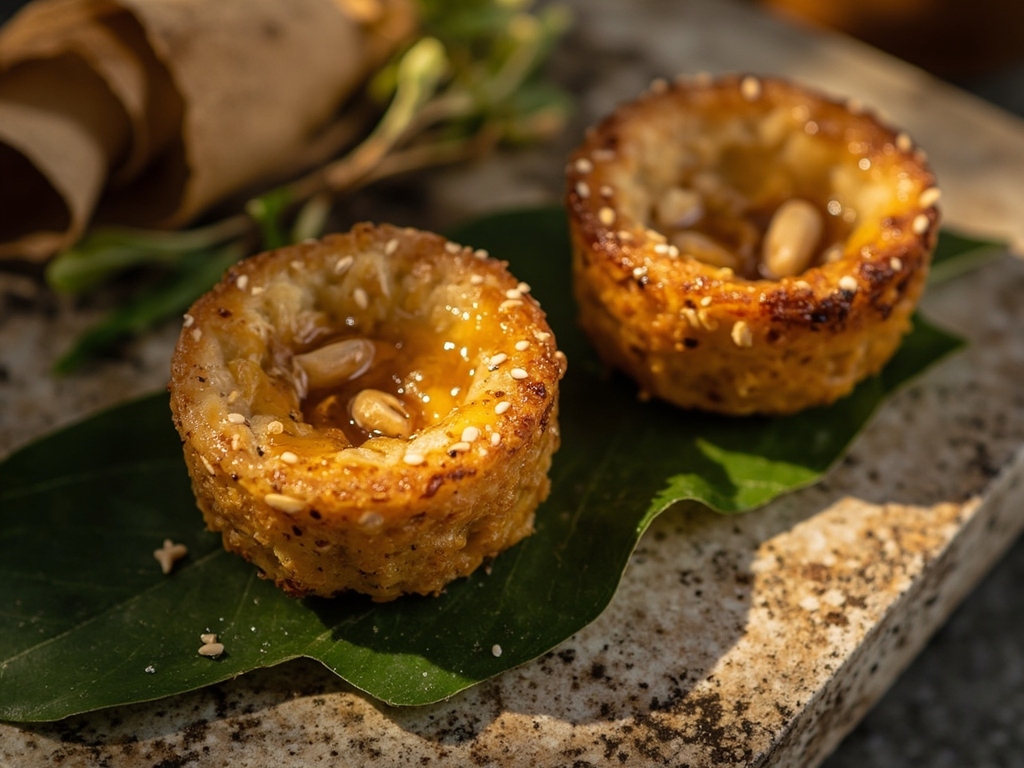
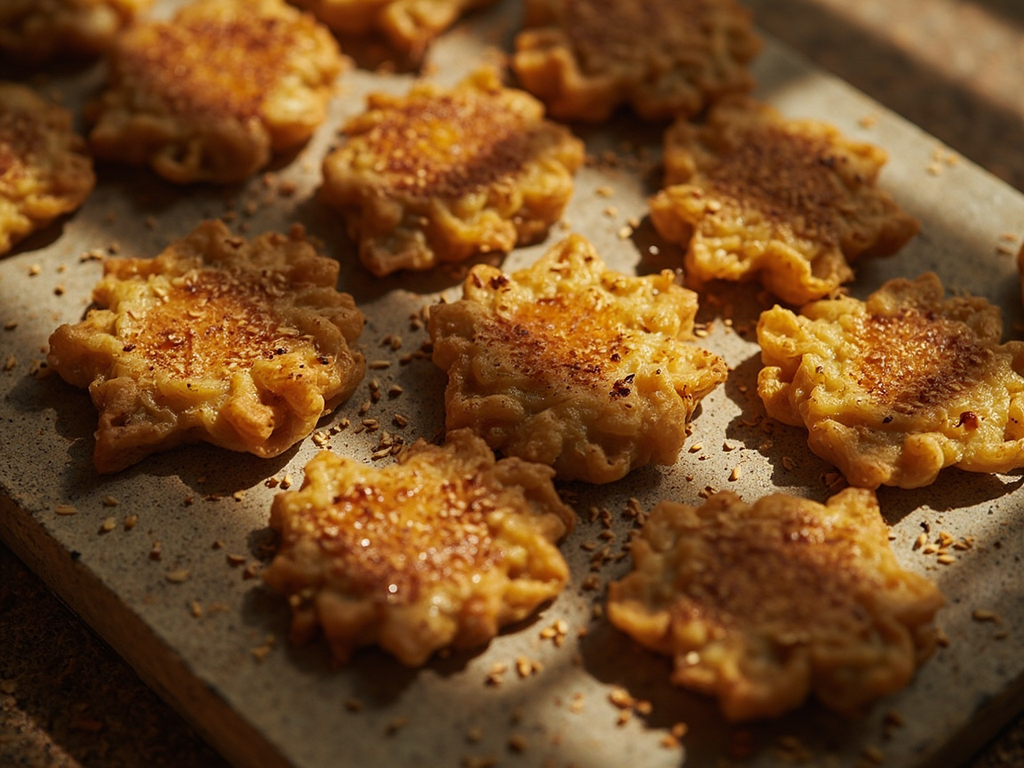
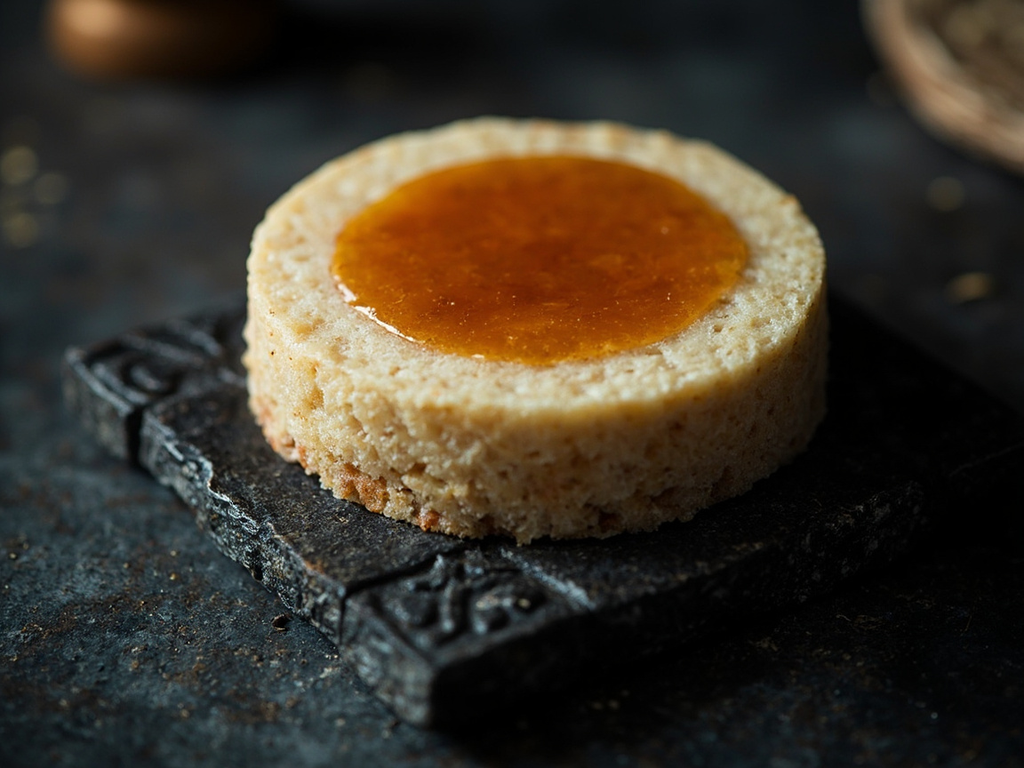
Why this dish? The Mexica molded effigies of their gods from amaranth dough (tzoalli). Inspired by this tradition, this round, pearly disk recalls the monolith of Coyolxauhqui: the Moon offered, sweetened with agave syrup.
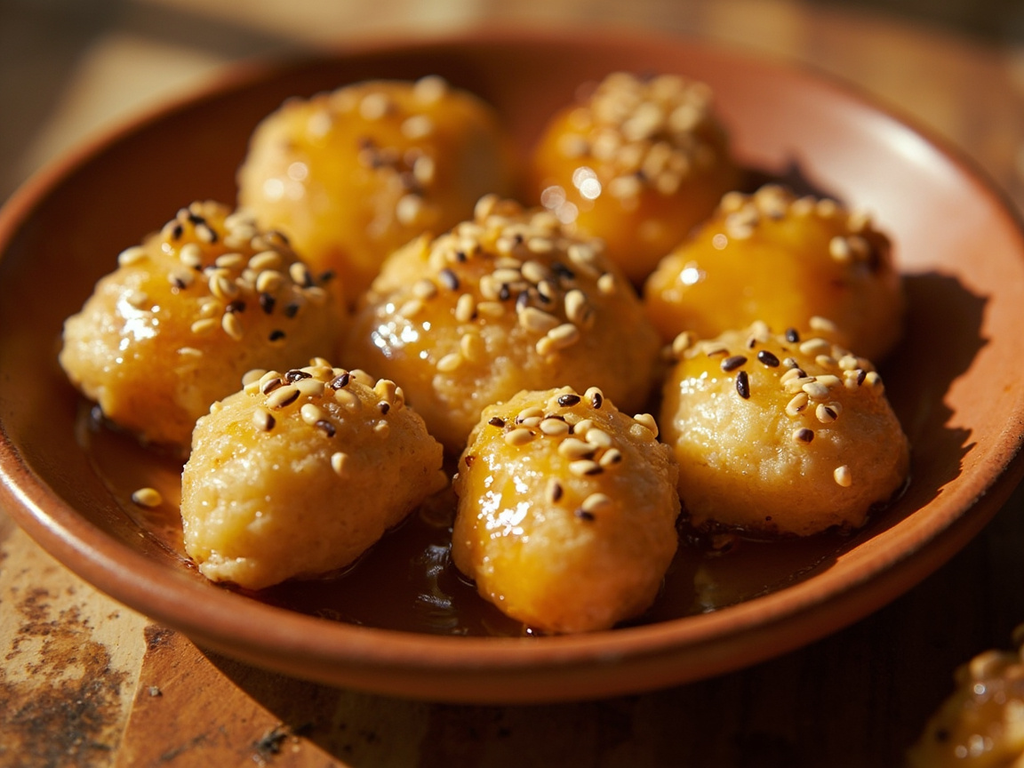
Popped amaranth bound with maguey syrup, pressed into a soft, crunchy disk. An offering sweet, to be broken like the light of the Moon.
You who wish to honor me, do not shed blood: instead take the small huauhtli seed, pop it on the hot stone like a rain of stars. Bind it with the thick honey drawn from the heart of the maguey, press it between your hands into a round disk — it is my body you remake, the one my brother severed atop Coatepec. Place it before me, then break and share it: thus was flesh once returned to the gods. Under the tooth it cracks and melts, sweet as moonlight on the lake.
- •Amaranth seeds (huauhtli) — two measures (popped base)
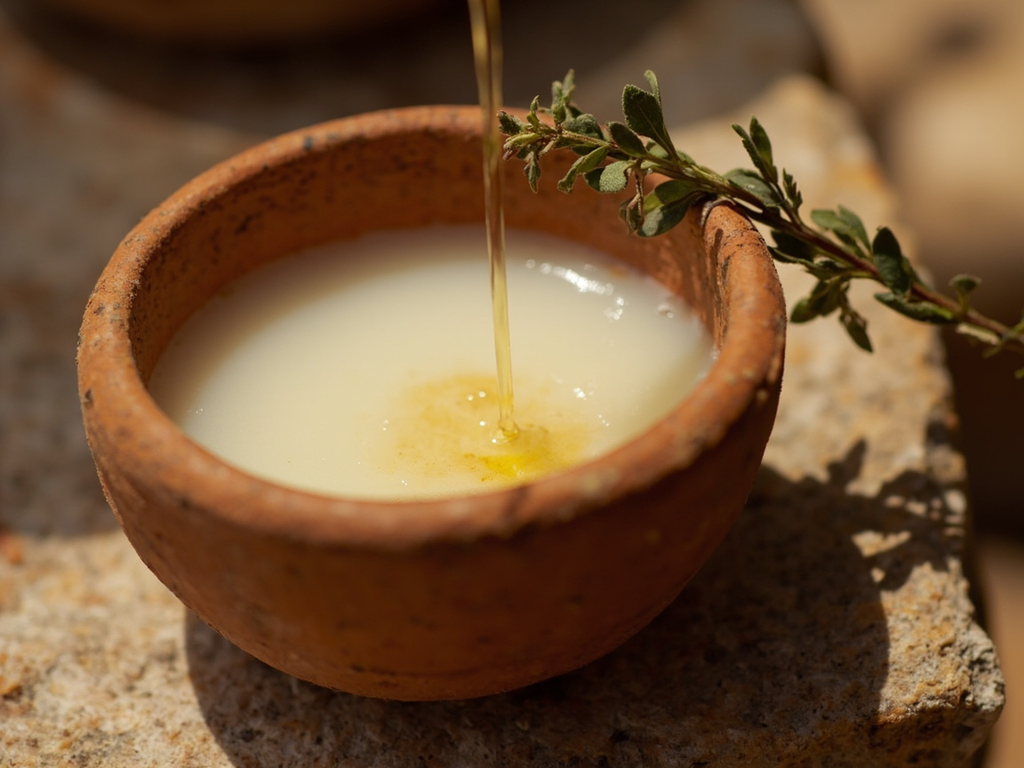
- •Maguey syrup (necuhtli) — one measure (sweet binder)
- •Melipona bee honey — a drizzle (optional) (flavor)
Tzoalli — amaranth disk of the Moon
Popped amaranth bound with maguey syrup, pressed into a soft, crunchy disk. An offering sweet, to be broken like the light of the Moon.
Why this dish? The Mexica molded effigies of their gods from amaranth dough (tzoalli). Inspired by this tradition, this round, pearly disk recalls the monolith of Coyolxauhqui: the Moon offered, sweetened with agave syrup.
You who wish to honor me, do not shed blood: instead take the small huauhtli seed, pop it on the hot stone like a rain of stars. Bind it with the thick honey drawn from the heart of the maguey, press it between your hands into a round disk — it is my body you remake, the one my brother severed atop Coatepec. Place it before me, then break and share it: thus was flesh once returned to the gods. Under the tooth it cracks and melts, sweet as moonlight on the lake.
Ingredients (period version)
- Amaranth seeds (huauhtli) — two measures (popped base)
- Maguey syrup (necuhtli) — one measure (sweet binder)
- Melipona bee honey — a drizzle (optional) (flavor)
Ingredients
- Popped amaranth — 80 g (crunchy base)
- Agave syrup — 100 g (sweet binder)
- Honey — 1 tbsp (optional) (flavor)
- Water — 1 tbsp (adjust syrup cooking)
Method
- If starting from raw seeds, pop them in small batches in a dry, hot pan, stirring constantly (otherwise use ready-popped amaranth).
- Heat agave syrup with water (and honey) until it forms a large syrupy bubble, without browning.
- Off the heat, pour in popped amaranth and mix quickly to coat evenly.
- Press the mixture firmly into a ring mold or round bowl, about 1.5 cm thick.
- Let set for 20 min, unmold the disk, and break into pieces.
How it was made : Sahagún and Durán recount that tzoalli — toasted amaranth and maguey syrup (sometimes with honey) — was used to fashion actual statues of gods, especially during the feast of Panquetzaliztli, which were then shared and eaten by the faithful. The specific association with Coyolxauhqui is a respectful reconstruction, presented as a homage rather than a reproduction of a sacred rite.
The contemporary twist : While the disk is still warm, engrave the lines of the famous Coyolxauhqui monolith with a knife tip before it sets.
Sources : Bernardino de Sahagún, Historia general de las cosas de Nueva España (Codex de Florence) · Diego Durán, Historia de las Indias de Nueva España
Coyolxauhqui · Charactorium