 flip
flipHoneyed Wine with Anise from Sardis
Honeyed Wine with Anise from Sardis
Why this dish? Wine flowed abundantly at Croesus's court, served in gold and silver craters. Sweetened with honey and perfumed with anise, cut with water as custom required, it accompanied conversation after the meal — the moment when Croesus, it is said, liked to test the wisdom of his guests.
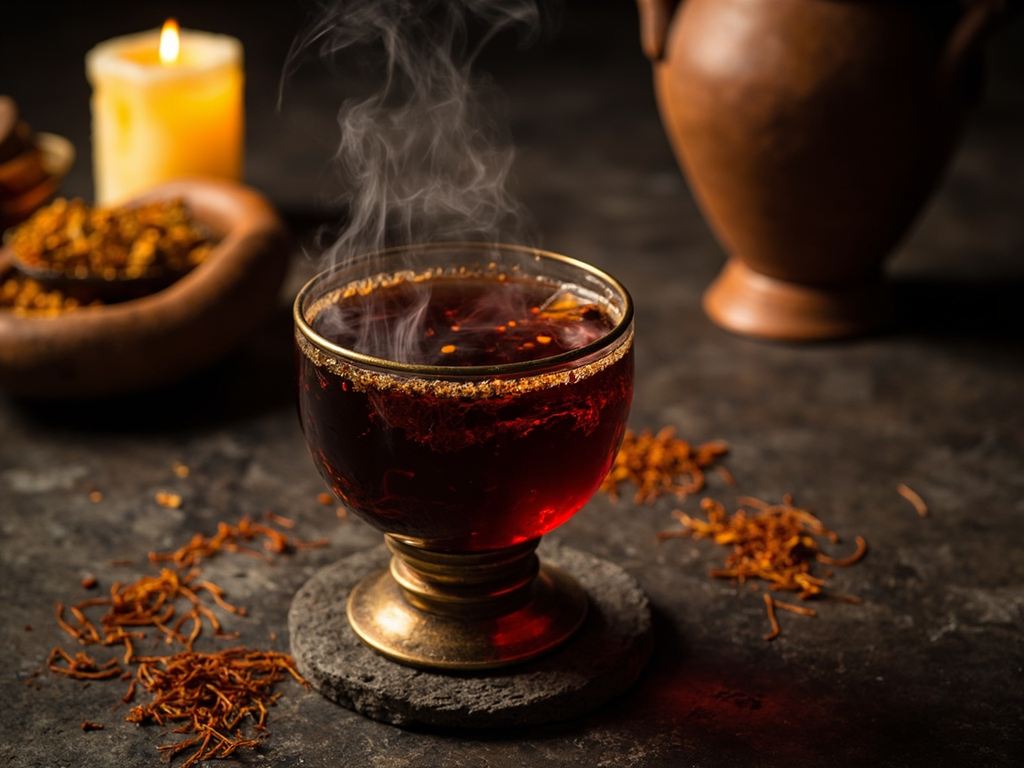
A warm red wine, melted with honey and infused with anise, served diluted with water. Sweet, fragrant, comforting — the hospitality cup of a court that made refinement an art.
Stay yet, stranger, the meal is not over while the cup goes round. We warm the wine from my hillsides, melt honey into it, toss in a few anise seeds, then cut it with water — for drinking neat is the business of barbarians, not kings. It is at this hour, cup in hand, that I liked to ask the wise men who passed: who then is the happiest of men? Drink slowly, and ponder your answer better than I loved the one I was given.
- •Red wine — a jug (base)
- •Honey — to taste (sweetness)
- •Anise seeds — a pinch (flavor)
- •Water — to cut the wine (ritual dilution)
Honeyed Wine with Anise from Sardis
A warm red wine, melted with honey and infused with anise, served diluted with water. Sweet, fragrant, comforting — the hospitality cup of a court that made refinement an art.
Why this dish? Wine flowed abundantly at Croesus's court, served in gold and silver craters. Sweetened with honey and perfumed with anise, cut with water as custom required, it accompanied conversation after the meal — the moment when Croesus, it is said, liked to test the wisdom of his guests.
Stay yet, stranger, the meal is not over while the cup goes round. We warm the wine from my hillsides, melt honey into it, toss in a few anise seeds, then cut it with water — for drinking neat is the business of barbarians, not kings. It is at this hour, cup in hand, that I liked to ask the wise men who passed: who then is the happiest of men? Drink slowly, and ponder your answer better than I loved the one I was given.
Ingredients (period version)
- Red wine — a jug (base)
- Honey — to taste (sweetness)
- Anise seeds — a pinch (flavor)
- Water — to cut the wine (ritual dilution)
Ingredients
- Full-bodied red wine — 50 cl (base)
- Honey — 3 tbsp (sweetness)
- Green anise seeds — 1 tsp (flavor)
- Water — 20-25 cl (to dilute when serving)
Method
- Gently warm the wine without boiling.
- Dissolve the honey into it and add the lightly crushed anise seeds.
- Let infuse off the heat for 10 minutes, then strain.
- Serve warm, diluted with hot water at about one-third water to two-thirds wine (non-alcoholic version: replace with hot red grape juice, same honey and anise infusion).
How it was made : The Greeks and peoples of Asia Minor drank wine cut with water; drinking it neat was considered excessive. It was often sweetened with honey (wine with honey, ancestor of Roman mulsum) and flavored with herbs or seeds like anise. Wine was shared from large craters — Croesus offered gold and silver ones at Delphi.
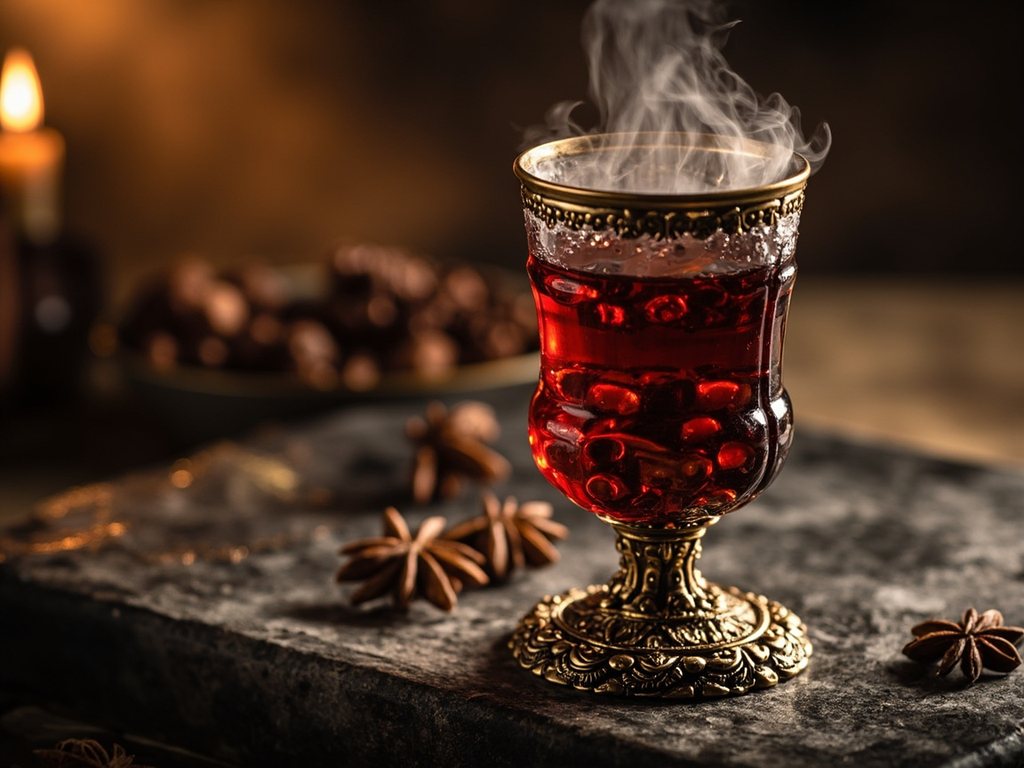
The contemporary twist : Served warm in winter in a golden cup, with a star anise floating on top: an ancient "mulled wine," also available in grape-juice version for the whole family.
Sources : Herodotus, Histories, book I (gold and silver craters offered at Delphi) · Athenaeus of Naucratis, Deipnosophists (wine cut with water, honeyed and flavored wines)
Croesus of Lydia · Charactorium