 flip
flipPanspermia of the Kronia — Cauldron of Grains and Beans with Honey
Panspermia of the Kronia — Cauldron of Grains and Beans with Honey
Why this dish? The Kronia, Athenian harvest festivals, celebrated Cronus in midsummer: masters and servants ate together in a joyful reversal of order, an echo of the equality of the Golden Age. They shared *panspermia*, "all seeds" boiled together in a single cauldron — a tribute to the nourishing earth of Cronus's time.
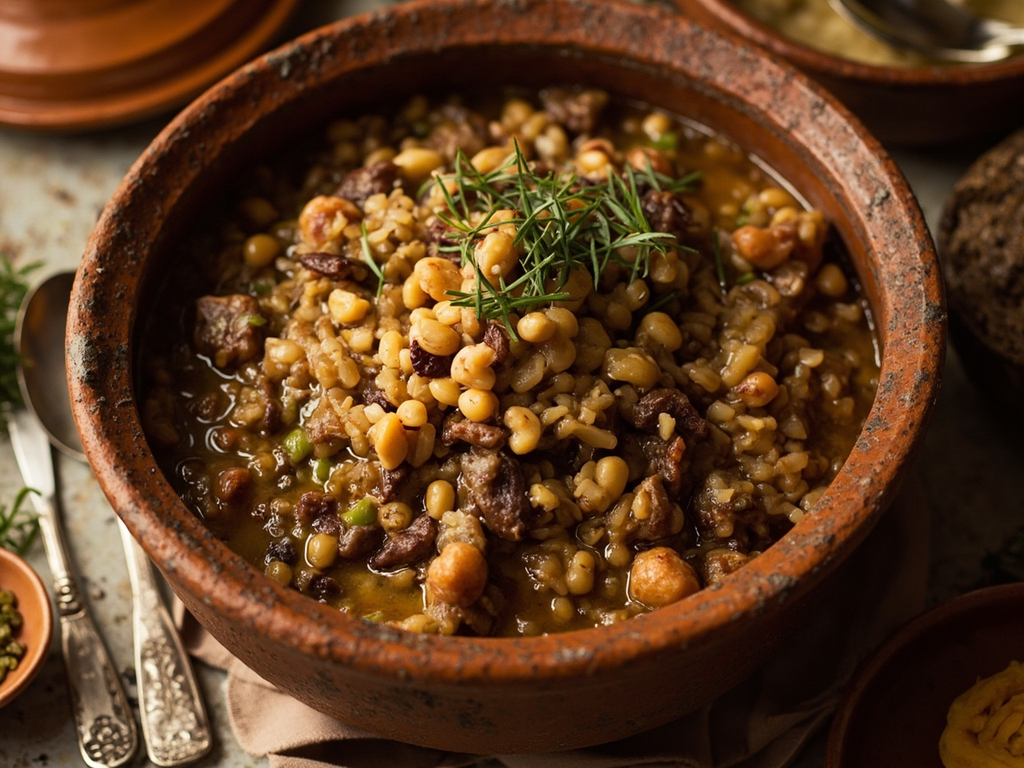
A large cauldron where barley, wheat, fava beans, chickpeas, and lentils simmer together, perfumed with herbs and bound with a little honey and oil. A dish for sharing, generous and rustic, a symbol of the effortless abundance of Cronus's reign.
Once a year, I allow the world to remember my Golden Age: let servants be unbound, let them sit at the same table as their masters, and let all draw from the same cauldron. Throw into it all the seeds of the earth, mortal — barley and fava, chickpea and lentil — for in my time no one counted their share. Let it boil long, sweeten with a dash of honey, and eat while thinking that before toil there was abundance. On that day, even I do not devour anyone.
- •Hulled barley grains — one measure (grain)
- •Wheat grains (spelt) — one measure (grain)
- •Dried fava beans — one measure (legume)
- •Chickpeas — half a measure (legume)
- •Lentils — half a measure (legume)
- •Honey — one ladle (sweet binder)
- •Olive oil — a good drizzle (fat)
- •Thyme and savory — a bunch (herb)
- •Sea salt — to taste (seasoning)
Panspermia of the Kronia — Cauldron of Grains and Beans with Honey
A large cauldron where barley, wheat, fava beans, chickpeas, and lentils simmer together, perfumed with herbs and bound with a little honey and oil. A dish for sharing, generous and rustic, a symbol of the effortless abundance of Cronus's reign.
Why this dish? The Kronia, Athenian harvest festivals, celebrated Cronus in midsummer: masters and servants ate together in a joyful reversal of order, an echo of the equality of the Golden Age. They shared *panspermia*, "all seeds" boiled together in a single cauldron — a tribute to the nourishing earth of Cronus's time.
Once a year, I allow the world to remember my Golden Age: let servants be unbound, let them sit at the same table as their masters, and let all draw from the same cauldron. Throw into it all the seeds of the earth, mortal — barley and fava, chickpea and lentil — for in my time no one counted their share. Let it boil long, sweeten with a dash of honey, and eat while thinking that before toil there was abundance. On that day, even I do not devour anyone.
Ingredients (period version)
- Hulled barley grains — one measure (grain)
- Wheat grains (spelt) — one measure (grain)
- Dried fava beans — one measure (legume)
- Chickpeas — half a measure (legume)
- Lentils — half a measure (legume)
- Honey — one ladle (sweet binder)
- Olive oil — a good drizzle (fat)
- Thyme and savory — a bunch (herb)
- Sea salt — to taste (seasoning)
Ingredients
- Hulled barley — 100 g (grain)
- Spelt (or wheat berries) — 100 g (grain)
- Dried fava beans (soaked) — 100 g (legume)
- Chickpeas (soaked) — 80 g (legume)
- Green lentils — 80 g (legume)
- Honey — 1 tbsp (sweet binder)
- Olive oil — 4 tbsp (fat)
- Fresh thyme and savory — a few sprigs (herb)
- Salt — to taste (seasoning)
Method
- The night before, soak the fava beans and chickpeas separately.
- In a large pot, cook the barley and spelt in salted water for 30 minutes.
- Add the drained fava beans and chickpeas, continue for 30 minutes, then add the lentils and herb bundle for 20–25 minutes.
- When everything is tender, drain excess water, remove the herbs, then bind with olive oil and honey.
- Adjust salt and serve very hot, in a single large sharing dish.
How it was made : Panspermia, literally "all seeds," was a porridge of grains and legumes offered and consumed during harvest festivals like the Pyanepsia, and associated with the communal spirit of the Kronia described in Athenian sources. Honey was often used to honor the divine part of the dish.
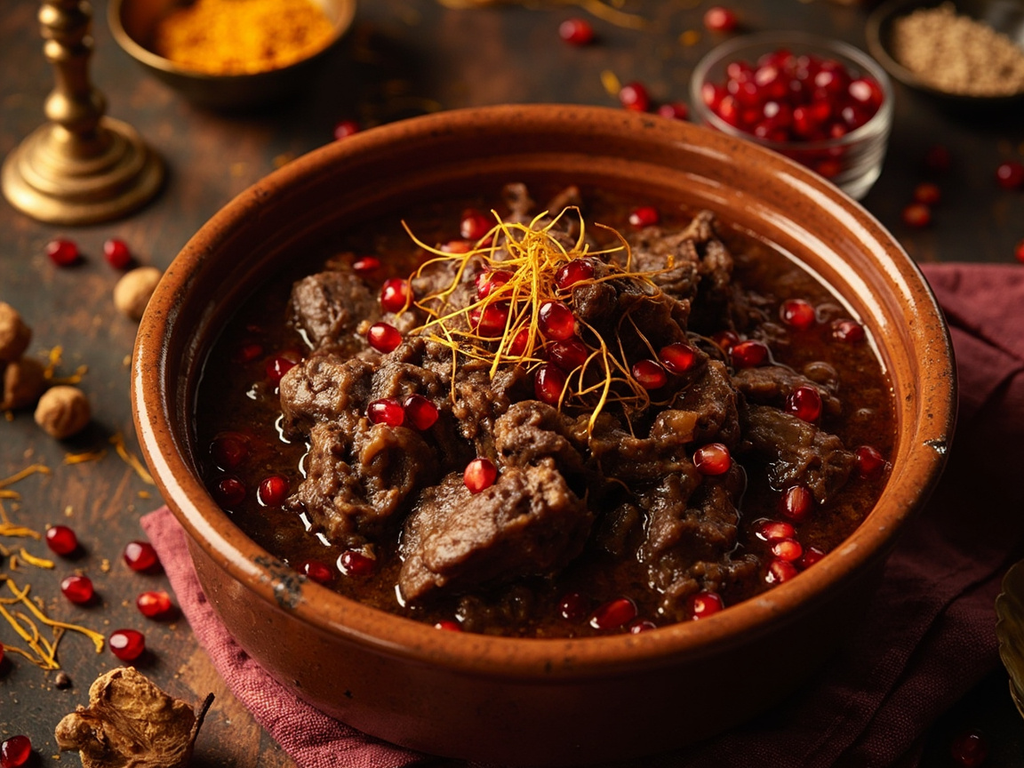
The contemporary twist : Serve it 'bowl-style' in a large terracotta bowl, fresh herbs on top and a drizzle of golden honey when presenting — everyone serves themselves, in the egalitarian spirit of the Kronia.
Sources : Hesiod, *Works and Days* (the myth of the Golden Age, v. 109-126) · Athenaeus, *The Deipnosophists*, Book XIV (on panspermia)
Cronos · Charactorium