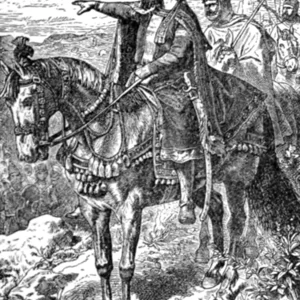

Founder of the Persian Achaemenid Empire in the 6th century BCE, Cyrus II unified the Median and Persian peoples. Renowned for his tolerance toward conquered peoples, he notably freed the Jewish captives held in Babylon.
Cyrus II(599 av. J.-C. — 529 av. J.-C.)
Cyrus II
Empire achéménide, Anshan
7 min read
Frequently asked questions
Key Facts
- c. 559 BCE: Cyrus II becomes king of Persia (Anshan)
- 550 BCE: conquest of the Median kingdom, foundation of the Achaemenid Empire
- 547 BCE: conquest of the kingdom of Lydia (King Croesus)
- 539 BCE: capture of Babylon and liberation of the Jewish captives
- 529 BCE: death of Cyrus II during a campaign in Central Asia
Works & Achievements
By unifying the Persians and Medes after his victory over Astyages, Cyrus created the first great empire in history to practice a policy of administrative and religious tolerance toward conquered peoples.
The defeat of King Croesus and the capture of Sardis extended the empire to the Ionian coast, bringing the Greek cities of Asia Minor into the Persian sphere and setting the stage for the future Greco-Persian Wars.
The conquest of Babylon with minimal destruction, followed by a decree allowing deported peoples to return to their homelands, is Cyrus's most celebrated political act — inscribed on the Cyrus Cylinder, now held at the British Museum.
Cyrus built his royal capital at Pasargadae in Persia, complete with palaces, gardens (the first Persian 'paradeisoi', the origin of the word 'paradise'), and a tomb whose ruins are still visible today.
This official edict authorized the Jews exiled in Babylon since 597 BC to return to Judea and rebuild the Temple in Jerusalem — a foundational act mentioned in several books of the Hebrew Bible.
Anecdotes
According to Herodotus, Cyrus was abandoned at birth on the orders of his grandfather Astyages, king of the Medes, who had dreamed that his grandson would overthrow him. Taken in by a shepherd, he grew up unaware of his royal origins — only to fulfill the very prophecy his grandfather had feared.
In 539 BC, at the fall of Babylon, Cyrus entered the city without significant fighting and was welcomed almost as a liberator. He paid homage to the Babylonian god Marduk and respected local temples, breaking with the tradition of conquerors who suppressed the religions of the defeated.
Cyrus issued what some historians consider one of the earliest edicts of religious tolerance in history: he allowed the Jews deported to Babylon by Nebuchadnezzar to return to Judea and rebuild their temple. This act earned him the remarkable biblical title of 'anointed of the Lord.'
Unlike the practices of his time, Cyrus did not systematically enslave conquered populations. He incorporated local elites into his administration and allowed peoples to keep their language, religion, and customs, preferring loyalty over terror.
The death of Cyrus remains shrouded in mystery. Herodotus reports that he was killed during a campaign against the Massagetae, a nomadic people of Central Asia led by Queen Tomyris. According to legend, she avenged her son's death by plunging Cyrus's head into a wineskin filled with blood.
Primary Sources
I am Cyrus, king of the world, great king, legitimate king, king of Babylon... I returned to the sacred cities on the other side of the Tigris the sanctuaries that had long been in ruins, and I gathered all their inhabitants and restored their dwellings to them.
Cyrus, son of Cambyses, was of Achaemenid stock on his father's side and of Median descent through his mother. He surpassed in greatness of spirit all the kings who had preceded him in Asia.
Thus says Cyrus king of Persia: The LORD, the God of heaven, has given me all the kingdoms of the earth, and he has charged me to build him a house at Jerusalem, which is in Judah. Whoever is among his people, may his God be with him, and let him go up to Jerusalem.
We have been struck by the number of peoples that Cyrus brought under his authority... he governed these peoples willingly and with their consent, for as long as he lived.
Key Places
The first capital of the Achaemenid Empire, founded by Cyrus II around 550 BCE. The tomb of Cyrus still stands there today — a simple stone chamber atop a six-stepped podium, now a UNESCO World Heritage Site.
The great metropolis of Mesopotamia, captured by Cyrus in 539 BCE. It was here that he proclaimed his famous decree of tolerance, inscribed on the Cyrus Cylinder, allowing deported peoples to return to their homelands.
Capital of the kingdom of Lydia, captured by Cyrus around 547 BCE following the defeat of the enormously wealthy King Croesus. This conquest gave the Persian Empire access to the Aegean coast and Mediterranean trade.
The ancient capital of the Median Empire, conquered by Cyrus in 550 BCE when he defeated Astyages. Cyrus made it one of his empire's seasonal capitals, a strategic hub between Persia and Mesopotamia.
The holy city whose Temple Cyrus authorized to be rebuilt after the Babylonian captivity in 538 BCE. This act earned him a unique place in the Hebrew Bible, where he is described as a 'shepherd' and an anointed one of God.
Typical Objects

A small clay cylinder inscribed in Babylonian cuneiform, discovered at Babylon in 1879. It proclaims Cyrus's policy of tolerance toward conquered peoples and is sometimes called the 'first declaration of human rights,' though this interpretation is anachronistic.

A weapon of war made from layers of wood, bone, and sinew, delivering great power on horseback. The bow was the emblematic weapon of the Achaemenid Persian armies that conquered the East under Cyrus.

A straight cylindrical crown worn by the great Persian kings, distinct from the rounded crowns of Median and Babylonian rulers. It symbolized royal legitimacy and the universal power Cyrus claimed over all peoples.

A small roller carved from semi-precious stone, rolled over wet clay to authenticate official documents. Cyrus's royal seal bore motifs of hunting and victory over enemies.

A drinking vessel shaped like an animal horn, often decorated with a griffin or lion head, used at Persian royal banquets. These prestigious objects reflect the refinement of the Achaemenid court founded by Cyrus at Pasargadae.

A combat vehicle drawn by horses, fitted with sharp blades on the wheels to cut through enemy ranks. The armies of Cyrus deployed these formidable chariots in their great battles of conquest.
School Curriculum
Vocabulary & Tags
Key Vocabulary
Tags
Daily Life
Morning
Cyrus began his day with Zoroastrian religious rites before the sacred fire, symbol of Ahura Mazda. He then received reports from his satraps (provincial governors) and generals, delivered by a network of swift horse messengers along the 'Royal Roads'.
Afternoon
Afternoons were devoted to royal audiences: Cyrus received delegations from conquered peoples, foreign ambassadors, and petitioners, in keeping with his policy of dialogue with local elites. Lion and boar hunts — a royal privilege — alternated with military training for the royal guard.
Evening
Royal banquets brought together Persian and Median nobles over roasted meats, barley bread, and Shiraz wines served in golden rhytons. Musicians played the harp and aulos (flute) while bards recited the king's military exploits.
Food
The Persian royal table featured lamb, beef, and game, accompanied by wheat and barley flatbreads, dates, pomegranates, and figs. Grape wine was the drink of the elites, while barley beer was consumed by soldiers and commoners. Spices — saffron, cumin, coriander — were used generously to flavor the dishes.
Clothing
Cyrus wore a long-sleeved robe of fine linen in white or purple, belted with a wide gold-embroidered sash. Over it, a Median tunic with multicolored stripes and a purple wool cloak. On his head, the straight cylindrical tiara — the mark of the Great King — replaced the Median cap during official ceremonies.
Housing
The palace of Pasargadae featured several 'apadanas' (columned audience halls) surrounded by irrigated gardens called 'paradeisoi', the origin of the word 'paradise'. Channels brought water to the arid plateau. The royal apartments were decorated with brightly colored wool carpets, embroidered hangings, and cedarwood furniture inlaid with ivory.
Historical Timeline
Period Vocabulary
Visual Style
Style évoquant les grands reliefs de Persépolis et les reconstitutions archéologiques de l'Orient ancien : architecture monumentale, costumes somptueux et palette chaude de l'Iran antique.
Sound Ambience
Ambiance sonore de la cour royale perse achéménide mêlant musique cérémonielle, rumeurs de palais multilingues et bruits de la grande armée conquérante traversant les plaines de Mésopotamie.
Liens externes & ressources
Références
Œuvres
Fondation de l'Empire achéménide
550 av. J.-C.
Conquête de la Lydie
547 av. J.-C.
Prise de Babylone et décret de tolérance
539 av. J.-C.
Construction de Pasargades
vers 546 av. J.-C.
Décret de retour des Juifs (Édit de Cyrus)
538 av. J.-C.
Rechercher
See also
Related Characters
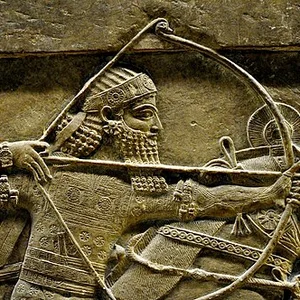
Ashurbanipal
684 av. J.-C. — 630 av. J.-C.
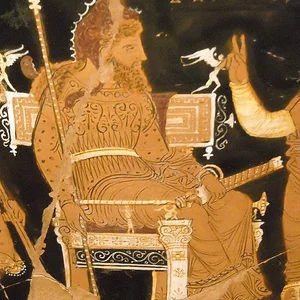
Darius I
549 av. J.-C. — 485 av. J.-C.
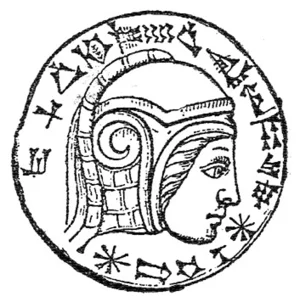
Nebuchadnezzar II
641 av. J.-C. — 561 av. J.-C.

Sammu-ramat (Semiramis)
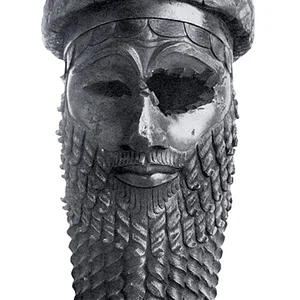
Sargon of Akkad
2350 av. J.-C. — 2300 av. J.-C.
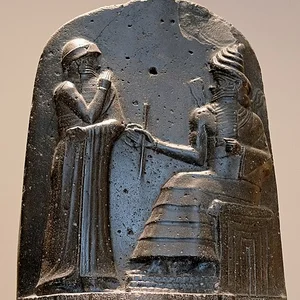
Hammurabi
1809 av. J.-C. — 1749 av. J.-C.