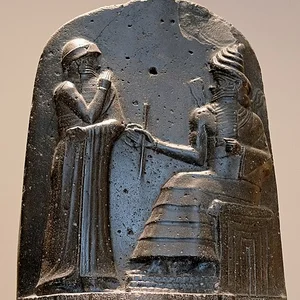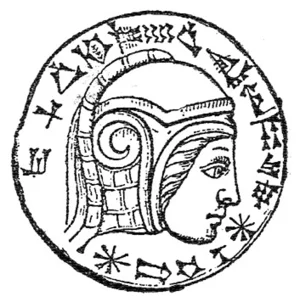

King of Babylon from 604 to 562 BC, Nebuchadnezzar II brought the Neo-Babylonian Empire to its height. He conquered Jerusalem, destroyed the Temple of Solomon, and deported the Hebrews to Babylonia. A great builder, he is associated with the legendary Hanging Gardens of Babylon.
Nebuchadnezzar II(641 av. J.-C. — 561 av. J.-C.)
Nebuchadnezzar II
empire néo-babylonien
8 min read
Frequently asked questions
Key Facts
- 604 BC: accession to the throne of Babylon following the death of his father Nabopolassar
- 597 BC: first capture of Jerusalem and deportation of part of the Judean elite
- 587–586 BC: destruction of the Temple of Solomon and mass deportation of the Hebrews (Babylonian captivity)
- 562 BC: death of Nebuchadnezzar II after forty-three years of reign
- Presumed construction of the Hanging Gardens of Babylon, one of the Seven Wonders of the Ancient World
Works & Achievements
Nebuchadnezzar transformed Babylon into a monumental metropolis: a double brick wall, the Southern and Northern Palaces, a processional avenue 250 metres long — an urban complex unmatched in the ancient world.
A masterpiece of Neo-Babylonian architecture, this monumental gate was covered in blue glazed bricks decorated with mythological animals and marked the entrance to the processional avenue. It has been reconstructed at the Pergamon Museum in Berlin.
Terraced gardens traditionally attributed to Nebuchadnezzar and considered one of the Seven Wonders of the Ancient World. Whether they actually existed remains a subject of debate among modern archaeologists.
A great stepped tower dedicated to the god Marduk and the probable inspiration for the biblical Tower of Babel. Nebuchadnezzar completed or restored its construction; estimates suggest it stood around 90 metres tall.
A series of military expeditions that extended the Neo-Babylonian Empire to the Mediterranean, subjugating the kingdoms of Judah, Ammon, and Moab as well as the Phoenician city-states, and securing control of key trade routes.
Nebuchadnezzar invested heavily in Mesopotamia's hydraulic network, digging and restoring canals that irrigated the Babylonian plain and ensured the agricultural prosperity of the empire.
Anecdotes
During the siege of Jerusalem in 597 BC, Nebuchadnezzar II did not stop at looting the Temple: he carried off King Jehoiachin along with the entire Judean elite — craftsmen, priests, and warriors. This mass deportation, known as the 'first deportation', was designed to strip the land of its brightest minds and crush any future resistance.
The destruction of Solomon's Temple in 586 BC remains one of the most traumatic events in Jewish history. Nebuchadnezzar ordered the sanctuary burned after an eighteen-month siege that reduced Jerusalem to famine. The grief over this catastrophe is recorded in the Hebrew Bible, in the Book of Lamentations attributed to the prophet Jeremiah.
The famous Hanging Gardens of Babylon, considered one of the Seven Wonders of the Ancient World, are said to have been built by Nebuchadnezzar for his wife Amytis, who grew lonely on the flat Mesopotamian plain and longed for the green mountains of her native Media. No archaeological remains have ever been found, which continues to fuel debate about whether they actually existed.
The Bible recounts in the Book of Daniel that Nebuchadnezzar was struck by a strange divine madness: he wandered naked through the fields, eating grass like an ox for seven years, before regaining his sanity and acknowledging the power of the God of Israel. This account, likely symbolic or legendary, nonetheless reflects the lasting impression the king made on the collective memory of the peoples he conquered.
Primary Sources
In the fifth year of King Jehoiachin of Judah, Nebuchadnezzar, king of Babylon, came to Jerusalem and the city was taken. He carried the king away to Babylon, along with the treasures of the house of the Lord.
Nebuchadnezzar, king of Babylon, marched against Jerusalem and the city was besieged. He burned the house of the Lord, the king's house, and all the houses of Jerusalem; every great house he burned down.
I, Nebuchadnezzar, king of Babylon, paved the processional way of Babylon with limestone slabs for the procession of the great lord Marduk. May Marduk, lord of the gods, grant me eternal life.
In the ninth year of Zedekiah, king of Judah, in the tenth month, Nebuchadnezzar, king of Babylon, marched with his entire army against Jerusalem and besieged it. The city was taken.
Rations of oil and barley granted to Jehoiachin, king of the land of Judah, and his five sons, held in Babylon under the custody of the royal palace.
Key Places
Capital of the Neo-Babylonian Empire, Nebuchadnezzar transformed it into the largest city of the ancient world, with its massive walls, processional way, the Ishtar Gate, and the ziggurat Etemenanki — the likely inspiration for the biblical Tower of Babel.
Nebuchadnezzar besieged and captured Jerusalem twice (597 and 586 BC), destroying the Temple of Solomon during the second siege and deporting most of the Judean population to Babylonia.
Site of the decisive battle of 605 BC, where Nebuchadnezzar, still crown prince, crushed the Egyptian army and secured Babylonian dominance over the entire Fertile Crescent.
A Phoenician island city that Nebuchadnezzar besieged for thirteen years (585–573 BC) without fully subduing it, highlighting the limits of Babylonian power against coastal strongholds.
A major holy city of Mesopotamia whose temples and canals Nebuchadnezzar restored. The Murašû archive, discovered at this site, bears witness to the presence and gradual integration of Judean deportees in Babylonia.
Typical Objects

Babylonian construction bricks were systematically stamped with the name of the reigning king. Thousands of bricks inscribed with the name of Nebuchadnezzar II have been found at Babylon, bearing witness to his frenetic building activity.

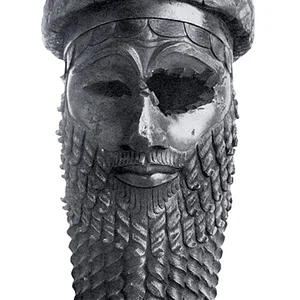
The headdress of the king of Babylon was a tall cylindrical or conical tiara, adorned with horns — a symbol of divinity — and geometric friezes. It set the ruler apart during religious ceremonies held in honor of Marduk.

The quintessential emblems of Mesopotamian power, the scepter and ring were symbolically presented to the king by the god Marduk during the New Year festival (Akitu). Nebuchadnezzar brandished them during solemn processions.

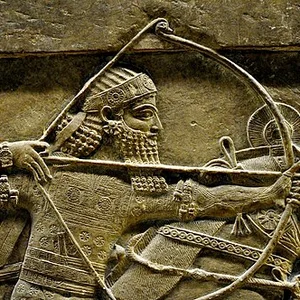
Nebuchadnezzar led his military campaigns from a two-wheeled chariot drawn by horses, armed with a composite bow. This prestigious and effective vehicle enabled him to triumph at Carchemish and during his many expeditions into the Levant.

Babylonian administration relied on thousands of clay tablets written in cuneiform script, recording rations, contracts, and palace registers. The Weidner tablets explicitly mention the rations issued to King Jehoiachin of Judah, a captive in Babylon.

The Ishtar Gate of Babylon was covered in lapis-blue glazed bricks depicting lions (symbol of Ishtar), sirrush dragons (symbol of Marduk), and bulls. These decorative elements were the artistic hallmark of Nebuchadnezzar II's reign.
School Curriculum
Vocabulary & Tags
Key Vocabulary
Tags
Daily Life
Morning
The king rose before dawn to attend the morning rites at the temple of Esagila, the main sanctuary of Marduk at the heart of Babylon. Priests performed the ablution and dressing of the divine statue while Nebuchadnezzar offered the first libations. The royal day began under the sign of the sacred, for the legitimacy of the Babylonian ruler rested entirely on his relationship with the supreme god.
Afternoon
The afternoon was devoted to royal audiences in the great throne room of the Southern Palace: ambassadors from vassal states, generals reporting on campaigns, scribes presenting administrative reports on canals, harvests, and palace stores. Nebuchadnezzar also oversaw Babylon's major construction projects, sometimes personally visiting work on the Ishtar Gate or the city walls.
Evening
In the evening, the king took part in formal banquets bringing together the military elite and high palace officials. Musicians played the harp and flute while servants poured barley beer and palm wine. Readings of astronomical omens by diviners (barû) often closed the evening, as the stars guided the king's political and military decisions.
Food
The Babylonian royal diet was rich and varied: barley and emmer wheat breads, roasted meats (mutton, beef, poultry), dried fish from the Euphrates, dates, figs, pomegranates, lentils, and chickpeas. Barley beer (sikaru) was the universal daily drink, while wine imported from Syria was reserved for prestigious banquets. Everything was seasoned with cumin, garlic, and onions.
Clothing
Nebuchadnezzar wore long fringed wool garments (sissiktu) — a symbol of status in Mesopotamia — dyed bright red and trimmed with gold thread. An elaborate belt cinched the waist, and a tall royal tiara crowned his head during ceremonies. A long, curled beard, carefully oiled and perfumed, was the hallmark of the warrior and king in Neo-Babylonian culture.
Housing
Nebuchadnezzar resided in the Southern Palace of Babylon, a colossal complex of several hundred rooms arranged around five inner courtyards. The walls were lined with glazed bricks decorated with friezes of lions and rosettes. The palace included throne rooms, private apartments, kitchens, storehouses, and interior gardens. It is in or near this palace that ancient traditions place the legendary Hanging Gardens.
Historical Timeline
Period Vocabulary
Visual Style
Direction artistique néo-babylonienne : briques émaillées bleu lapis, frises de lions et dragons en relief, personnages aux vêtements à franges bordeaux et or, atmosphère solennelle et monumentale.
Sound Ambience
Ambiance sonore de Babylone royale : tambours cérémoniels, chants de prêtres en akkadien, bruits de marché et de construction sur fond du souffle de l'Euphrate.
Liens externes & ressources
Références
Œuvres
Reconstruction et embellissement de Babylone
604-562 av. J.-C.
Porte d'Ishtar
Vers 575 av. J.-C.
Jardins suspendus de Babylone
Vers 600 av. J.-C.
Etemenanki — la ziggurat de Babylone
Reconstruction vers 600 av. J.-C.
Campagnes militaires en Levant (Judée, Phénicie, Syrie)
605-573 av. J.-C.
Système de canaux et d'irrigation de Babylonie
604-562 av. J.-C.