 flip
flipMay-e angûr, the Pomegranate and Grape Wine of the Elites
May-e angûr, the Pomegranate and Grape Wine of the Elites
Why this dish? Herodotus reports that the Persians deliberated serious matters while drinking, then reconsidered sober. Grape wine was the drink of the elites at Cyrus's court; the pomegranate, fruit of his royal gardens (paradeisos), was mixed in for feast days.
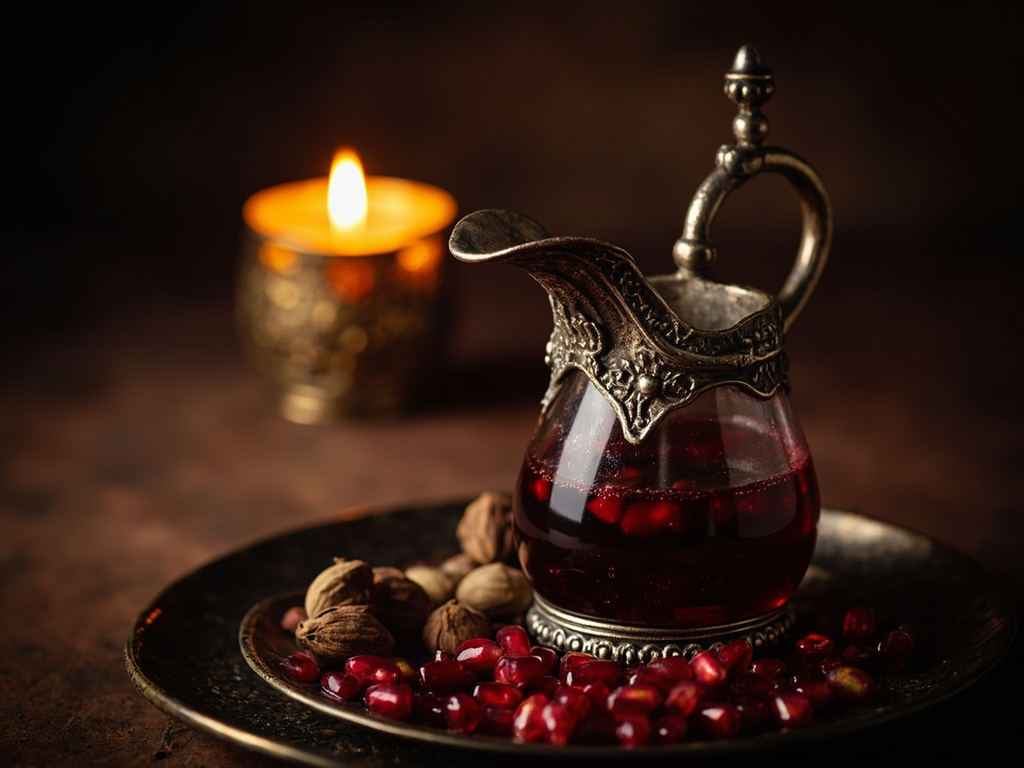
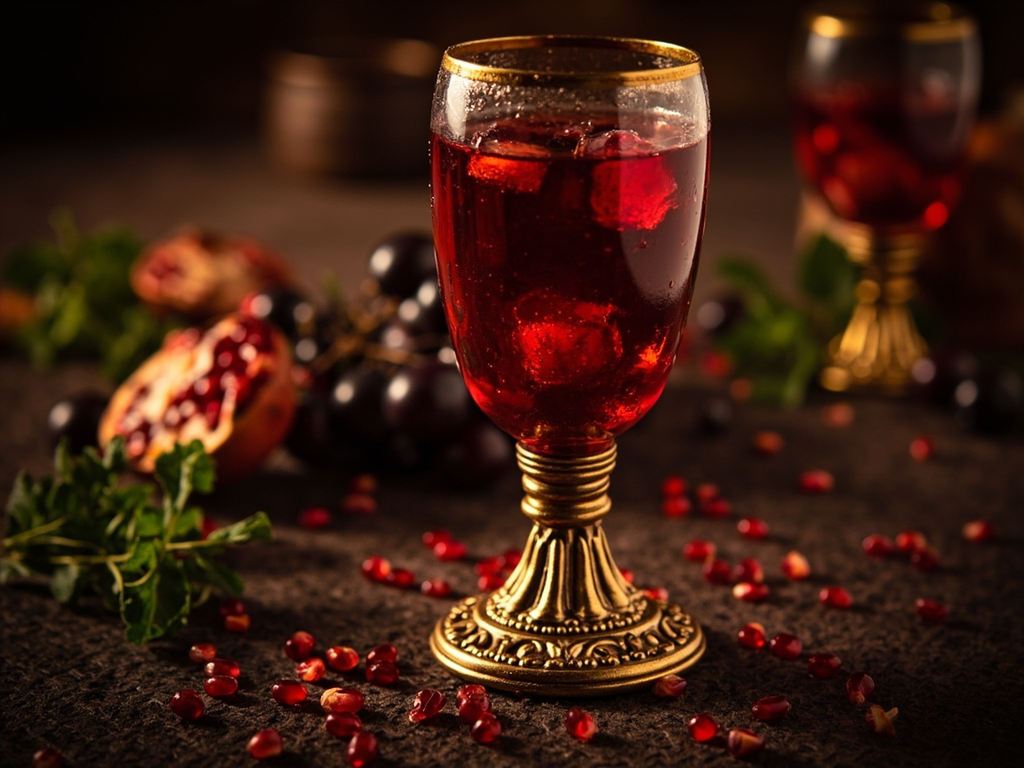
A beverage of grape and pomegranate juice, lightly spiced with coriander and sweetened with honey, served chilled. Bright, fruity, tangy — the cup raised over the royal cloths (non-alcoholic version for young audiences).
Raise the cup, friend, and drink to the health of the Great King. Among us Persians, we decide nothing important without first drinking — then we rethink it sober the next day, and if the opinion holds, it is wise. I mix the juice of the vine with the ruby juice of my pomegranates, those fruits of my walled gardens that you call paradise. A pinch of coriander, a dash of honey: that is what gladdens a king's heart without clouding his mind.
- •Fresh grape juice — an amphora (base)
- •Pomegranate juice — a quarter (acidity, color)
- •Honey — to taste (sweetness)
- •Crushed coriander seeds — a pinch (perfume)
- •Fresh spring water — to dilute (dilution)
May-e angûr, the Pomegranate and Grape Wine of the Elites
A beverage of grape and pomegranate juice, lightly spiced with coriander and sweetened with honey, served chilled. Bright, fruity, tangy — the cup raised over the royal cloths (non-alcoholic version for young audiences).
Why this dish? Herodotus reports that the Persians deliberated serious matters while drinking, then reconsidered sober. Grape wine was the drink of the elites at Cyrus's court; the pomegranate, fruit of his royal gardens (paradeisos), was mixed in for feast days.
Raise the cup, friend, and drink to the health of the Great King. Among us Persians, we decide nothing important without first drinking — then we rethink it sober the next day, and if the opinion holds, it is wise. I mix the juice of the vine with the ruby juice of my pomegranates, those fruits of my walled gardens that you call paradise. A pinch of coriander, a dash of honey: that is what gladdens a king's heart without clouding his mind.
Ingredients (period version)
- Fresh grape juice — an amphora (base)
- Pomegranate juice — a quarter (acidity, color)
- Honey — to taste (sweetness)
- Crushed coriander seeds — a pinch (perfume)
- Fresh spring water — to dilute (dilution)
Ingredients
- Grape juice (white or red, no added sugar) — 500 ml (base)
- Pure pomegranate juice — 200 ml (acidity, color)
- Honey — 1 to 2 tbsp (sweetness)
- Coriander seeds — 1/2 tsp, crushed (perfume)
- Fresh water — 200 ml (dilution)
- Ice cubes and mint leaves — for serving (freshness)
Method
- Crush the coriander seeds and infuse them for 10 minutes in a little warmed grape juice.
- Strain, mix grape juice, pomegranate juice and honey until dissolved.
- Dilute with fresh water to taste.
- Refrigerate for 1 hour.
- Serve over ice in cups, with mint; for adults, a fermented wine version existed at court.
How it was made : Wine held a major social and ritual role among the Achaemenids; it was drunk from gold and silver rhytons like those found in Iran. The pomegranate, omnipresent in Persian art, adorned columns and seals. This non-alcoholic version evokes the festive beverage for all ages.
The contemporary twist : Serve as a mocktail in a golden rhyton-style cup, with a splash of sparkling water and a zest — “the Toast of Pasargadae.”
Cyrus II · Charactorium