 flip
flipFirst Grain Cakes for the God's Table
First Grain Cakes for the God's Table
Why this dish? Dagon is the god of the harvest: before threshing the new grain, the first fruits of wheat were presented to him as cakes sweetened with honey and dates, placed on the offering table of his temple in Ashdod or Ugarit.
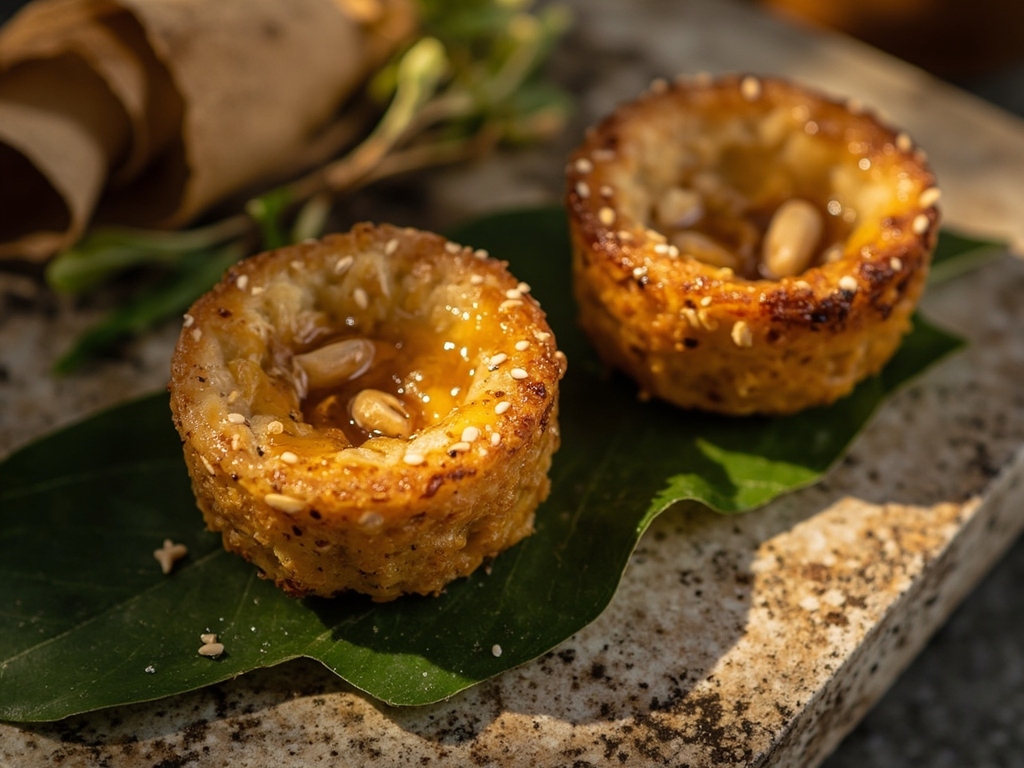
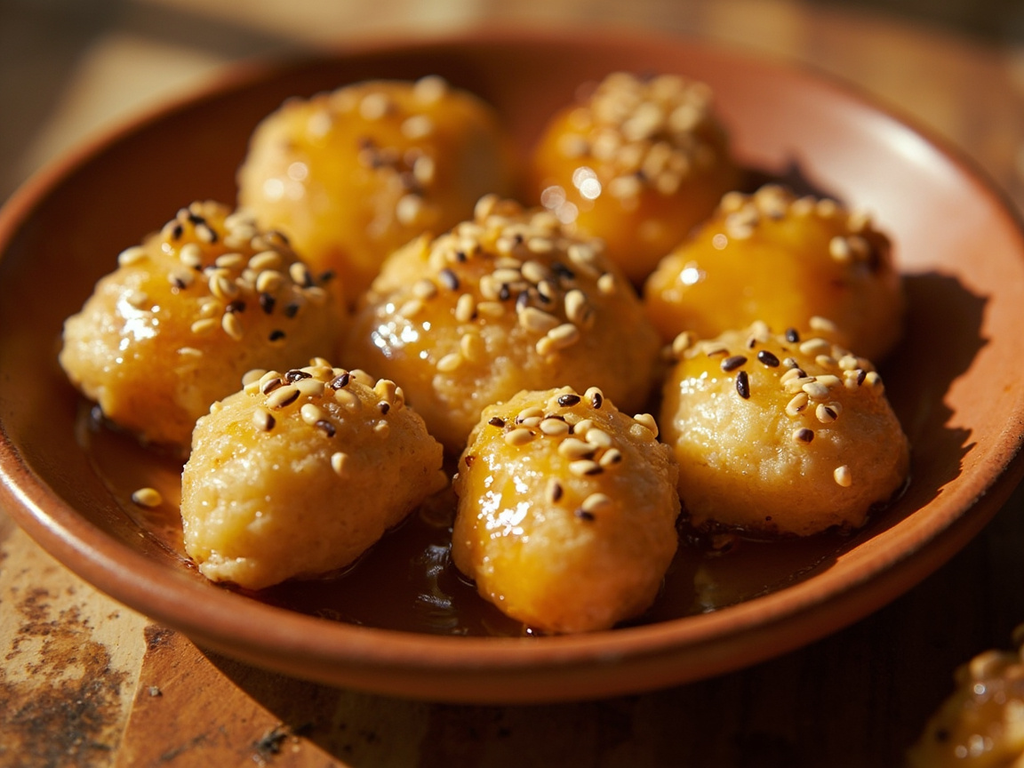
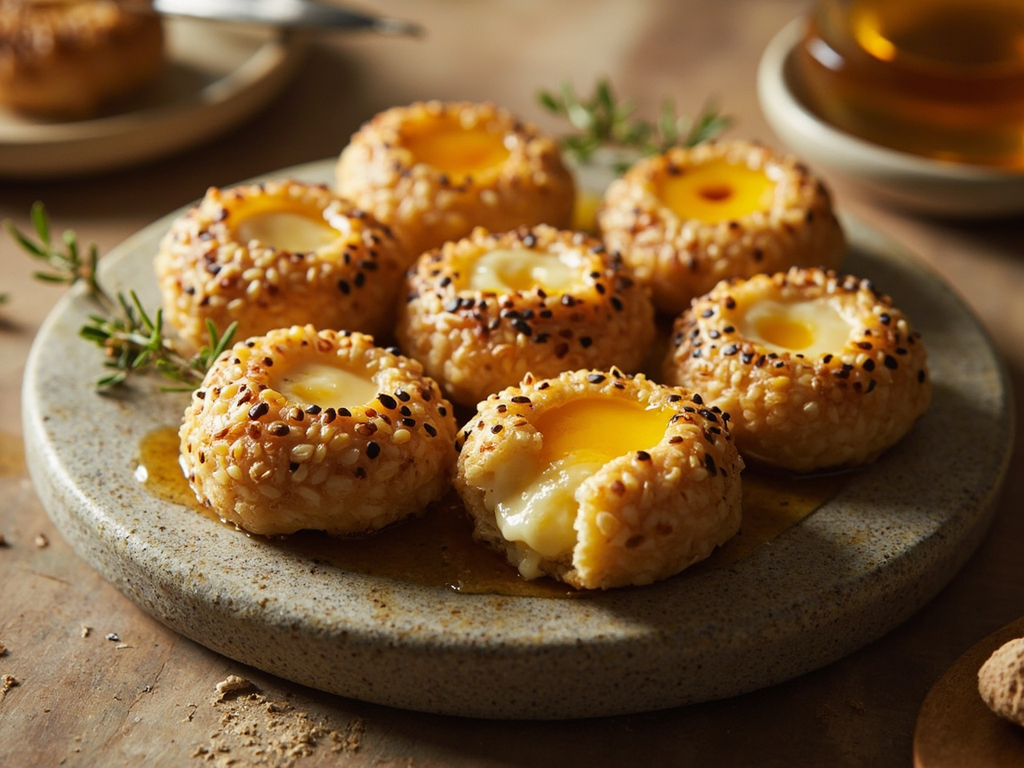
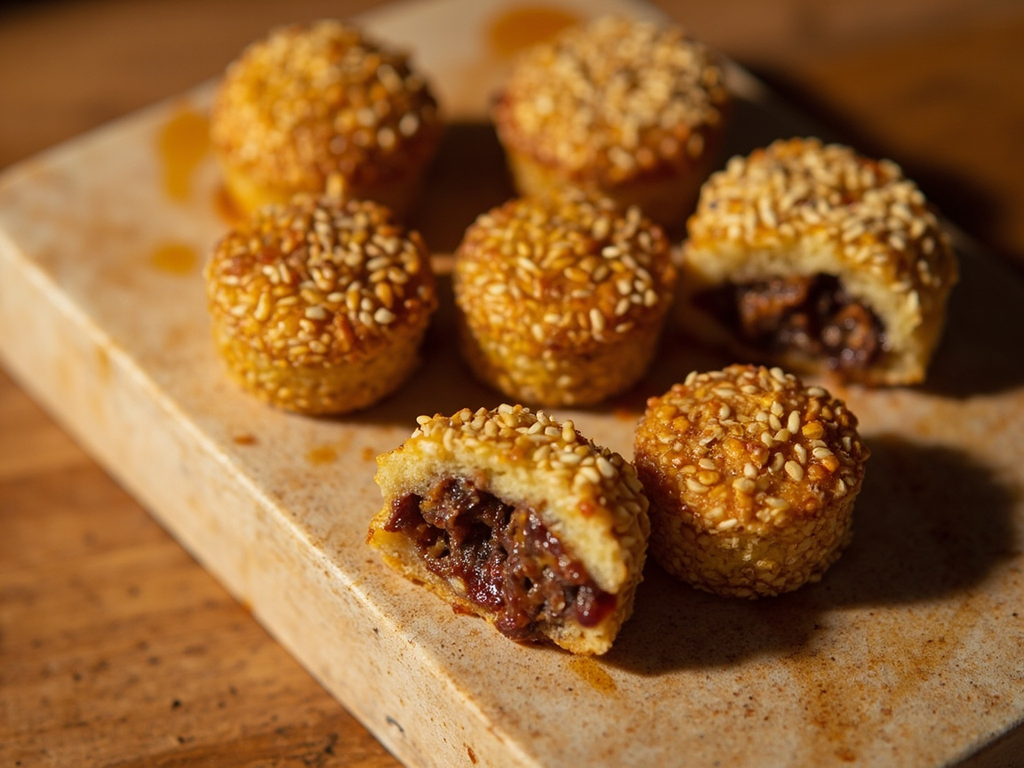
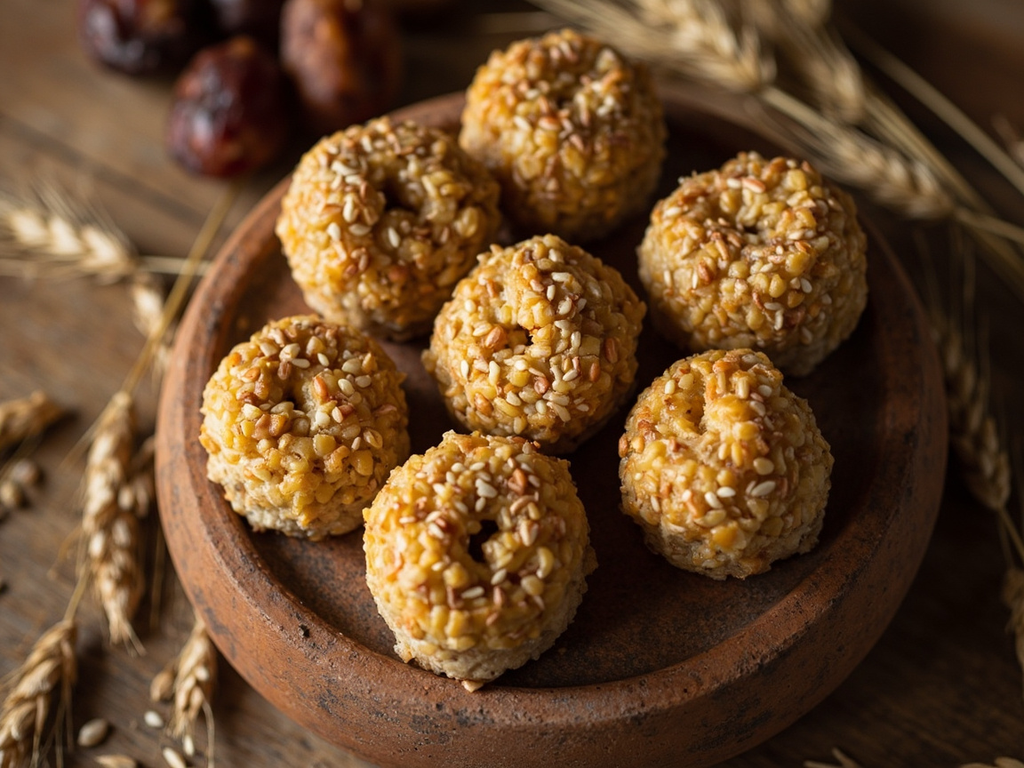
Small dense cakes of emmer flour, bound with honey and crushed dates, perfumed with sesame. They were baked on a hot stone and then placed before the cult statue of the god, as first fruits of the harvest.
Mortal, listen to the master of grain. When the ear has yellowed in my field, you shall not bite the first bread: you shall first place it on my table, still hot from the stone. Take the finest emmer flour, mix it with wild honey and the flesh of dates, press it between your palms, and let the slow fire brown the cake. This sweetness is my portion — and the abundance of the next harvests shall be yours.
- •Emmer wheat flour — two generous handfuls (cereal base, the grain of the god)
- •Wild honey — a good drizzle (binder and sweetness)
- •Pitted and mashed ripe dates — a small handful (sweetness, softness)
- •Sesame seeds — a generous pinch (flavor, crunch)
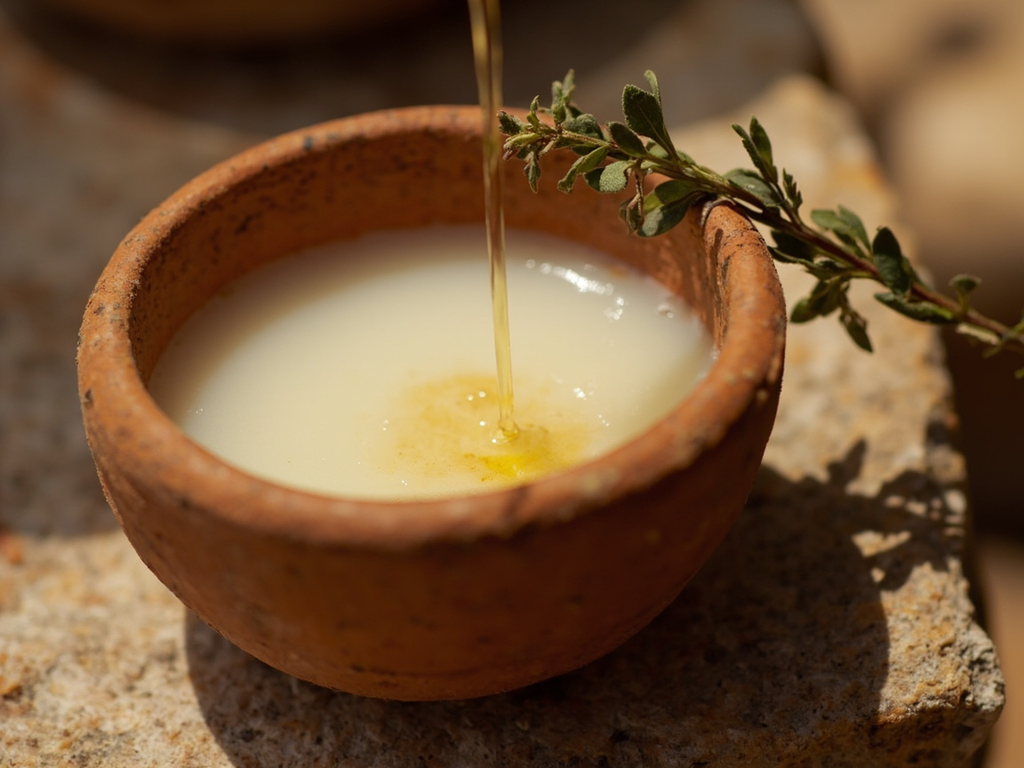
- •Olive oil — a drizzle (dough suppleness)
First Grain Cakes for the God's Table
Small dense cakes of emmer flour, bound with honey and crushed dates, perfumed with sesame. They were baked on a hot stone and then placed before the cult statue of the god, as first fruits of the harvest.
Why this dish? Dagon is the god of the harvest: before threshing the new grain, the first fruits of wheat were presented to him as cakes sweetened with honey and dates, placed on the offering table of his temple in Ashdod or Ugarit.
Mortal, listen to the master of grain. When the ear has yellowed in my field, you shall not bite the first bread: you shall first place it on my table, still hot from the stone. Take the finest emmer flour, mix it with wild honey and the flesh of dates, press it between your palms, and let the slow fire brown the cake. This sweetness is my portion — and the abundance of the next harvests shall be yours.
Ingredients (period version)
- Emmer wheat flour — two generous handfuls (cereal base, the grain of the god)
- Wild honey — a good drizzle (binder and sweetness)
- Pitted and mashed ripe dates — a small handful (sweetness, softness)
- Sesame seeds — a generous pinch (flavor, crunch)
- Olive oil — a drizzle (dough suppleness)
Ingredients
- Spelt flour (or einkorn) — 200 g (cereal base)
- Honey — 3 tbsp (binder and sweetness)
- Pitted Medjool dates — 80 g (about 5) (sweetness, softness)
- Sesame seeds — 2 tbsp (flavor, crunch)
- Olive oil — 2 tbsp (suppleness)
- Warm water — 4 to 6 tbsp (hydration)
Method
- Mash the dates into a paste with a fork and a little warm water.
- Mix the spelt flour, honey, oil, and date paste; add water little by little until a firm and supple dough forms.
- Incorporate half the sesame seeds.
- Shape into small thick cakes (6-7 cm), sprinkle with the remaining sesame seeds, pressing them in.
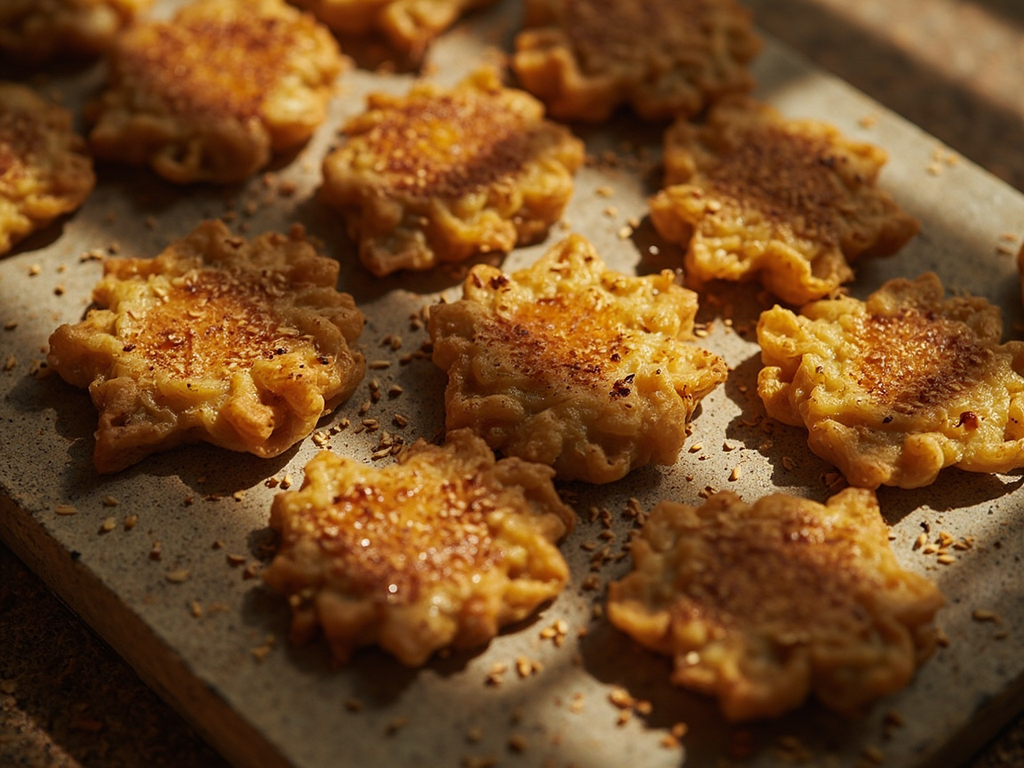
- Cook on a hot griddle or cast-iron pan over low heat, 4-5 minutes per side until golden and fragrant.
- Let cool slightly: they firm up as they cool, like the offering cakes that had to hold on the temple table.
How it was made : The temples of the ancient Near East received daily deposits of breads and cakes (Akkadian akalu, Hebrew leḥem) on the offering table. Emmer wheat, more rustic than modern wheat, dominated the fields; honey and dates were the main sweeteners before cane sugar. Baking was done on stone or the wall of a clay oven (tannur).
The contemporary twist : Served warm with Greek yogurt and a drizzle of honey, they become a "first fruits" snack perfect for a family table.
Dagon · Charactorium