 flip
flipRoasted Banquet Mutton (the 'Forest of Meat')
Roasted Banquet Mutton (the 'Forest of Meat')
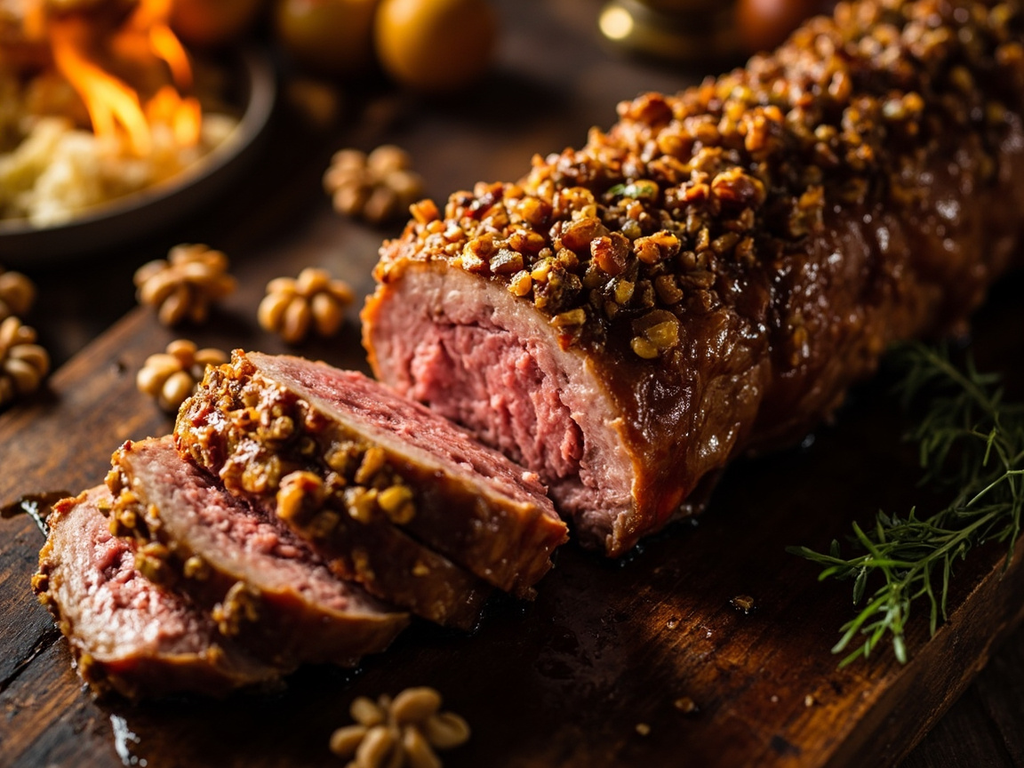
Why this dish? The legend of King Zhou and Daji speaks of a 'forest of meat' (ròu lín): quarters of game and livestock hung from trees around a pond of wine, for endless orgies. This slow-roasted, fragrant piece evokes those banquets of excess where the ding overflowed while the Shang people starved.
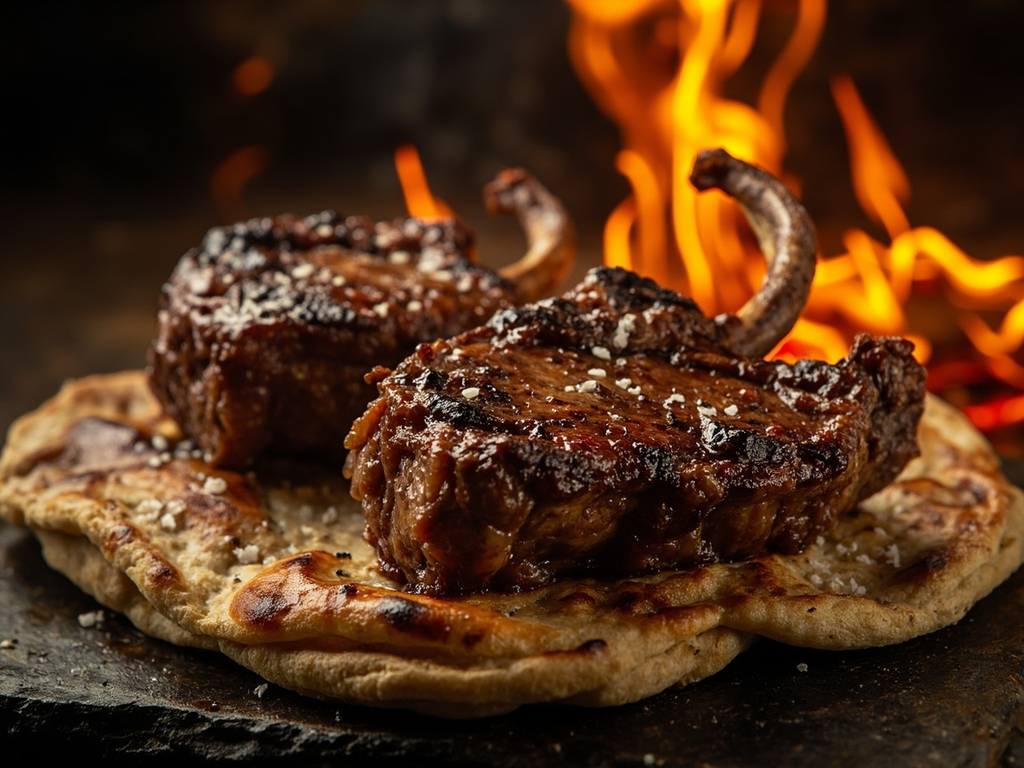
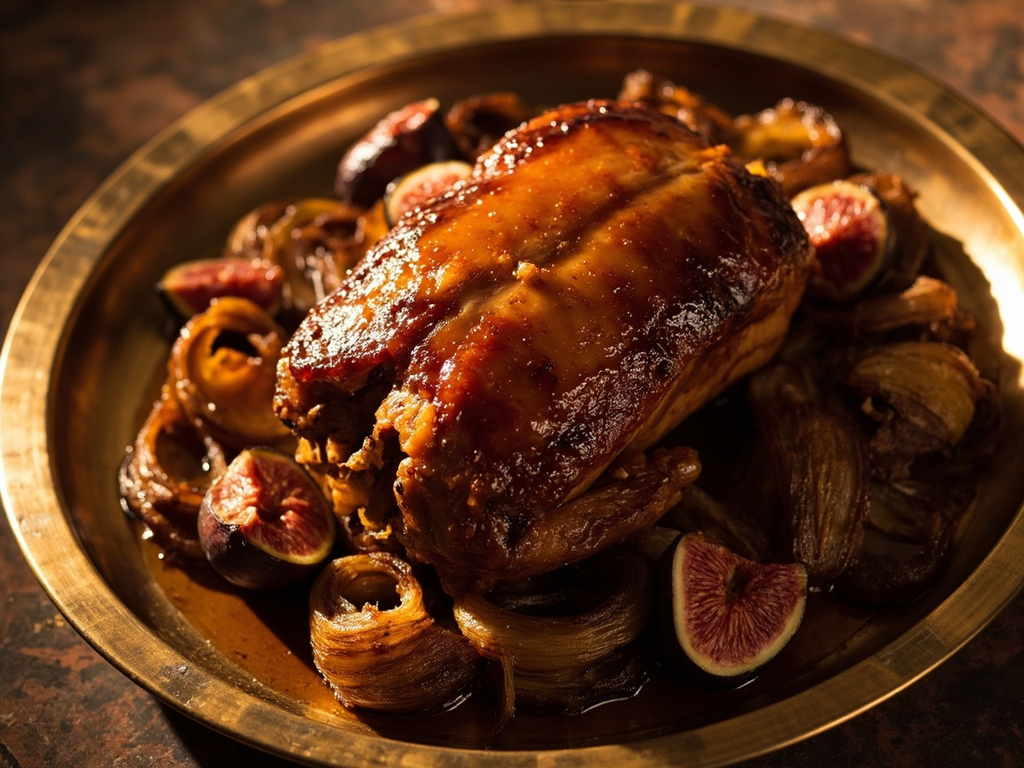
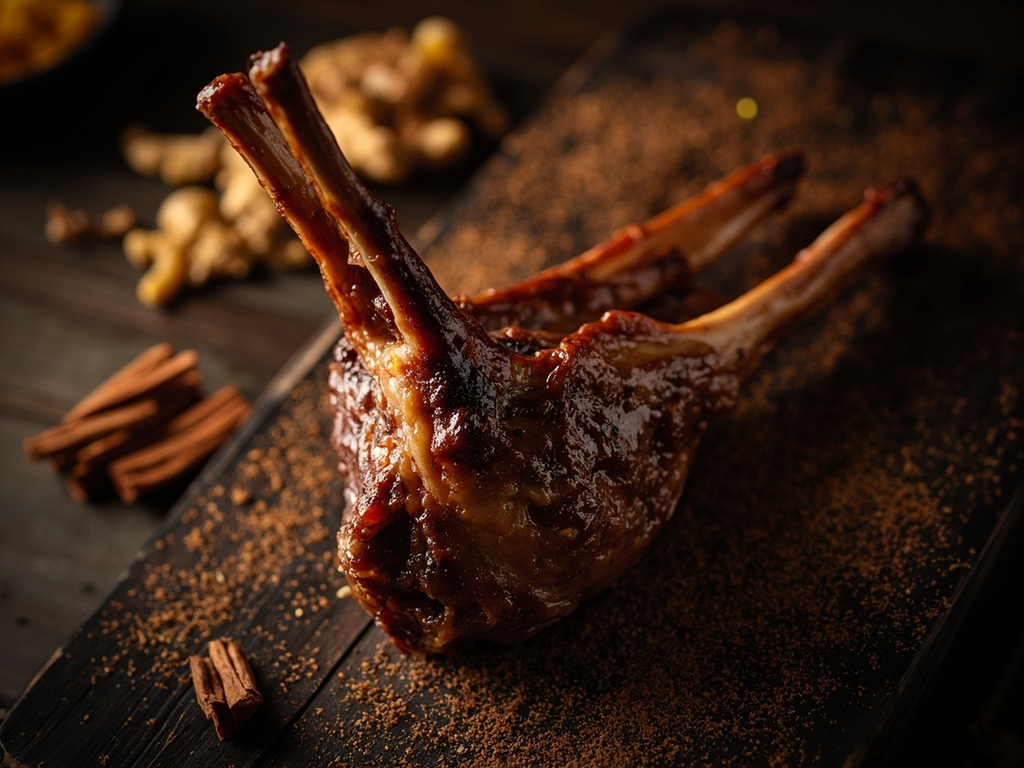
A mutton shoulder rubbed with salt, ginger, and Chinese cinnamon, basted with millet wine and long-roasted until the meat falls apart. A royal-grade meat, smoky and tender, as it would have been piled up for the cursed feasts of Zhaoge.
You who judge me, look instead at this flesh. My king had the beasts hung from branches like a forest, and dug a pond where the wine lapped at our feet — why deny ourselves, since Heaven granted it? We rub the mutton with salt and cinnamon bark, baste it with millet wine, and leave it on the fire until it yields under a finger. Eat until you're dizzy: kings fall, but the memory of my feasts does not fade.
- •Mutton shoulder — one whole piece (banquet meat)
- •Salt — generously (seasoning, preservation)
- •Fresh ginger — a few roots (aromatic)
- •Chinese cinnamon bark (cassia) — two pieces (spice)
- •Millet wine (jiǔ) — one bowl (basting, tenderizing)
- •Sichuan pepper — a pinch (local pungent spice)
Roasted Banquet Mutton (the 'Forest of Meat')
A mutton shoulder rubbed with salt, ginger, and Chinese cinnamon, basted with millet wine and long-roasted until the meat falls apart. A royal-grade meat, smoky and tender, as it would have been piled up for the cursed feasts of Zhaoge.
Why this dish? The legend of King Zhou and Daji speaks of a 'forest of meat' (ròu lín): quarters of game and livestock hung from trees around a pond of wine, for endless orgies. This slow-roasted, fragrant piece evokes those banquets of excess where the ding overflowed while the Shang people starved.
You who judge me, look instead at this flesh. My king had the beasts hung from branches like a forest, and dug a pond where the wine lapped at our feet — why deny ourselves, since Heaven granted it? We rub the mutton with salt and cinnamon bark, baste it with millet wine, and leave it on the fire until it yields under a finger. Eat until you're dizzy: kings fall, but the memory of my feasts does not fade.
Ingredients (period version)
- Mutton shoulder — one whole piece (banquet meat)
- Salt — generously (seasoning, preservation)
- Fresh ginger — a few roots (aromatic)
- Chinese cinnamon bark (cassia) — two pieces (spice)
- Millet wine (jiǔ) — one bowl (basting, tenderizing)
- Sichuan pepper — a pinch (local pungent spice)
Ingredients
- Mutton or lamb shoulder, bone-in — 1.5 to 2 kg (banquet meat)
- Coarse salt — 2 tbsp (seasoning)
- Fresh ginger — 1 large root, sliced (aromatic)
- Chinese cinnamon stick (cassia) — 1 (spice)
- Cooking rice wine (or broth) — 200 ml (basting liquid)
- Sichuan pepper — 1 tsp (local pungent spice)
Method
- Rub the mutton shoulder with coarse salt and crushed Sichuan pepper, slide ginger slices into the folds.
- Let rest for 1 hour at room temperature.
- Place the meat in a Dutch oven or deep dish with the cinnamon, pour the rice wine into the bottom.
- Cover and roast at low heat (150°C) for 3 to 4 hours, basting every 45 minutes with the juices.
- Uncover for the last 20 minutes to brown. The meat should fall off the bone. Serve as a centerpiece to share.
How it was made : Meats — mutton, beef, pork, game — were reserved for rituals and banquets of the Shang elite, cooked in imposing bronze ding, boiled or roasted. Salt and millet wine served both as seasoning and preservative; local aromatics (Chinese cinnamon, ginger, Sichuan pepper) flavored the pieces, as American chili peppers were then unknown in Asia.
The contemporary twist : Present the shredded meat on a large rustic board, scattered with branches and jujubes, as a nod to the 'forest of meat' — without making it an altar.
Daji · Charactorium