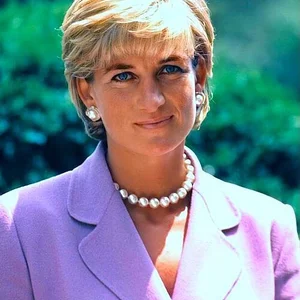

Diana Spencer married Prince Charles, heir to the British crown, in 1981, becoming Princess of Wales. A global media figure devoted to humanitarian causes, she died in a car crash in Paris in 1997.
Diana (Princess of Wales)
Diana Frances Spencer, Princess of Wales
5 min read
Frequently asked questions
Famous Quotes
« I'd like to be a queen of people's hearts.»
Key Facts
- Born in 1961 into a family of the British aristocracy (the Spencers)
- Married Prince Charles on 29 July 1981 in a wedding watched by hundreds of millions of viewers
- Led humanitarian campaigns, notably against anti-personnel landmines and on behalf of AIDS patients
- Divorced Prince Charles in 1996
- Died on 31 August 1997 in a car crash in the underpass beneath the Pont de l'Alma in Paris
Works & Achievements
Her commitment helped drive the international mobilization that led to the Ottawa Treaty banning anti-personnel mines, signed in late 1997.
Diana served as president of this renowned London children's hospital, supporting many causes related to sick children.
Her visits to and gestures toward AIDS patients helped change public attitudes toward the disease.
Diana devoted herself to people suffering from leprosy, breaking taboos by touching them in public.
Diana put 79 of her dresses up for sale to fund efforts against AIDS and cancer, shortly before her death.
Anecdotes
On 29 July 1981, the wedding of Diana and Prince Charles at St Paul's Cathedral in London was broadcast on television and watched by around 750 million viewers worldwide, one of the largest media events in history.
In April 1987, Diana publicly shook the hand of an AIDS patient without wearing gloves. At a time when many wrongly believed the disease could be passed on through simple contact, this gesture helped change the way the public viewed those who were ill.
In January 1997, Diana walked through a partially cleared minefield in Angola, wearing a flak jacket and a visor, to support the international campaign against anti-personnel landmines. The images travelled around the world.
Nicknamed the “people's princess” by the press, Diana was relentlessly pursued by the paparazzi. It was while fleeing these photographers that the car carrying her crashed in the Pont de l'Alma tunnel in Paris on 31 August 1997.
At her funeral on 6 September 1997, the singer Elton John performed a rewritten version of *Candle in the Wind*, retitled *Goodbye England's Rose*. The single became one of the best-selling of all time, with its proceeds donated to charity.
Primary Sources
There were three of us in this marriage, so it was a bit crowded.
Diana was the very essence of compassion, of duty, of style, of beauty.
I want to pay tribute to Diana myself. She was an exceptional and gifted human being.
Key Places
Royal estate near which Diana was born in 1961, at Park House. Her family was close to the British Crown.
Site of her wedding to Prince Charles on 29 July 1981, watched by hundreds of millions of viewers.
Diana's official residence in London, where she lived with her sons William and Harry.
Site of the fatal car crash that occurred during the night of 30 to 31 August 1997.
Site of her national funeral on 6 September 1997, an event of worldwide mourning.
Ancestral estate of the Spencer family where Diana is buried, on an island in the middle of a lake.
Typical Objects

Ring set with an oval sapphire surrounded by diamonds, given at the engagement in 1981. It is now worn by Catherine, Princess of Wales.

Gown of ivory silk taffeta with a train nearly eight metres long, created by David and Elizabeth Emanuel for the 1981 wedding.

Diamond tiara belonging to the Spencer family, worn by Diana on her wedding day instead of a royal jewel.

Protective equipment worn by Diana during her visit to a minefield in Angola in 1997, which became an emblem of her humanitarian commitment.

The telephoto lens of the photographers who relentlessly tracked Diana. These cameras symbolise the media pressure that marked her life and her death.
School Curriculum
Vocabulary & Tags
Key Vocabulary
Daily Life
Morning
Diana's mornings combined official duties with family life. Whenever she could, she would take her sons William and Harry to school herself, which was unusual for a member of the royal family.
Afternoon
Her afternoons were often devoted to visits to hospitals, schools, or charitable organizations. Each outing was meticulously planned by her staff and followed by the press.
Evening
In the evening, she attended official dinners, charity galas, or cultural premieres. She also cherished simple moments spent with her children at Kensington Palace.
Food
Like the royal court, she had access to refined cuisine, but Diana often ate lightly. She publicly spoke about her eating disorders, particularly bulimia, during the difficult years of her marriage.
Clothing
Diana was a global fashion icon, wearing the creations of leading British and international designers. Her outfits, from gala gowns to casual wear, were scrutinized and imitated all over the world.
Housing
She lived at Kensington Palace in London, as well as in the various royal residences during official stays. After her divorce, she kept her apartments at Kensington.
Historical Timeline
Period Vocabulary
Liens externes & ressources
Références
Œuvres
Soutien au Halo Trust et campagne contre les mines antipersonnel
1997
Présidence du Great Ormond Street Hospital for Children
1989
Engagement public contre la stigmatisation du sida
1987-1997
Patronage de la Leprosy Mission
1990
Vente caritative de ses robes aux enchères (Christie's)
juin 1997