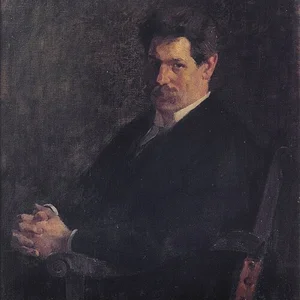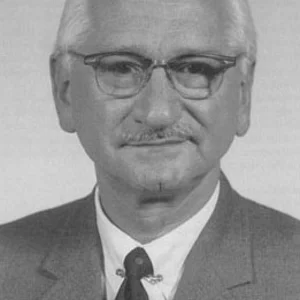

American physician and virologist of Polish origin. In the 1950s he developed the live attenuated oral vaccine against poliomyelitis, administered on a sugar cube, which made possible mass vaccination campaigns around the world.
Albert Sabin(1906 — 1993)
Albert Sabin
États-Unis, Empire russe
6 min read
Frequently asked questions
Key Facts
- Born in 1906 in Białystok (Russian Empire, now Poland), emigrated to the United States in 1921
- Developed the live attenuated oral vaccine against polio, tested on a large scale from 1957-1959
- His oral vaccine (OPV) was approved in the United States in 1961, succeeding the injectable vaccine of Jonas Salk (1955)
- Declined to patent his vaccine in order to make it accessible to as many people as possible
- Died in 1993 in Washington; his vaccine is a cornerstone of the global eradication of polio
Works & Achievements
His major achievement: a vaccine swallowed on a sugar cube, cheap and easy to administer, which became the main tool of the worldwide polio eradication campaigns.
Meticulous virology work that involved weakening the virus so it would immunize without causing illness.
Vaccination of millions of Soviet children, the first large-scale demonstration of the oral vaccine's effectiveness.
During the Second World War, Sabin helped develop vaccines to protect American soldiers.
A major ethical gesture: by refusing to patent his discovery, Sabin made it cheap and accessible to the entire world.
Sabin put his experience at the service of one of the world's great centers of scientific research.
Anecdotes
Albert Sabin was convinced that his oral vaccine, dropped onto a lump of sugar, was better than the injectable vaccine of his rival Jonas Salk. To prove it, he tested it on himself, on his own family, and on volunteer inmates in an Ohio prison.
Unable to test his vaccine on a large scale in the United States (where Salk's vaccine was already deployed), Sabin turned to the Soviet Union at the height of the Cold War. Millions of Soviet children were vaccinated in the late 1950s, proving the effectiveness of the oral vaccine.
Sabin refused to patent his vaccine so that it would remain cheap and accessible to the entire world. He believed his discovery was a gift to humanity and did not want to profit from it.
Sabin's vaccine, simple to administer since it was swallowed rather than injected, became the main weapon in the great worldwide campaigns to eradicate polio, such as the “national immunization days” organized in dozens of countries.
Born in Białystok in the Russian Empire (today in Poland), Sabin emigrated to the United States as a teenager and learned English. He paid for part of his medical studies himself and became one of the most influential virologists of the 20th century.
Primary Sources
The live attenuated oral poliovirus vaccine offers the advantage of producing intestinal immunity and spreading naturally, enabling large-scale collective protection.
The trials conducted on several million children demonstrated the safety and effectiveness of the oral vaccine administered by mouth.
Oral administration of attenuated strains of all three types of poliovirus induces lasting immunity comparable to that of a natural infection, without causing the disease.
Key Places
Sabin's birthplace, then part of the Russian Empire. He spent his childhood there before his family emigrated.
Sabin studied medicine there and earned his degree in 1931. It was the starting point of his scientific career.
Laboratory at the University of Cincinnati where Sabin developed his oral polio vaccine in the 1950s.
Site of the mass trials of the oral vaccine in the late 1950s, which demonstrated its effectiveness on millions of children.
Prestigious research center that Sabin directed beginning in 1970.
Sabin's burial place, in tribute to his military service and his contribution to public health.
Typical Objects

The iconic carrier for the oral vaccine: a drop of vaccine placed on a sugar cube that the child swallows. This simple gesture made it possible to vaccinate entire crowds without a syringe.

The virologist's basic instrument for observing cells and cultures. Sabin used it to study how polioviruses behaved within tissues.

Tubes and flasks where viruses were grown on living cells. It was by culturing the poliovirus that Sabin selected weakened strains, unable to cause the disease.

A small bottle for placing the exact dose of vaccine into the child's mouth. Light and easy to carry, it made mass campaigns possible.

A huge respirator in which polio patients whose breathing muscles were paralyzed were enclosed. Its frightening silhouette symbolizes the disease that Sabin's vaccine helped push back.

The working garment of the researcher and the physician, a guarantee of hygiene and a sign of the scientific profession. Sabin wore it every day in his laboratories.
School Curriculum
Vocabulary & Tags
Key Vocabulary
Tags
Daily Life
Morning
Sabin started his day early at the laboratory, in a white coat. Mornings were devoted to experiments on virus cultures and examining the results under the microscope.
Afternoon
In the afternoon, he analyzed data, wrote scientific papers, and discussed with his fellow researchers. He was renowned for his rigor and his inexhaustible energy.
Evening
In the evening, Sabin often kept working late, reading medical journals and preparing for the international conferences he attended all over the world.
Food
Like a twentieth-century American, his diet was ordinary and urban. Absorbed in his work, he gave little importance to meals, which he often ate quickly.
Clothing
At the laboratory, he wore the researcher's white coat. In public and at conferences, he sported the classic suit and tie of the scientist and physician of his era.
Housing
Sabin lived in comfortable urban housing close to his places of work, in Cincinnati and then elsewhere, according to his roles as a researcher and professor.
Historical Timeline
Period Vocabulary
Liens externes & ressources
Références
Œuvres
Vaccin oral vivant atténué contre la poliomyélite (vaccin Sabin)
1957-1961
Sélection des souches atténuées des trois types de poliovirus
1956
Essais cliniques de masse en Union soviétique
1959
Recherches sur les vaccins contre l'encéphalite et la dengue
années 1940
Renoncement au brevet du vaccin
années 1960
Direction de l'Institut Weizmann
1970-1972