 flip
flipJamu Kunyit Asam
Jamu Kunyit Asam
Why this dish? Jamu — herbal medicinal tonics — are an integral part of Javanese culture, from the kraton to the most remote villages. Kunyit asam (turmeric-tamarind) is the most widespread jamu, drunk daily to maintain bodily vigor. Diponegoro, raised in the kraton tradition where herbalists prepared jamu for the royal family, and who led a life of piety and asceticism, would naturally have consumed these brews. On campaign, turmeric and tamarind grew everywhere in Java, making this remedy accessible even in wartime.
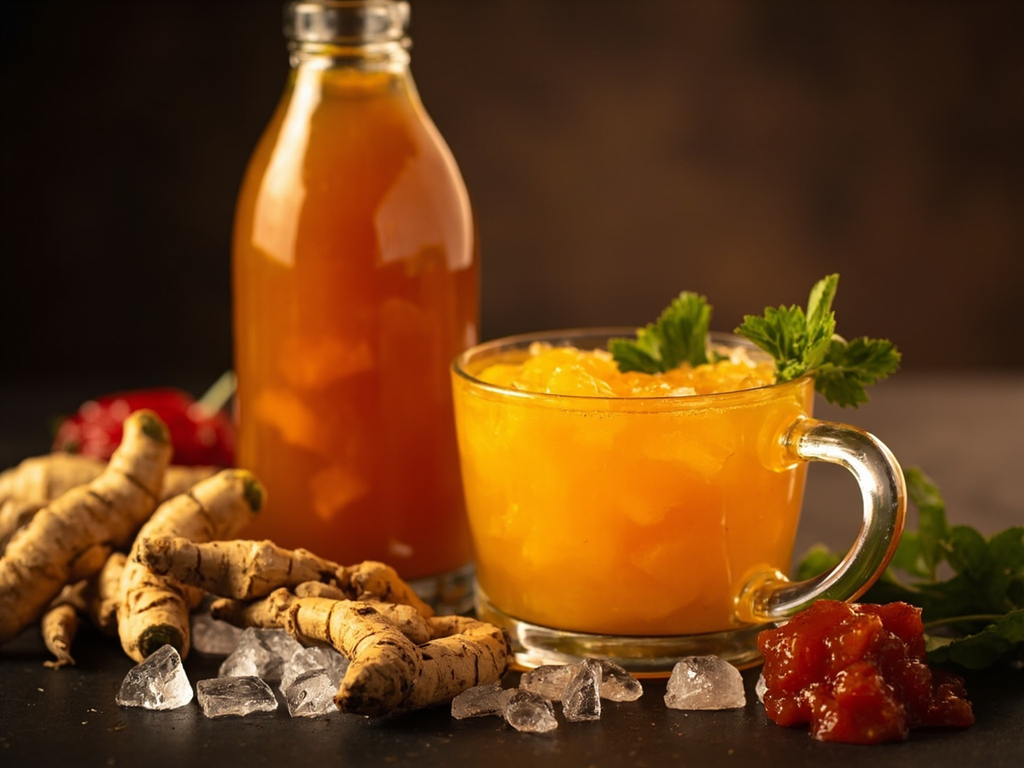
Bright yellow decoction of fresh turmeric and tamarind, lightly sweetened with palm sugar. This ancient Javanese tonic, both bitter, sour, and comforting, is drunk warm or at room temperature. The gukang jamu (jamu sellers) still offer it today in the streets of Yogyakarta.
Every morning, before the dawn prayer, I drank my jamu kunyit — it is the discipline of the body that prepares that of the soul. My grandmother at the kraton taught me that turmeric purifies the blood and tamarin keeps fevers at bay. In the forest of Selarong, when the marsh miasmas afflicted my soldiers, I had jars of this jamu prepared to fortify the men. It is not a Dutch medicine with their dubious powders — it is the knowledge of our ancestors, inscribed in the very earth of Java.
- •Fresh turmeric (kunyit) — Several rhizomes (Medicinal base, anti-inflammatory)
- •Tamarind (asam Jawa) — A handful of pulp (Acidity and digestion)
- •Gula Jawa (palm sugar) — A small piece (Sweeten bitterness)
- •Water — Abundant (Decoction)
- •Salt — A pinch (Balance flavors)
Jamu Kunyit Asam
Bright yellow decoction of fresh turmeric and tamarind, lightly sweetened with palm sugar. This ancient Javanese tonic, both bitter, sour, and comforting, is drunk warm or at room temperature. The gukang jamu (jamu sellers) still offer it today in the streets of Yogyakarta.
Why this dish? Jamu — herbal medicinal tonics — are an integral part of Javanese culture, from the kraton to the most remote villages. Kunyit asam (turmeric-tamarind) is the most widespread jamu, drunk daily to maintain bodily vigor. Diponegoro, raised in the kraton tradition where herbalists prepared jamu for the royal family, and who led a life of piety and asceticism, would naturally have consumed these brews. On campaign, turmeric and tamarind grew everywhere in Java, making this remedy accessible even in wartime.
Every morning, before the dawn prayer, I drank my jamu kunyit — it is the discipline of the body that prepares that of the soul. My grandmother at the kraton taught me that turmeric purifies the blood and tamarin keeps fevers at bay. In the forest of Selarong, when the marsh miasmas afflicted my soldiers, I had jars of this jamu prepared to fortify the men. It is not a Dutch medicine with their dubious powders — it is the knowledge of our ancestors, inscribed in the very earth of Java.
Ingredients (period version)
- Fresh turmeric (kunyit) — Several rhizomes (Medicinal base, anti-inflammatory)
- Tamarind (asam Jawa) — A handful of pulp (Acidity and digestion)
- Gula Jawa (palm sugar) — A small piece (Sweeten bitterness)
- Water — Abundant (Decoction)
- Salt — A pinch (Balance flavors)
Ingredients
- Fresh turmeric — 100 g, peeled (Medicinal base)
- Tamarind paste — 2 tbsp (Acidity)
- Palm sugar or honey — 2 tbsp (Sweeten)
- Water — 1 liter (Decoction)
- Salt — 1 pinch (Balance)
Method
- Peel the fresh turmeric and grate finely or blend with a little water to make a paste.
- In a saucepan, bring the water to a boil. Add the turmeric paste and simmer for 15 minutes.
- Add the tamarind paste, palm sugar, and pinch of salt. Stir and cook for another 5 minutes.
- Strain through a fine sieve or cheesecloth to obtain a clear golden-yellow liquid.
- Let cool slightly. Jamu is traditionally drunk warm or at room temperature, never iced.
- Keeps for 2 to 3 days in the refrigerator.
How it was made : Jamu is a Javanese medicinal tradition documented since the 9th century, with depictions on the bas-reliefs of Borobudur temple. At the kraton of Yogyakarta, specialized herbalists (dukun jamu) prepared formulas passed down through generations. Kunyit asam is the oldest and most universal jamu — from palace to village. The anti-inflammatory properties of turmeric and digestive properties of tamarind are now confirmed by modern pharmacological research.
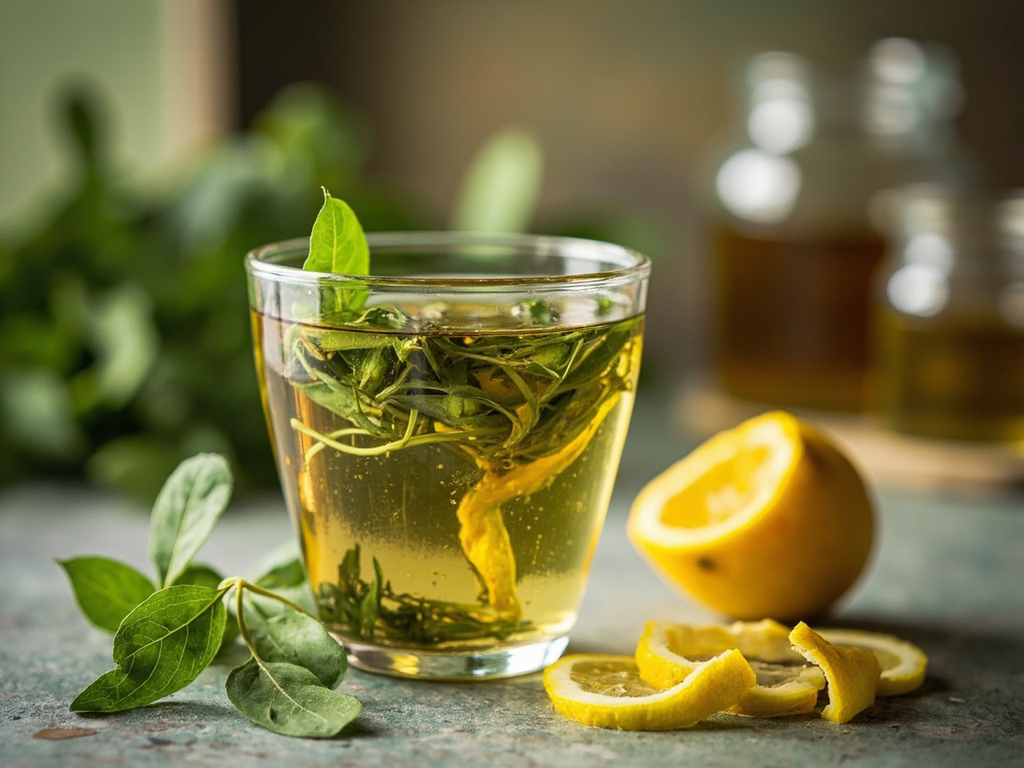
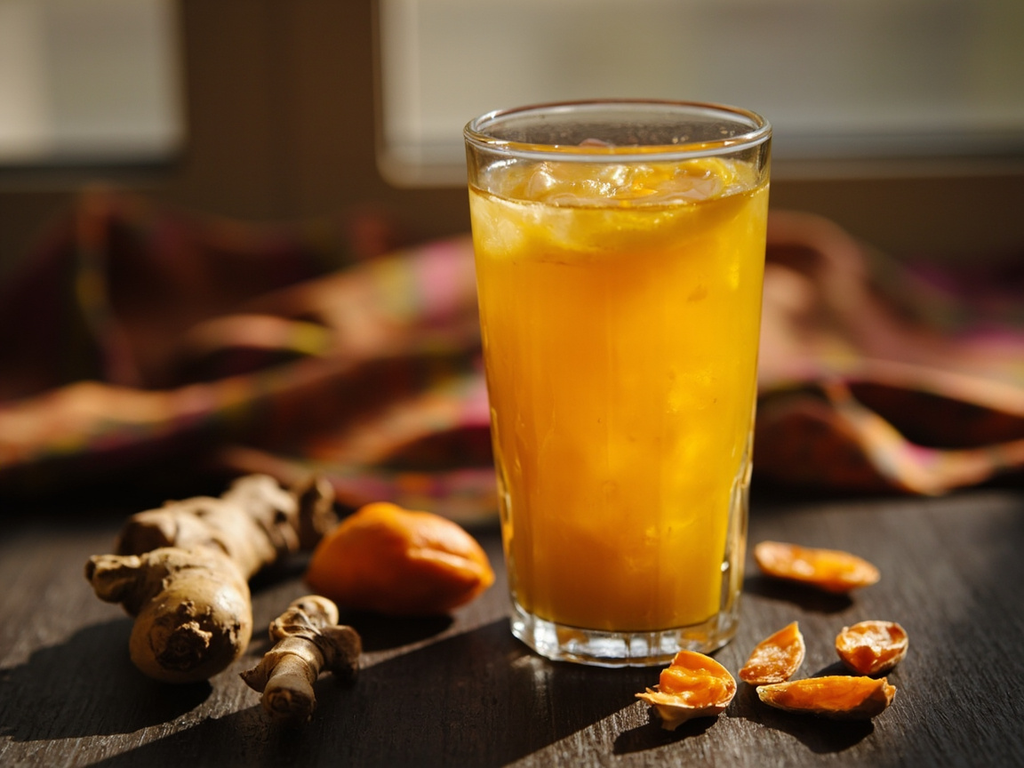
The contemporary twist : Serve in a small clear glass to appreciate the sunny yellow color, with a thin slice of fresh turmeric floating on top as decoration.
Sources : Beers, Susan-Jane, “Jamu: The Ancient Indonesian Art of Herbal Healing”, Periplus, 2001 · Soedarsono et Supriyadi, “Tumbuhan Obat Tradisional Jawa”, UGM Press, 1999
Diponegoro · Charactorium