
French jazz guitarist
Django Reinhardt(1910 — 1953)
Django Reinhardt
France
9 min read
Frequently asked questions
Famous Quotes
« La musique est une chose trop sérieuse pour ne pas en rire.»
Key Facts
- Né en 1910 à Liberchies (Belgique) dans une famille tsigane manouche, il grandit en France
- En 1928, un incendie de sa roulotte lui brûle gravement la main gauche, ne lui laissant que deux doigts valides
- En 1934, il cofonde avec le violoniste Stéphane Grappelli le Quintette du Hot Club de France, premier grand groupe de jazz européen
- Compositeur de 'Minor Swing' (1937) et 'Nuages' (1940), pièces maîtresses du répertoire jazz mondial
- Il meurt d'une hémorragie cérébrale en 1953 à Fontainebleau, laissant une œuvre fondatrice du jazz manouche
Works & Achievements
A minor-key composition that became the absolute standard of gypsy jazz, recorded with the Quintette du Hot Club de France. Its brilliant harmonic structure and dizzying improvisations make it one of the most covered pieces in jazz history.
A melancholic ballad composed during the Occupation, it became the anthem of Parisian cultural resistance and Django's most famous piece. Its poignant melody was broadcast clandestinely on Radio Londres and symbolized hope in dark times.
A virtuosic composition showcasing the dialogue between Django's guitar and Grappelli's violin. This title gave rise to the term 'djangology', used to refer to the entire repertoire and technique invented by Django.
A musical tribute to the popular Parisian neighborhood of Belleville, blending gypsy influences with American swing. This piece perfectly illustrates the unique synthesis Django achieved between European Romani music and American jazz.
A composition of great harmonic richness, recorded during the war, bearing witness to Django's artistic maturity at its peak. The American title 'Django's Tiger' was adopted during its international release after the war.
One of Django's last compositions, of great serenity, recorded in Samois shortly before his death. It illustrates his evolution toward a more introspective style and his complete mastery of the electric guitar at the end of his career.
Anecdotes
In November 1928, Django Reinhardt narrowly escaped death in a fire that engulfed his caravan. His last two fingers on his left hand were severely burned and partially paralyzed. Doctors told him he would never be able to play guitar again, but Django completely reinvented his technique, using only his two functional fingers for complex chords.
In 1946, Django Reinhardt was invited by Duke Ellington to tour the United States, the home of jazz. But the trip turned into an organizational disaster: Django arrived without a guitar, without sheet music, hours late to rehearsals. Yet the moment he started playing, American audiences were spellbound by this European genius who had come from the Manouche caravans.
Django Reinhardt had a passion for billiards and fishing, to the point of disappearing for hours before a concert to play pool. His musical partners, most notably Stéphane Grappelli, would despair of finding him and sometimes had to start concerts without him, before he would arrive late, a smile on his face, and immediately light up the stage.
During the German Occupation, Django Reinhardt, as a Manouche, should have fled or gone into hiding. Yet he performed throughout the war in Paris, becoming strangely popular among Nazi officers who loved his jazz, despite the regime's official policy against this music, deemed 'degenerate'. He did attempt to flee to Switzerland in 1943, without success.
Django composed without being able to read or write music. He memorized everything by ear and improvised constantly. When musicologists or publishers wanted to notate his compositions, they had to follow him around with music paper and transcribe in real time, as Django was unable to dictate a written score.
Primary Sources
The 78 rpm records made between 1934 and 1939 constitute the direct sonic testimony of Django's genius. Titles such as 'Minor Swing' and 'Djangology' were captured in Parisian studios and broadcast across Europe.
Django speaks of his Manouche origins, his self-taught apprenticeship, and his vision of jazz: 'Jazz is like a conversation — you have to listen to the other person before you respond.'
Grappelli describes their first meeting at the Bal Blomet in Paris and the spontaneous birth of the Quintette: 'We started playing together and it was as if we had known each other forever. Django heard everything, retained everything, invented everything.'
Document attesting to Django's American tour alongside Duke Ellington, a testament to the international recognition of the European musician on the world jazz stage.
The recordings from 1947–1953 show Django adopting the electric guitar and evolving toward bebop, demonstrating his constant capacity for reinvention until his death.
Key Places
A shantytown on the outskirts of Paris where many Manouche families lived, including Django's. It was here that he grew up, learned guitar at musette dance halls, and forged his musical identity amid poverty and creativity.
Famous Parisian dance hall where Django and Stéphane Grappelli first met and played together, giving birth to their legendary partnership and the future Quintette du Hot Club de France.
Prestigious Parisian concert hall where Django and the Quintette du Hot Club de France gave some of their most memorable performances, cementing the reputation of Gypsy jazz among the wider Parisian public.
Village on the banks of the Seine where Django spent the last years of his life fishing and composing. Since 1983, an annual Gypsy jazz festival has been held there in his honor, drawing thousands of enthusiasts from around the world.
Village in Wallonia where Jean Reinhardt was born on January 23, 1910, into a family of itinerant Sinti. His birth in a caravan encampment symbolizes the nomadic and free-spirited destiny that would define his entire life.
Typical Objects

A large-soundhole guitar made by Mario Maccaferri for the Selmer company, which became the iconic instrument of gypsy jazz. Django shaped its characteristic sound — warm and percussive — through its steel strings and unique resonance chamber.

Django used a particularly thick and rigid pick to achieve a clean, powerful attack on the steel strings. This accessory, combined with his two-finger technique, gave his playing a stunning precision and velocity.

The recording medium of the era, shellac 78 rpm records allowed Django's music to be heard in cafés, dance halls, and homes. Each side lasted only three minutes, forcing musicians to condense their improvisational genius.

The traditional dwelling of the Sinti and Manouche community, the horse-drawn caravan was Django's itinerant home. It was in a similar caravan that he nearly died in the fire of 1928, an event that radically transformed his life as a musician.

After his 1946 American tour, Django adopted the electric guitar, reflecting his constant desire to reinvent himself. The Gibson ES-300 allowed him to explore bebop and expand his sound toward new musical horizons.

Django's favorite pastime off stage, the fishing rod symbolized his passion for nature and the quiet life along the Seine at Samois. He would often disappear for hours — or even days — to fish, much to the despair of his musical partners.
School Curriculum
Vocabulary & Tags
Key Vocabulary
Daily Life
Morning
Django rarely got up before noon, true to the rhythm of night musicians. He started the day slowly, with strong coffee and a cigarette, often in his caravan or a makeshift apartment in Paris. He didn't read newspapers and kept up with current events at the café, through conversation.
Afternoon
Afternoons were devoted to fishing along the Seine or endless games of billiards in the cafés of Montparnasse or Saint-Germain. He could also disappear for hours to play cards with other Manouche Roma, forgetting rehearsals and professional appointments.
Evening
Evenings began with late rehearsals, often improvised, then concerts in Parisian jazz clubs — the Hot Club, Melody's Bar, the cellar venues of Saint-Germain. Django played until dawn, improvising endlessly, then lingered with the musicians over a glass of red wine.
Food
Django ate simply, following the habits of the Manouche community: stews, game, slow-cooked dishes prepared over a wood fire or by his mother Négros. He enjoyed ordinary red wine and beer, and had no interest in the refinements of Parisian bourgeois cuisine.
Clothing
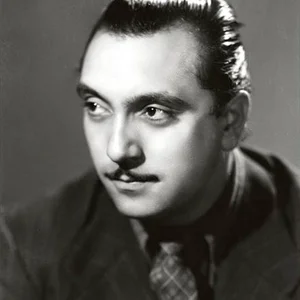
Django wore dark suits, often slightly rumpled, with a tie and sometimes a wide-brimmed hat. His style was that of a European jazz musician of the 1930s–40s, somewhere between stage elegance and natural nonchalance. He frequently had a cigarette at his lips, including on stage.
Housing
Django long lived in caravans with his family and the Manouche community on the outskirts of Paris. With success, he rented apartments in Paris, but regularly returned to live at the encampment. Late in life, he settled in a house in Samois-sur-Seine, by the water, always remaining close to nature and the river.
Historical Timeline
Period Vocabulary
Visual Style
Esthétique jazz parisien des années 1930-40 : clair-obscur dramatique, tons sépia et ambre, ambiance cave enfumée avec affiches Art Déco et silhouettes élégantes en costumes d'époque.
Sound Ambience
Ambiance de cave jazz parisienne des années 1930-40, guitare manouche en dialogue avec un violon, brouhaha de brasserie et atmosphère enfumée d'un Paris sous l'Occupation.