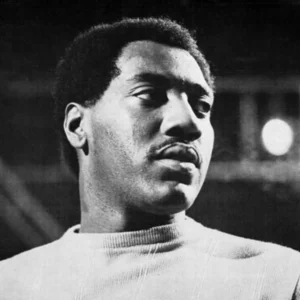

Dorothy Ashby was an American jazz harpist and composer, considered one of the pioneers who established the harp as a fully-fledged solo instrument in jazz. Active from the 1950s to the 1980s, she blended jazz, world music, and soul.
Dorothy Ashby(1932 — 1986)
Dorothy Ashby
États-Unis
6 min read
Frequently asked questions
Key Facts
- Born on August 6, 1932, in Detroit into a family of musicians
- Released her landmark album 'Afro-Harping' in 1968, blending jazz, funk, and exotic sounds
- Established the harp, an instrument rare in jazz, as a solo improvisation instrument
- Highly sought-after as a studio musician in the 1970s (Stevie Wonder, Bill Withers)
- Died on April 13, 1986, in Santa Monica, California
Works & Achievements
Her first album under her own name, which established the harp as a fully-fledged jazz solo instrument.
Recorded with flutist Frank Wess for Prestige; a refined dialogue between harp and flute over hard bop foundations.
Her second collaboration with Frank Wess, confirming her place in East Coast jazz.
Her most famous record, produced by Richard Evans: a blend of jazz, funk, soul, and African sounds, later heavily sampled by hip-hop producers.
An album extending the soul-jazz vein of “Afro-Harping,” with covers of hits from the era.
Her most adventurous work: she sings, plays the koto, and draws inspiration from the Persian poetry of Omar Khayyam.
Her contribution to this soul masterpiece, notably on “If It's Magic,” illustrates her status as a leading studio musician.
Compositions written for the African American theater troupe she co-founded in Detroit with her husband John Ashby.
Anecdotes
Dorothy Ashby liked to say that she had three handicaps when it came to making it in jazz: being a woman, being Black, and playing an instrument that almost no one associated with the music. Back then the harp was seen as a parlor instrument—classical and “feminine”; she spent years convincing audiences and musicians that you really could swing with it.
She grew up in Detroit in a family of musicians: her father, Wiley Thompson, was a jazz guitarist who often invited fellow players over to the house. Young Dorothy learned by listening to them, and she started out on piano and saxophone at the famous Cass Technical High School before falling in love with the harp.
In 1970 she recorded “The Rubaiyat of Dorothy Ashby,” an album inspired by a collection of medieval Persian poems, the Rubaiyat of Omar Khayyam. On the record she sings and also plays the koto, a thirteen-stringed Japanese zither: a bold blend of jazz, soul, and world music that was well ahead of its time.
Dorothy Ashby's harp can be heard on one of soul music's most celebrated albums: Stevie Wonder's “Songs in the Key of Life” (1976), notably on the track “If It's Magic.” In demand as a session musician, she brought her instrument to millions of listeners who would never have crossed paths with her in a jazz club.
With her husband John Ashby, a percussionist and writer, she founded an African American theater troupe in Detroit, the Ashby Players, for which she composed the music. She also hosted a radio show, proving that she was as much an artist as a cultural entrepreneur for her community.
Primary Sources
I had something like three strikes against me: being a woman, being Black, and playing an instrument that people — and especially musicians — just couldn't picture in jazz.
The first recording entirely devoted to the harp as a solo jazz instrument: on it, Dorothy Ashby improvises the way a saxophonist or a pianist would, backed by a jazz rhythm section.
A landmark album blending harp, strings, percussion, and funk groove; it brings jazz into conversation with soul and African sounds, and remains her most-listened-to record.
Dorothy Ashby is credited on harp on the album, notably on the song “If It's Magic,” a testament to her standing as a leading studio musician.
Key Places
Her hometown, where she grew up in a family of musicians and began her career. Birthplace of Motown and capital of soul.
A high school renowned for its music program, where she studied piano and saxophone alongside future jazz greats from Detroit.
It was for the Cadet label, in Chicago, that she recorded her most famous album, “Afro-Harping,” in 1968.
In the late 1950s she recorded albums there with flutist Frank Wess, such as “Hip Harp” and “In a Minor Groove.”
Settled in California, she became a sought-after studio musician for pop and soul, and died there in 1986.
Typical Objects
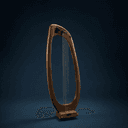
Her instrument of choice, with 47 strings and 7 pedals. Against all prejudice, she turned it into a genuine solo jazz instrument.
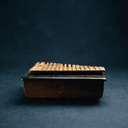
A thirteen-stringed Japanese zither that she featured on the album “The Rubaiyat of Dorothy Ashby,” opening jazz up to world music.
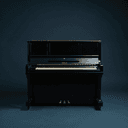
The first instrument she studied at Cass Technical High School in Detroit; it gave her the harmonic foundations that would later feed her harp playing.
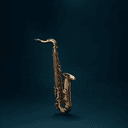
An instrument she also played in her youth; its influence can be felt in the way she improvised melodic lines on the harp.
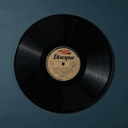
The format for jazz albums of the era, on which her recordings such as “Afro-Harping” and “Dorothy's Harp” were released.
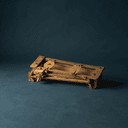
Sheets on which she wrote her compositions and arrangements, including the music for the Ashby Players theater troupe.
School Curriculum
Vocabulary & Tags
Key Vocabulary
Tags
Daily Life
Morning
A professional harpist's morning begins with long hours of technical exercises: the harp demands daily work on the fingers and pedals. Dorothy Ashby also used this time to write her arrangements and compositions.
Afternoon
Afternoons were often devoted to rehearsals with her musicians or to recording sessions in the studio. As a much-in-demand musician, she went from one session to the next for other jazz, soul, and pop artists.
Evening
In the evening came the concerts: jazz clubs, performance halls, and, in Detroit, shows by her troupe the Ashby Players. Transporting and tuning a large concert harp was part of the ritual before stepping on stage.
Food
Like most middle-class Americans of her day, she ate ordinary everyday food. Life as a touring musician often meant meals grabbed on the go, between one drive and one concert and the next.
Clothing
On stage, she wore elegant outfits, polished dresses, and the carefully styled hair typical of jazz and soul artists from the 1950s to the 1970s. In the studio, her clothing was simpler and more practical.
Housing
She first lived in Detroit, an industrial city and a capital of Black American music, before settling in California, near Los Angeles, to be closer to the recording studios where she worked.