 flip
flipMaccha besara — freshwater fish in mustard gravy
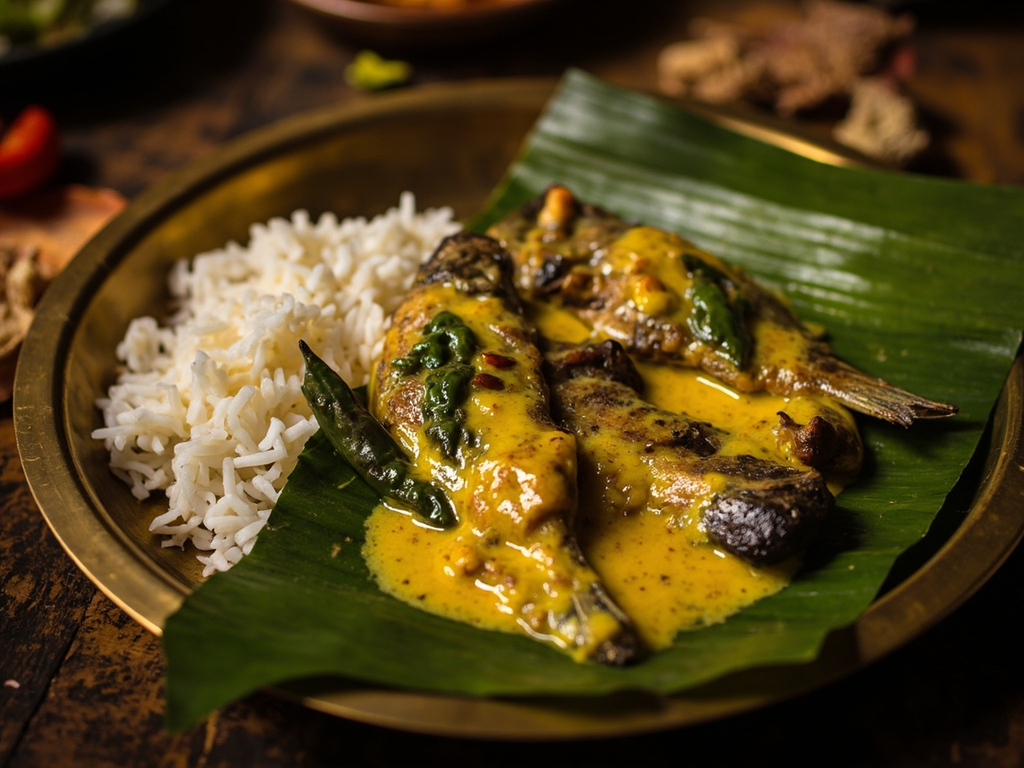
Maccha besara — freshwater fish in mustard gravy
Why this dish? Her profile notes that she grew up with simply prepared freshwater fish. In the villages of Mayurbhanj, fish caught in ponds and rivers is a dish for good days, reserved for festivals and visits—a modest luxury in a frugal life.
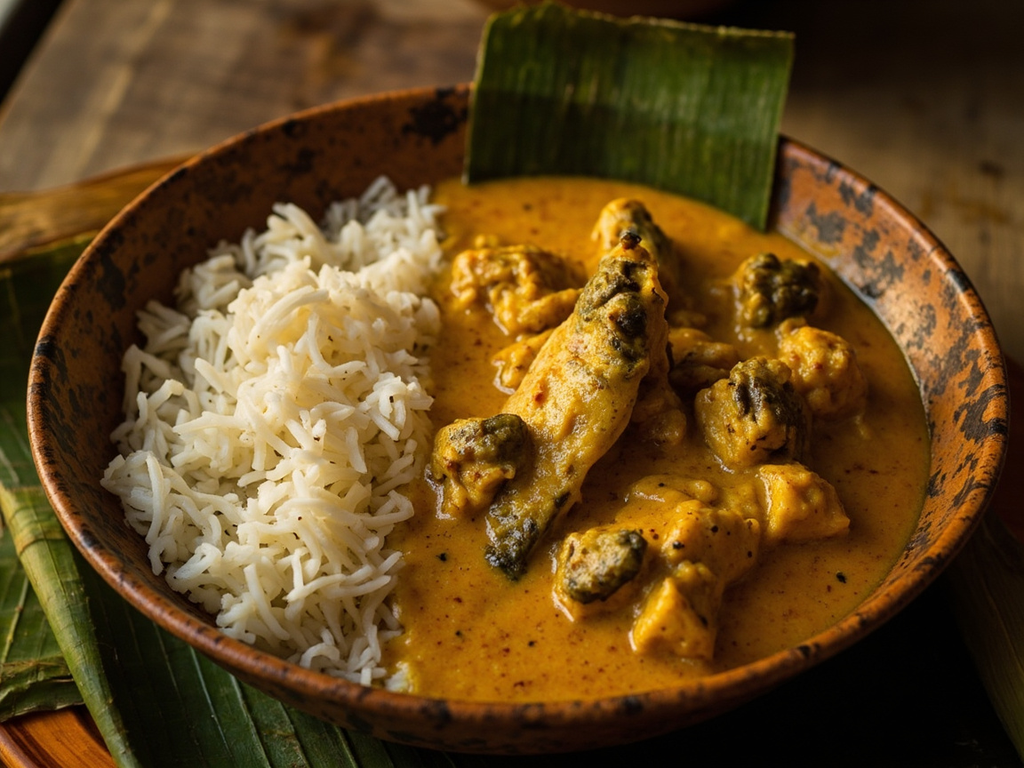
Pieces of river fish simmered in a golden mustard paste sauce, spiced with turmeric and chili, all carried by mustard oil. Served over rice, it is the dish that marks that a day is not like the others.
Fish, for us, was not every day—it was for celebration, for honoring a guest. My father would return from the pond, and my mother would grind mustard seeds on the stone until they became a paste that stung the nose. We would heat the oil until smoking, brown the fish, then that mustard paste would envelop it in a deep yellow. Believe me, the smell would escape the house and the whole neighborhood knew we were rejoicing that day.
- •Freshwater fish (rohu, local carp) — a few pieces (heart of the festive dish)
- •Mustard seeds ground into paste — two handfuls (signature sauce, pungent)
- •Fresh turmeric — a piece (color and aroma)
- •Mustard oil — generous (cooking medium)
- •Chili — to taste (heat)
- •Salt — to taste (seasoning)
Maccha besara — freshwater fish in mustard gravy
Pieces of river fish simmered in a golden mustard paste sauce, spiced with turmeric and chili, all carried by mustard oil. Served over rice, it is the dish that marks that a day is not like the others.
Why this dish? Her profile notes that she grew up with simply prepared freshwater fish. In the villages of Mayurbhanj, fish caught in ponds and rivers is a dish for good days, reserved for festivals and visits—a modest luxury in a frugal life.
Fish, for us, was not every day—it was for celebration, for honoring a guest. My father would return from the pond, and my mother would grind mustard seeds on the stone until they became a paste that stung the nose. We would heat the oil until smoking, brown the fish, then that mustard paste would envelop it in a deep yellow. Believe me, the smell would escape the house and the whole neighborhood knew we were rejoicing that day.
Ingredients (period version)
- Freshwater fish (rohu, local carp) — a few pieces (heart of the festive dish)
- Mustard seeds ground into paste — two handfuls (signature sauce, pungent)
- Fresh turmeric — a piece (color and aroma)
- Mustard oil — generous (cooking medium)
- Chili — to taste (heat)
- Salt — to taste (seasoning)
Ingredients
- Carp or rohu fillets/steaks (or bream as substitute) — 500 g (heart of the dish)
- Yellow mustard seeds — 3 tbsp (soaked then ground) (mustard paste)
- Turmeric powder — 1 tsp (color and aroma)
- Mustard oil — 3 tbsp (cooking medium)
- Green chilies — 2, slit (heat)
- Salt — 1 tsp (seasoning)
- Warm water — 1 cup (sauce base)
Method
- Rub the fish with salt and turmeric, let rest for 10 minutes.
- Grind the soaked mustard seeds with a little water and one chili into a smooth paste.
- Heat mustard oil until lightly smoking, quickly brown the fish pieces, then set aside.
- In the same oil, add the mustard paste, turmeric, and salt, cook for 2 minutes while stirring.
- Add warm water, return the fish, cover, and simmer gently for 8 to 10 minutes; serve over rice.
How it was made : The mustard paste (besara) was ground by hand on the sil-batta, the flat stone of East Indian kitchens. Fish, caught in community ponds and rivers of Mayurbhanj, marked the year of modest families during festivals and large gatherings.
The contemporary twist : A pinch of nigella seeds (kalonji) at serving and a drizzle of raw mustard oil revive the aroma, in a contemporary festive style.
Draupadi Murmu · Charactorium