 flip
flipCorn Pone (cornmeal griddlecake)
Corn Pone (cornmeal griddlecake)
Why this dish? In the perpetually cash-strapped Clemm-Poe household, cornbread was the daily staple: a handful of cornmeal, water, salt, a little lard, and everyone was fed. It is the bread of dignified poverty that Poe's anchor describes — frugal but constant.
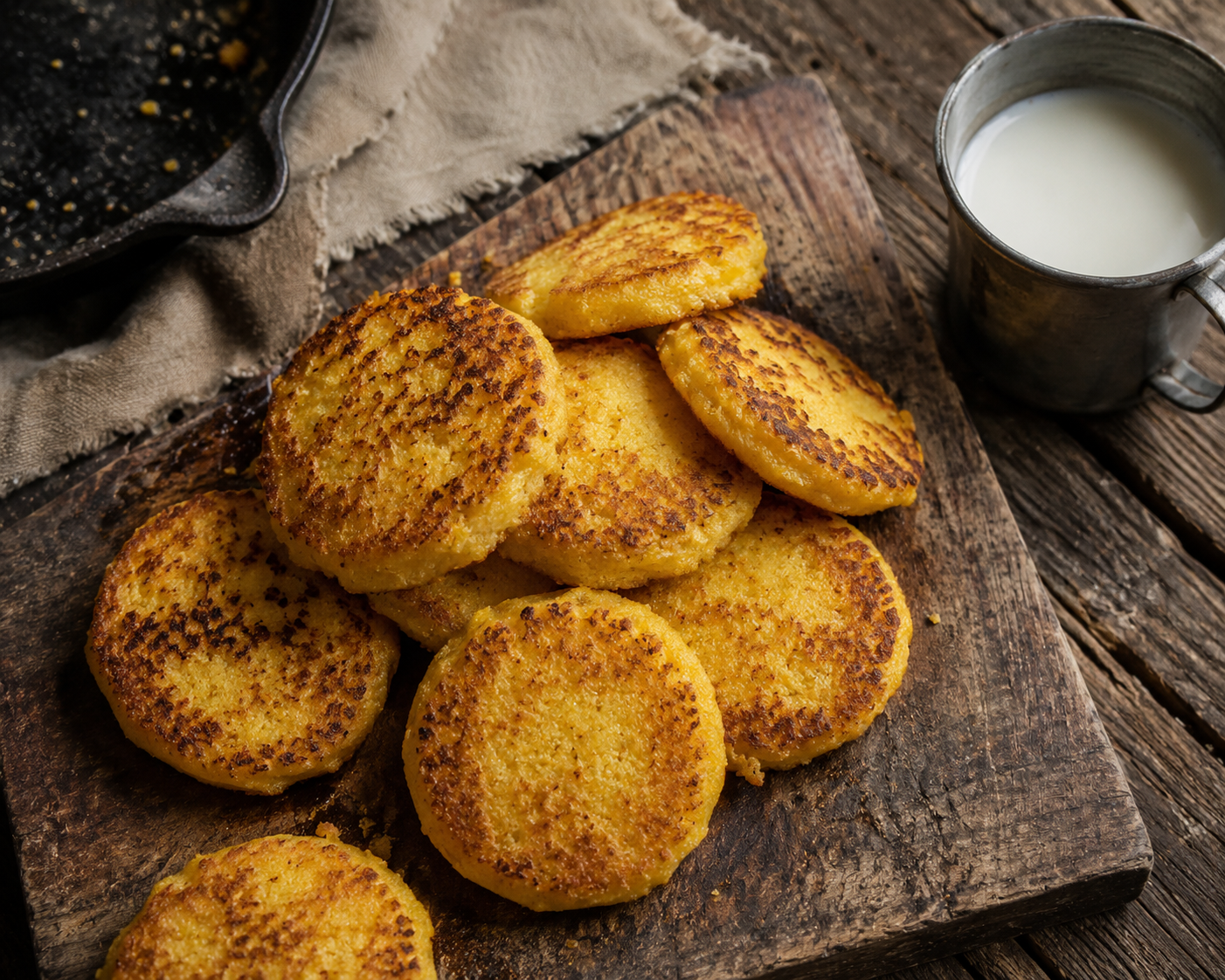
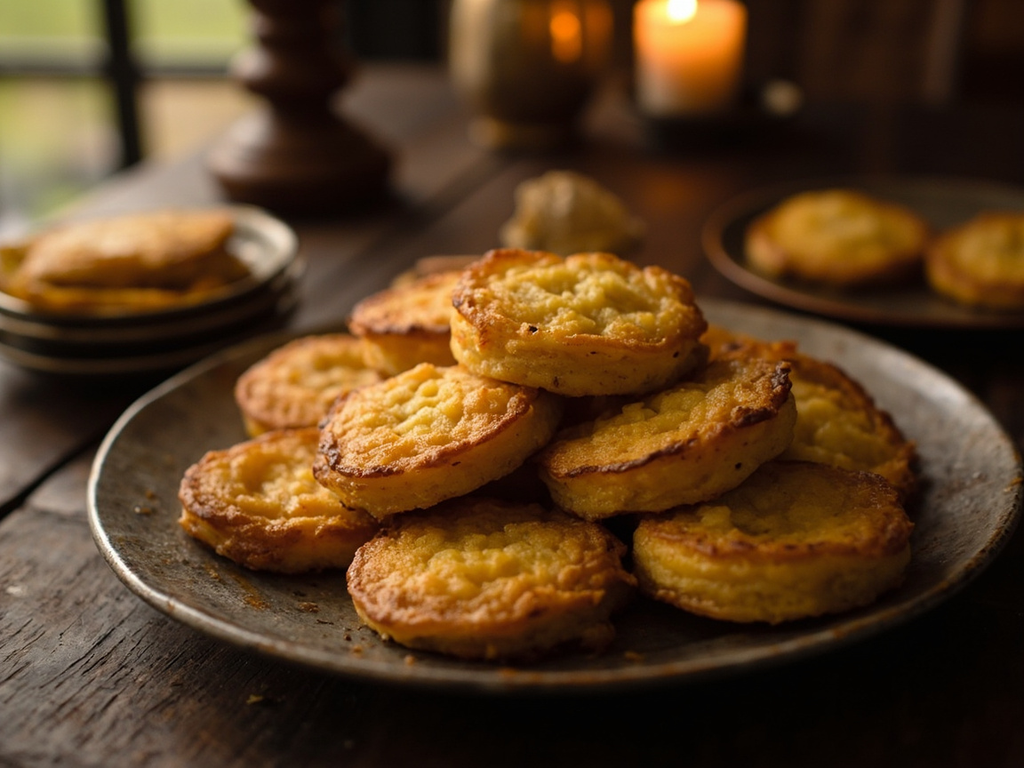
A thick cornmeal cake, golden in the pan or cooked in the ashes, with a crunchy crust and a tender heart. The bread of penniless days, simple and comforting.
Allow me to speak to you of this humble bread, reader, for it was the faithful companion of my darkest days. My good aunt Maria — she whom I called Muddy — often had no treasure but a measure of cornmeal and a pinch of salt; and yet, from this poverty, she drew a golden cake that filled the house with a comforting fragrance. I ate it warm, in the evening, by the light of a flickering candle, while my pen dried on the page. Believe me: there is a nobility in the poor man's bread that the feasts of the rich know not.
- •Cornmeal — two generous handfuls (base)
- •Boiling water — enough to bind (binder)
- •Salt — a pinch (seasoning)
- •Lard — a walnut-sized piece (cooking fat)
Corn Pone (cornmeal griddlecake)
A thick cornmeal cake, golden in the pan or cooked in the ashes, with a crunchy crust and a tender heart. The bread of penniless days, simple and comforting.
Why this dish? In the perpetually cash-strapped Clemm-Poe household, cornbread was the daily staple: a handful of cornmeal, water, salt, a little lard, and everyone was fed. It is the bread of dignified poverty that Poe's anchor describes — frugal but constant.
Allow me to speak to you of this humble bread, reader, for it was the faithful companion of my darkest days. My good aunt Maria — she whom I called Muddy — often had no treasure but a measure of cornmeal and a pinch of salt; and yet, from this poverty, she drew a golden cake that filled the house with a comforting fragrance. I ate it warm, in the evening, by the light of a flickering candle, while my pen dried on the page. Believe me: there is a nobility in the poor man's bread that the feasts of the rich know not.
Ingredients (period version)
- Cornmeal — two generous handfuls (base)
- Boiling water — enough to bind (binder)
- Salt — a pinch (seasoning)
- Lard — a walnut-sized piece (cooking fat)
Ingredients
- Fine cornmeal — 200 g (base)
- Boiling water — about 250 ml (binder)
- Salt — 1/2 tsp (seasoning)
- Lard or butter — 2 tbsp (cooking fat)
Method
- Mix the cornmeal and salt in a bowl.
- Pour in the boiling water in a stream while stirring, until a thick, malleable dough forms. Let rest for 10 minutes: the cornmeal will swell.
- Shape into oval cakes about 1.5 cm thick with wet hands.
- Melt the lard in a cast-iron skillet over medium heat.
- Cook each cake for 5 to 6 minutes per side, until a beautiful golden, crispy crust forms.
- Serve warm, plain or with a drizzle of molasses.
How it was made : Corn pone was traditionally cooked directly under the hearth ashes or on a flat iron hoe (hence 'hoecake'). Stone-ground white cornmeal, unleavened, gave a dense bread that kept and traveled well. It was the basic food of modest Southern households.
The contemporary twist : Serve as mini appetizer cakes topped with a little fresh cheese and a chive — a 'corn pone bites' nod.
Edgar Allan Poe · Charactorium