
Edith Flanigen is an American chemist born in 1929, a pioneer in the chemistry of zeolites (molecular sieves). Her work revolutionized oil refining and industrial purification. She is one of the most prolific inventors of the 20th century.
Edith Flanigen
Edith Marie Flanigen
5 min read
Frequently asked questions
Key Facts
- Born on April 28, 1929, in Buffalo (New York State)
- Joined Union Carbide in 1952, where she conducted her research on zeolites
- Co-invented zeolite Y, a key catalyst in oil cracking, and developed synthetic emeralds
- First woman to receive the Perkin Medal, in 1992
- Received the National Medal of Technology and Innovation in 2014; holder of more than 100 patents
Works & Achievements
A process for growing emeralds in the laboratory, used notably in masers. A feat of crystal chemistry.
A zeolite catalyst that transformed petroleum refining worldwide by greatly increasing fuel yields.
A new family of microporous materials co-invented by Flanigen, broadening the applications of molecular sieves.
A patent portfolio that makes her one of the most prolific inventors of the 20th century in materials chemistry.
Landmark papers describing the structure and synthesis of molecular sieves, foundational to an entire field of chemistry.
Anecdotes
In 1956, while working at Union Carbide, Edith Flanigen developed a process for manufacturing synthetic emeralds. These artificial stones were so pure that they were used not in jewelry but in masers, the ancestors of lasers. A chemist who made precious stones in a laboratory: enough to astonish her contemporaries.
Edith Flanigen is nicknamed the “mother of zeolites.” These tiny crystals full of pores act like sieves at the scale of molecules: they sort atoms according to their size. Thanks to her zeolite Y, oil refining became far more efficient, making it possible to produce more gasoline from the same barrel.
In 1992, Edith Flanigen became the first woman to receive the prestigious Perkin Medal, one of the highest honors in American chemistry, more than eighty years after its creation. In doing so, she broke through a long-standing glass ceiling in a very male-dominated scientific world.
Edith Flanigen is one of the most prolific inventors of the 20th century: she holds 109 American patents. In 2014, at the age of 85, President Barack Obama personally presented her with the National Medal of Technology and Innovation, the highest technological honor in the United States.
Edith's passion for chemistry runs in the family: her two sisters, Joan and Jane, also became chemists. All three were encouraged by a high school chemistry teacher, proof that a good teacher can change lives.
Primary Sources
In this recorded biographical interview, Edith Flanigen looks back on her early days at Union Carbide, her work on synthetic emeralds, and her discovery of synthetic zeolites for refining.
The honor recognizes her discoveries in the chemistry of silicates, zeolites, and molecular sieves, which have made chemical and petroleum production safer, cleaner, and more efficient.
The jury praised more than forty years of innovation and around a hundred patents that transformed oil refining, air purification, and the production of industrial gases.
The induction honors her pioneering role in the synthesis of zeolitic materials and their industrial application to molecular sieves.
Key Places
Industrial city in the northern United States where Edith Flanigen was born in 1929 and grew up.
Institution where she earned her first degree in chemistry in 1950.
University in New York State where she obtained her master's degree in chemistry in 1952.
Industrial laboratory near Buffalo where she carried out most of her career and her research on zeolites.
Place where, in 2014, President Barack Obama presented her with the National Medal of Technology and Innovation.
Typical Objects
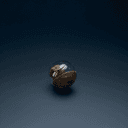
Microporous aluminosilicate crystal whose regular pores sort and trap molecules according to their size. It is the key material in Flanigen's work.

Green stone made in a laboratory through controlled crystallization. Flanigen developed its synthesis, notably for technical uses such as masers.
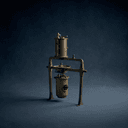
Y-zeolite-based powder introduced in refineries to break large hydrocarbon molecules down into gasoline. It made refining far more efficient.
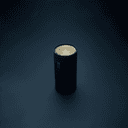
Device that reveals the internal structure of crystals by analyzing X-ray diffraction. Essential for understanding the architecture of zeolites.
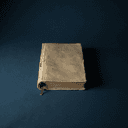
Logbook in which the chemist records protocols, observations, and results. For an inventor with 109 patents, it is the written memory of every experiment.
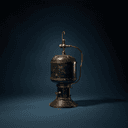
Sealed vessel resistant to heat and pressure, in which zeolites are crystallized from hot solutions. It is the materials chemist's “kitchen.”
School Curriculum
Vocabulary & Tags
Key Vocabulary
Tags
Daily Life
Morning
Edith arrives early at the Union Carbide research center, puts on her lab coat, and reviews her laboratory notebook. The morning is devoted to preparing solutions and starting crystal syntheses in heated autoclaves.
Afternoon
In the afternoon, she analyzes her samples with an X-ray diffractometer to uncover the structure of the zeolites she has obtained. She discusses the results with her fellow chemists and fine-tunes the protocols.
Evening
In the evening, she writes reports, prepares patent applications, and reads recent scientific literature. Passionate about her work, she happily continues her thinking well beyond office hours.
Food
Like many middle-class Americans in the postwar era, she eats simple food: sandwiches, coffee, and family meals. Lunch is often eaten quickly, between two experiments in the lab.
Clothing
At work, a white lab coat and safety goggles are essential. Outside, she wears the understated suits and dresses typical of a mid-twentieth-century American professional.
Housing
She lives in the Buffalo and Tonawanda area, in a house in the North American residential suburbs, close to her industrial workplace.
Historical Timeline
Period Vocabulary
Liens externes & ressources
Références
Œuvres
Synthese de l'emeraude artificielle
1956
Zeolithe Y et craquage catalytique
vers 1962
Tamis moleculaires aluminophosphates (AlPO)
1982
109 brevets americains
1956-1994
Publications scientifiques sur les zeolithes
Annees 1960-1990