 flip
flipFlatbrød — travel flatbread
Flatbrød — travel flatbread
Why this dish? Grieg was a great traveler, crisscrossing Europe for concerts but also Norway, even into the Hardanger valleys where he collected folklore. Flatbrød, a dry, light bread that keeps for months, was the immemorial travel provision of the Norwegian wayfarer.
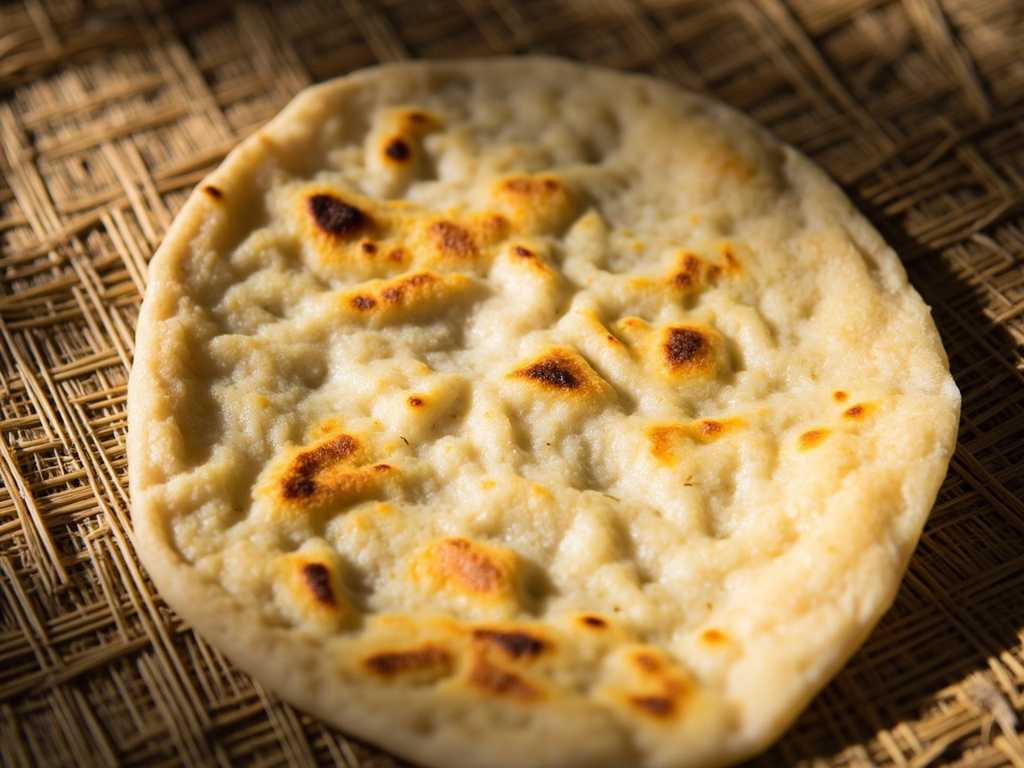
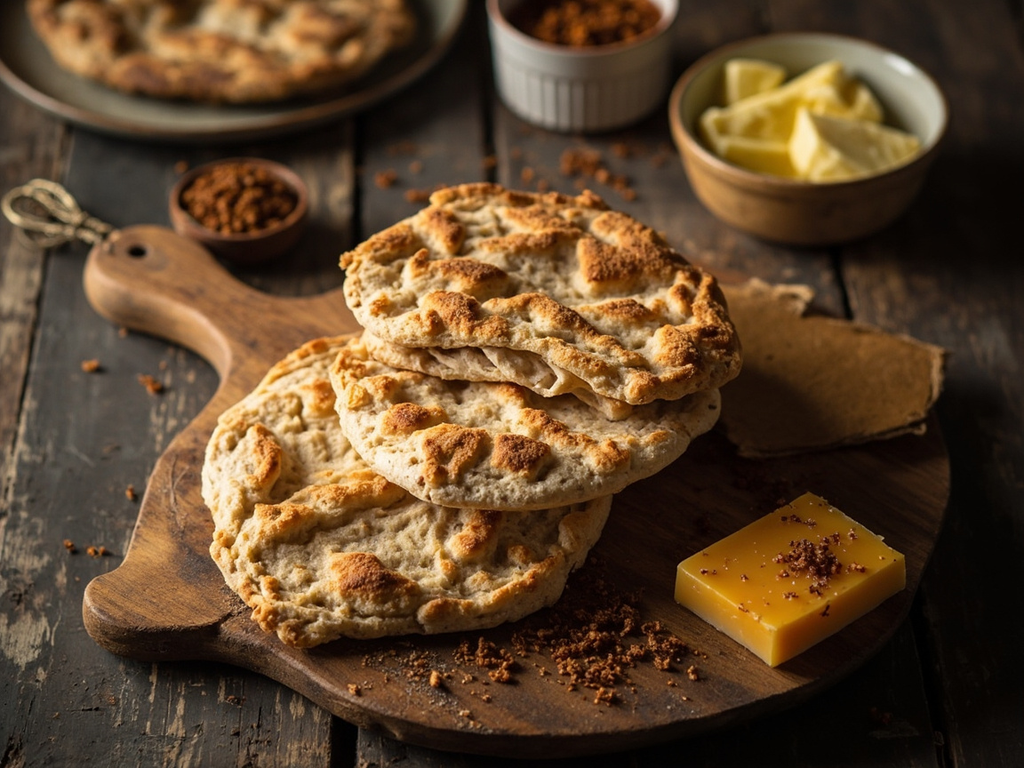
A very thin flatbread of rye and barley flours, baked crispy then dried, which keeps indefinitely and accompanies cheese, butter, or fish on long journeys.
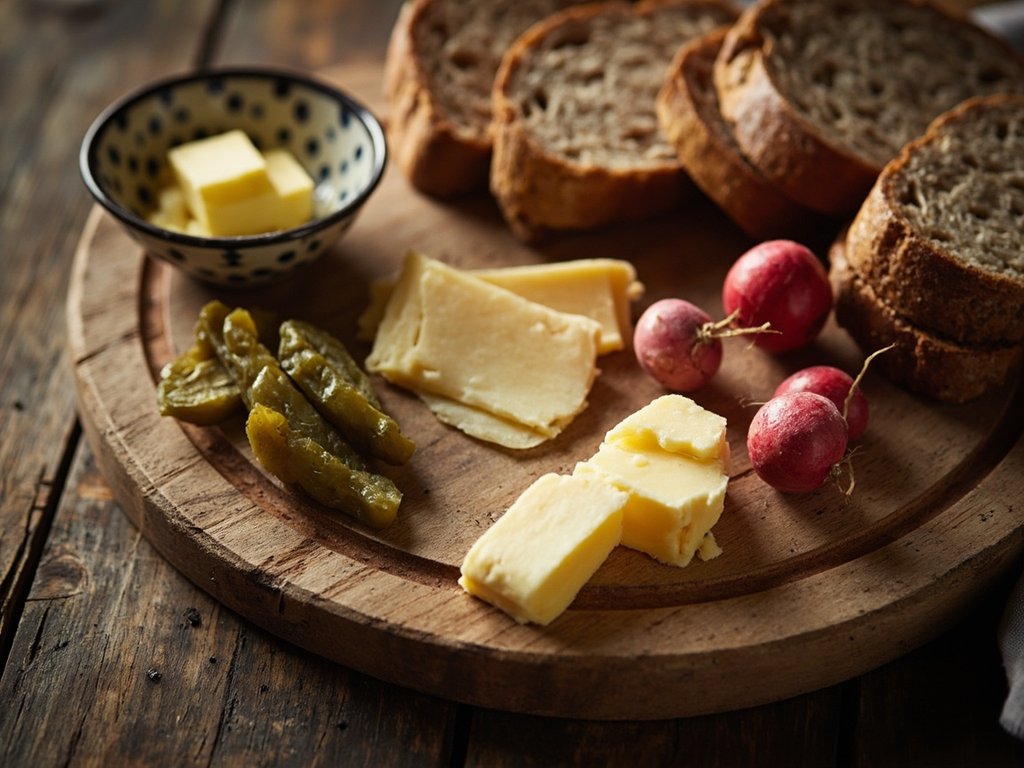
Believe me, a musician travels more than a sailor! From Leipzig to Christiania, and especially through our valleys where I listened for the old tunes of the Hardingfele, one needed bread that would not mold. Flatbrød, there is the faithful companion: we rolled it thin as a leaf, baked it on the griddle until it crackled, and it stayed with you for months in the knapsack. Break off a piece, spread butter and a little brown goat cheese, and you have the meal of every Norwegian walking toward the mountains — those very mountains that breathed my music into me.
- •Rye flour — the largest part (base)
- •Barley flour — a complement (rusticity)
- •Water — to form the dough (binder)
- •Salt — a pinch (seasoning)
Flatbrød — travel flatbread
A very thin flatbread of rye and barley flours, baked crispy then dried, which keeps indefinitely and accompanies cheese, butter, or fish on long journeys.
Why this dish? Grieg was a great traveler, crisscrossing Europe for concerts but also Norway, even into the Hardanger valleys where he collected folklore. Flatbrød, a dry, light bread that keeps for months, was the immemorial travel provision of the Norwegian wayfarer.
Believe me, a musician travels more than a sailor! From Leipzig to Christiania, and especially through our valleys where I listened for the old tunes of the Hardingfele, one needed bread that would not mold. Flatbrød, there is the faithful companion: we rolled it thin as a leaf, baked it on the griddle until it crackled, and it stayed with you for months in the knapsack. Break off a piece, spread butter and a little brown goat cheese, and you have the meal of every Norwegian walking toward the mountains — those very mountains that breathed my music into me.
Ingredients (period version)
- Rye flour — the largest part (base)
- Barley flour — a complement (rusticity)
- Water — to form the dough (binder)
- Salt — a pinch (seasoning)
Ingredients
- Rye flour — 200 g (base)
- Barley flour (or whole wheat) — 100 g (rusticity)
- Warm water — 180 ml approx. (binder)
- Salt — 1 tsp (seasoning)
Method
- Mix flours and salt, add warm water gradually and knead into a firm, smooth dough.
- Divide into small balls; on a well-floured surface, roll each ball as thin as possible (almost translucent).
- Heat a griddle or dry frying pan over high heat.
- Cook each flatbread 1–2 min per side, until dry and marked with golden spots.
- Let cool and dry completely in the air; stack in an airtight container.
- Serve broken into pieces, with butter, brown cheese (brunost), or herring.
How it was made : Baked in large batches once or twice a year, dried flatbrød kept for months, even years, on Norwegian farms. Its thinness and dryness made it the ideal provision for shepherds, fishermen, and travelers before daily fresh bread.
The contemporary twist : Break into irregular shards to serve as Nordic "crackers" under smoked salmon and dill spreads for an aperitif.
Edvard Grieg · Charactorium