 flip
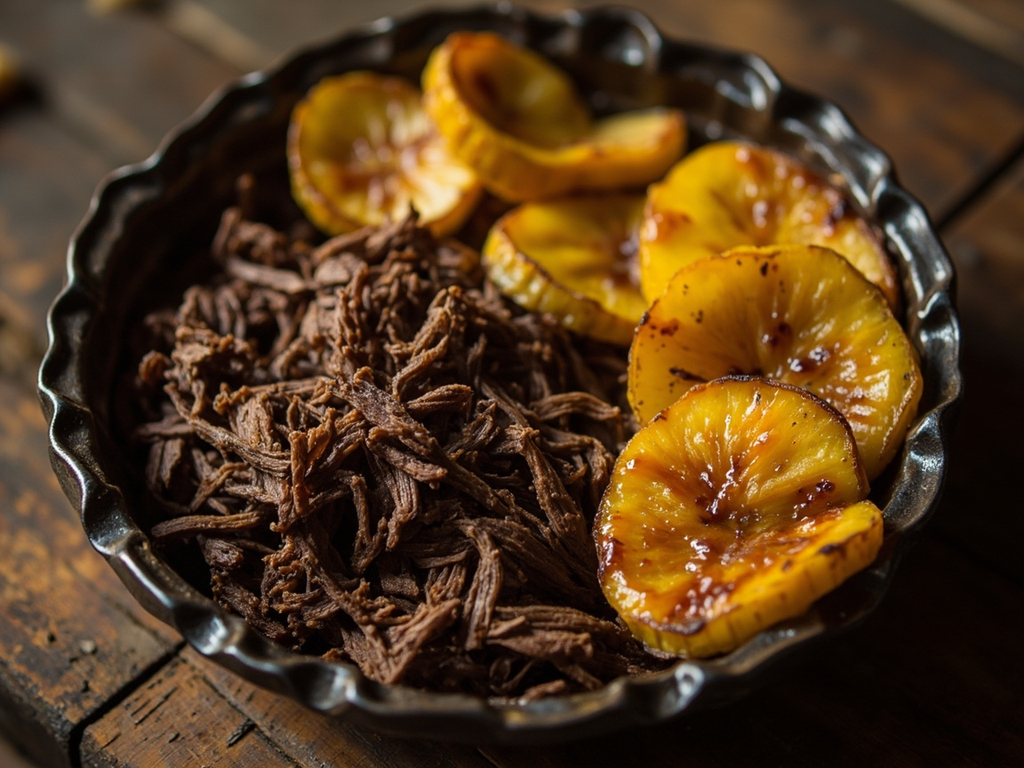
flipRación de tasajo con plátano (Dried Meat and Plantain from the Campfire)
Ración de tasajo con plátano (Dried Meat and Plantain from the Campfire)
Why this dish? Its sheet says it: in the Venezuelan llanos, Humboldt sustained himself on dried meat and plantain, frugally, enduring privations. Tasajo (sun-dried salted beef) accompanied by plátano was the ordinary ration of the llaneros who escorted him between Calabozo and the Orinoco in 1800.
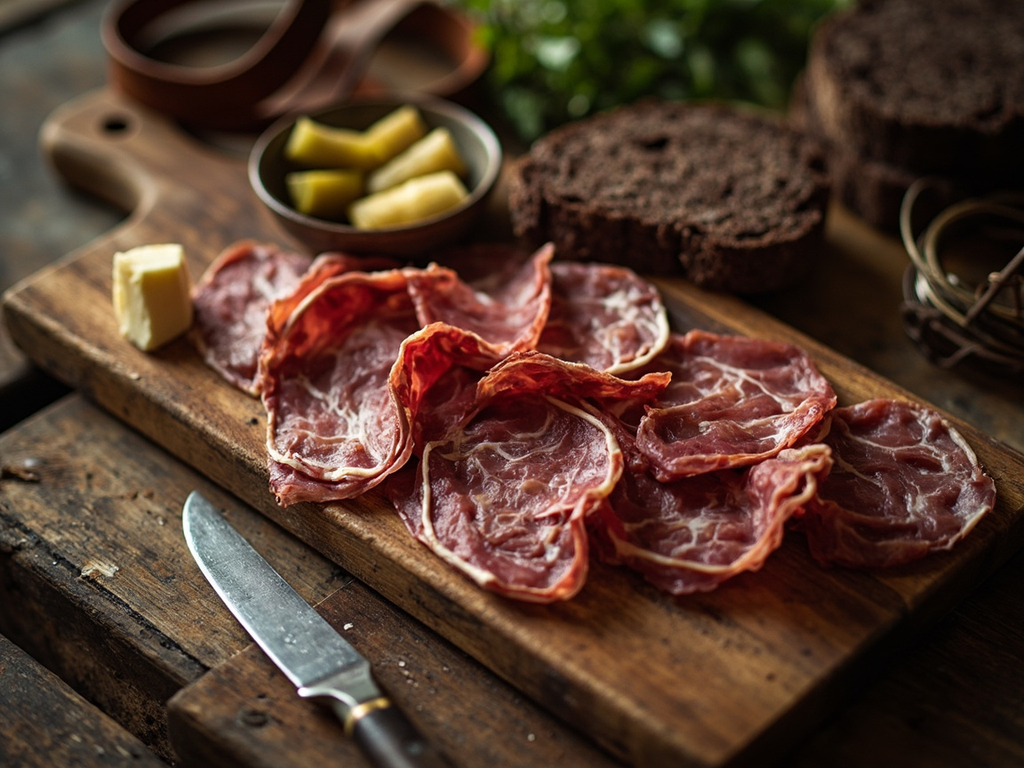
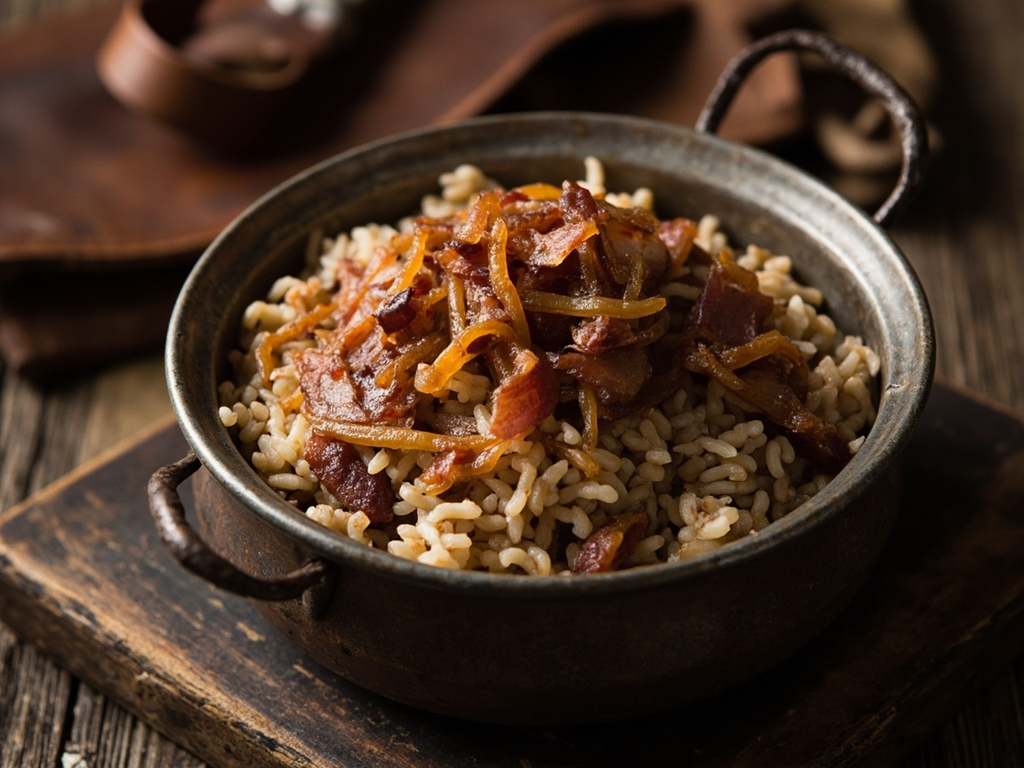
Strips of dried salted beef, desalted then shredded, reheated with roasted or boiled plantain. A dense, salty food, made to sustain the body under the heat of the plains.
Allow me to describe the ordinary fare of our plains. The beef is sliced thin as a leaf, rubbed with salt, and left to the sun of the llanos, which dries it in a day, so ardent is the air — I measured there temperatures unknown to Europe. We eat it thus, shredded, with the plátano that fire softens. Believe me, the man who wishes to observe nature must learn to forgo the delights of the table; this ration sustained me for whole days without my giving it further thought.
- •Dried salted beef (tasajo) — a handful per man (preserved protein base)
- •Ripe plantain — as available (filling starch)
- •Salt — abundant for preservation (drying agent)
- •Beef fat — a little (cooking fat)
Ración de tasajo con plátano (Dried Meat and Plantain from the Campfire)
Strips of dried salted beef, desalted then shredded, reheated with roasted or boiled plantain. A dense, salty food, made to sustain the body under the heat of the plains.
Why this dish? Its sheet says it: in the Venezuelan llanos, Humboldt sustained himself on dried meat and plantain, frugally, enduring privations. Tasajo (sun-dried salted beef) accompanied by plátano was the ordinary ration of the llaneros who escorted him between Calabozo and the Orinoco in 1800.
Allow me to describe the ordinary fare of our plains. The beef is sliced thin as a leaf, rubbed with salt, and left to the sun of the llanos, which dries it in a day, so ardent is the air — I measured there temperatures unknown to Europe. We eat it thus, shredded, with the plátano that fire softens. Believe me, the man who wishes to observe nature must learn to forgo the delights of the table; this ration sustained me for whole days without my giving it further thought.
Ingredients (period version)
- Dried salted beef (tasajo) — a handful per man (preserved protein base)
- Ripe plantain — as available (filling starch)
- Salt — abundant for preservation (drying agent)
- Beef fat — a little (cooking fat)
Ingredients
- Dried beef (bresaola, cecina, or tasajo if available) — 200 g (protein base)
- Ripe plantains — 2 (starch)
- Onion — 1 (aromatic)
- Oil or lard — 2 tbsp (cooking)
- Water — for desalting (rehydration)
Method
- If the meat is very salty, soak it for 1–2 hours in cold water, changing the water once, then drain.
- Shred the meat by hand or cut into thin strips.
- Peel the plantains, cut them on the bias, and brown them in hot oil until tender and caramelized on the edges.
- Sauté the chopped onion, add the shredded meat, and warm it for 5 minutes to soften.
- Serve the meat alongside the plantain, without further adornment — this is walking food.
How it was made : In the llanos, there was neither freshness nor market: sun- and salt-dried tasajo was the only transportable meat in the tropics. Plantain, brought from Africa to the Americas in the 16th century, was already widely cultivated and served as the bread of the plains. Cooking was done over a simple wood fire, the fogón.
The contemporary twist : Serve the shredded meat on mashed plantain patties, 'patacón' style, with a squeeze of lime to brighten the salt.
Sources : Alexander von Humboldt, Relation historique du Voyage aux régions équinoxiales du Nouveau Continent (1814-1825)
Alexander von Humboldt · Charactorium