 flip
Roasted Meats from the Sacrifice
Roasted Meats from the Sacrifice
Why this dish? King Aegeus presides over the great sacrifices at Athens. When the victim is offered on the altar, the smoke and bones wrapped in fat rise to the gods; the flesh is skewered and roasted for men — the only time meat is eaten in abundance. It is the banquet given for a departure or a return, like that of Theseus.
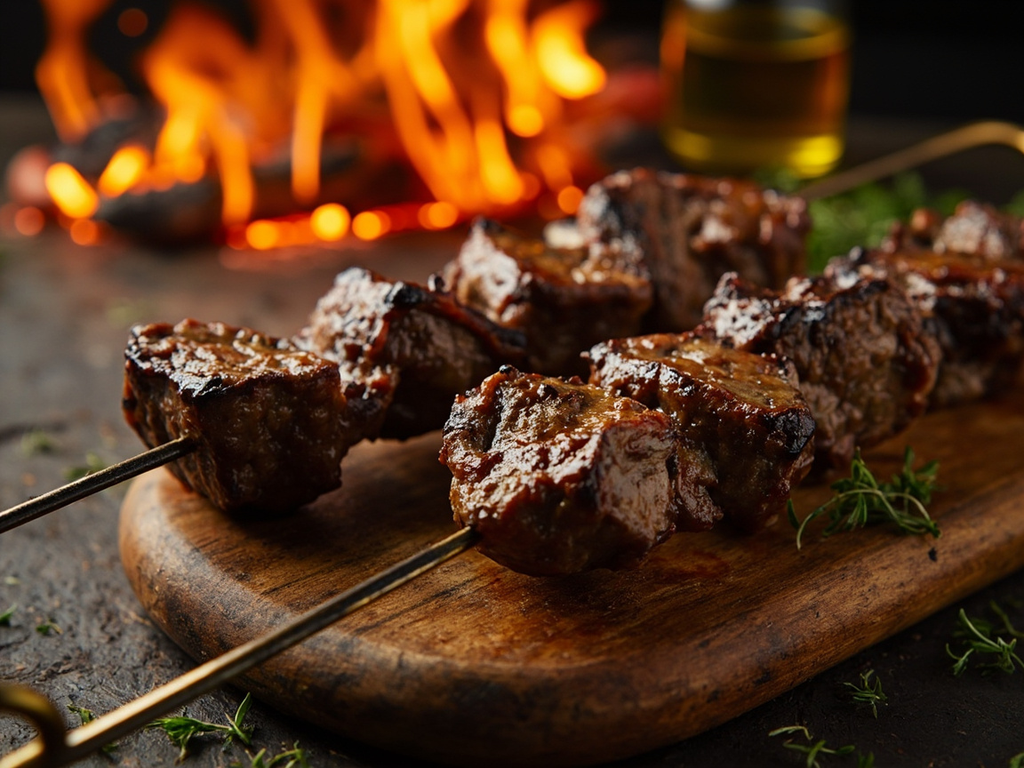
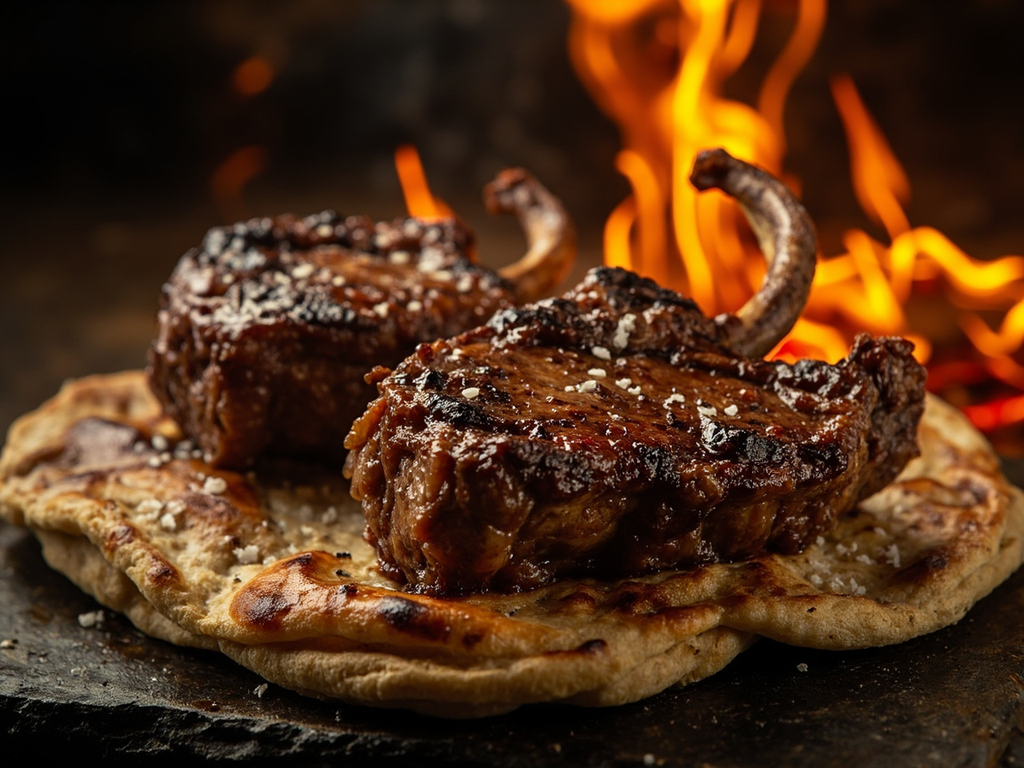
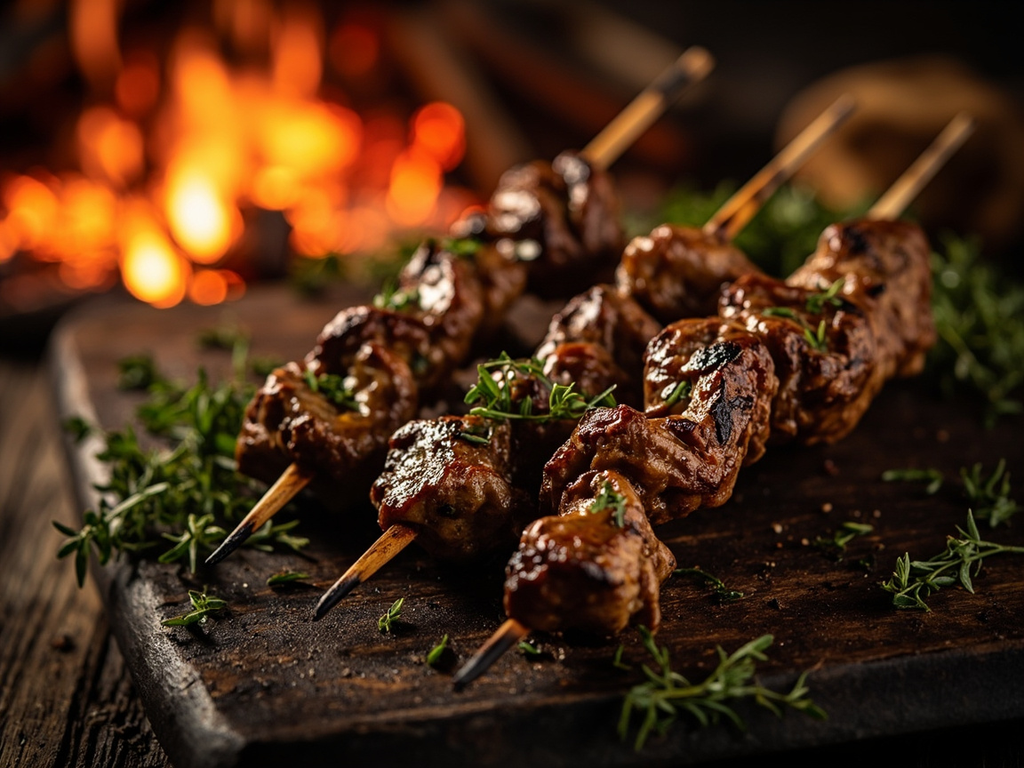
Pieces of mutton and beef skewered, salted, roasted over embers and basted with olive oil. The meat smokes, crackles, and is shared at knifepoint. Bold, smoky, deeply savory.
The knife has cut the beast's throat, and the gods' portion — the thighs anointed with fat — already burns on the altar; their smoke rises straight to Olympus. For us mortals, the fine flesh remains: I have it threaded onto spits and turned over the embers, and my men sprinkle it with oil to make it shine. Hold your piece, stranger, eat it hot: these are rare days, when a king shares the meat of his herd.
- •Mutton and beef — according to the sacrificed herd (heart of the feast)
- •Olive oil — for basting (fat and shine)
- •Sea salt — by hand (seasoning)
- •Wild oregano and thyme — a few sprigs (aromatics (herbs of the hills))
Roasted Meats from the Sacrifice
Pieces of mutton and beef skewered, salted, roasted over embers and basted with olive oil. The meat smokes, crackles, and is shared at knifepoint. Bold, smoky, deeply savory.
Why this dish? King Aegeus presides over the great sacrifices at Athens. When the victim is offered on the altar, the smoke and bones wrapped in fat rise to the gods; the flesh is skewered and roasted for men — the only time meat is eaten in abundance. It is the banquet given for a departure or a return, like that of Theseus.
The knife has cut the beast's throat, and the gods' portion — the thighs anointed with fat — already burns on the altar; their smoke rises straight to Olympus. For us mortals, the fine flesh remains: I have it threaded onto spits and turned over the embers, and my men sprinkle it with oil to make it shine. Hold your piece, stranger, eat it hot: these are rare days, when a king shares the meat of his herd.
Ingredients (period version)
- Mutton and beef — according to the sacrificed herd (heart of the feast)
- Olive oil — for basting (fat and shine)
- Sea salt — by hand (seasoning)
- Wild oregano and thyme — a few sprigs (aromatics (herbs of the hills))
Ingredients
- Boneless leg or shoulder of lamb — 600 g, in large cubes (main meat)
- Beef flank or skirt steak — 300 g (second meat)
- Olive oil — 4 tbsp (marinade and basting)
- Dried oregano — 1 tbsp (aromatic)
- Fresh thyme — a few sprigs (aromatic)
- Salt and a little wine vinegar — to taste (seasoning)
Method
- Cut the meats into large chunks and thread them onto skewers (metal or soaked wood).
- Mix oil, oregano, stripped thyme, and a splash of vinegar; coat the meat and let rest for 30 minutes.
- Prepare a bed of glowing embers (barbecue) or a very hot cast-iron grill.
- Salt just before cooking. Roast the skewers, turning often and basting with oil, for 8 to 12 minutes.
- The meat should be golden and smoky outside, pink inside for beef.
- Serve immediately on a board with maza cakes for sopping.
How it was made : In heroic Greece, eating meat in quantity was almost always linked to sacrifice: the gods received the bones and fat (the wrapped femur), while men shared the roasted flesh on spits. Stews were rare; roasting dominated the banquets described by Homer.
The contemporary twist : Present as "Heroic Age Skewers" stuck into a half-loaf of bread, banquet-style, with a lemon wedge (a later Mediterranean nod, offered on the side).
Sources : Homer, Iliad (sacrifice and banquet scenes) · Marcel Detienne & Jean-Pierre Vernant, The Cuisine of Sacrifice among the Greeks
Aegeus · Charactorium