 flip
flipStreet-style macaroni with cheese from Naples
Street-style macaroni with cheese from Naples
Why this dish? Vigée Le Brun stayed in Rome and Naples around 1790, where she painted Queen Maria Carolina among others. In the streets of Naples, street vendors sold macaroni with cheese that people ate standing up, by hand — a picturesque sight that all 18th-century travelers described with delight.
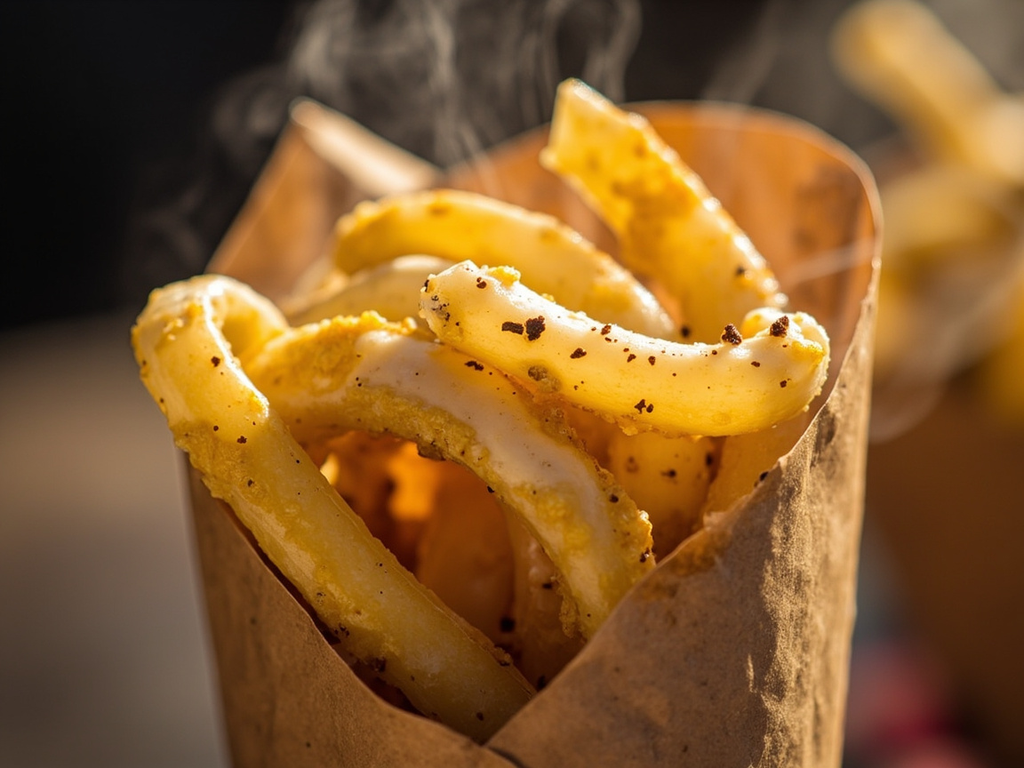
Long macaroni boiled in water then tossed in a shower of grated cheese and pepper — 18th-century Neapolitan street food, simple, hot, and popular.
In Naples, I could not help but be delightfully astonished by those common people who, standing in the middle of the street, slurped long macaroni that they let hang above their mouths! The vendor pulled them steaming from his great cauldron, dusted them with a sharp cheese and a turn of pepper, and each ate them with full fingers, without ceremony. I confess that after my court suppers, this dish so frank and cheerful seemed to me the very portrait of Neapolitan joy.
- •Macaroni (long pasta) — a good portion per person (base)
- •Grated sheep's cheese (pecorino) — a generous handful (savory binder)
- •Pepper — to taste (kick)
- •Lard or butter — a little (creaminess (optional))
- •Salt — for the water (cooking)
Street-style macaroni with cheese from Naples
Long macaroni boiled in water then tossed in a shower of grated cheese and pepper — 18th-century Neapolitan street food, simple, hot, and popular.
Why this dish? Vigée Le Brun stayed in Rome and Naples around 1790, where she painted Queen Maria Carolina among others. In the streets of Naples, street vendors sold macaroni with cheese that people ate standing up, by hand — a picturesque sight that all 18th-century travelers described with delight.
In Naples, I could not help but be delightfully astonished by those common people who, standing in the middle of the street, slurped long macaroni that they let hang above their mouths! The vendor pulled them steaming from his great cauldron, dusted them with a sharp cheese and a turn of pepper, and each ate them with full fingers, without ceremony. I confess that after my court suppers, this dish so frank and cheerful seemed to me the very portrait of Neapolitan joy.
Ingredients (period version)
- Macaroni (long pasta) — a good portion per person (base)
- Grated sheep's cheese (pecorino) — a generous handful (savory binder)
- Pepper — to taste (kick)
- Lard or butter — a little (creaminess (optional))
- Salt — for the water (cooking)
Ingredients
- Macaroni or bucatini — 320 g (4 servings) (base)
- Grated pecorino — 100 g (binder)
- Freshly ground black pepper — generously (kick)
- Butter — 20 g (creaminess)
- Coarse salt — for the water (cooking)
Method
- Cook the pasta in a large pot of boiling salted water until tender but firm; reserve a ladleful of pasta water.
- Drain and return the pasta to the hot saucepan with the butter.
- Add the grated pecorino by handfuls, stirring and moistening with a little pasta water to form a creamy coating.
- Pepper generously and toss vigorously.
- Serve piping hot, in a paper cone for the "street" spirit, or in a bowl.
How it was made : In the 18th century, Naples was nicknamed the city of the "mangiamaccheroni." Pasta was eaten with grated cheese and pepper — tomato sauce would only take hold later, in the 19th century. Vendors cooked macaroni outdoors in huge cauldrons and sold portions to passersby.
The contemporary twist : Serve in a kraft paper cone street-food style, with a final veil of pecorino grated at the last moment and a turn of the pepper mill in front of the guest.
Sources : Élisabeth Vigée Le Brun, *Souvenirs* (1835–1837) · Travel accounts of the Grand Tour to Naples, 18th century
Élisabeth Vigée Le Brun · Charactorium