 flip
flipKāuru, the sweetness of tī kōuka
Kāuru, the sweetness of tī kōuka
Why this dish? When Best walked the trails of Urewera, field notebook in pocket, durable and nourishing provisions were needed. Kāuru, dried sugar from the root of the cabbage tree, was precisely that kind of walking food the ancients carried.
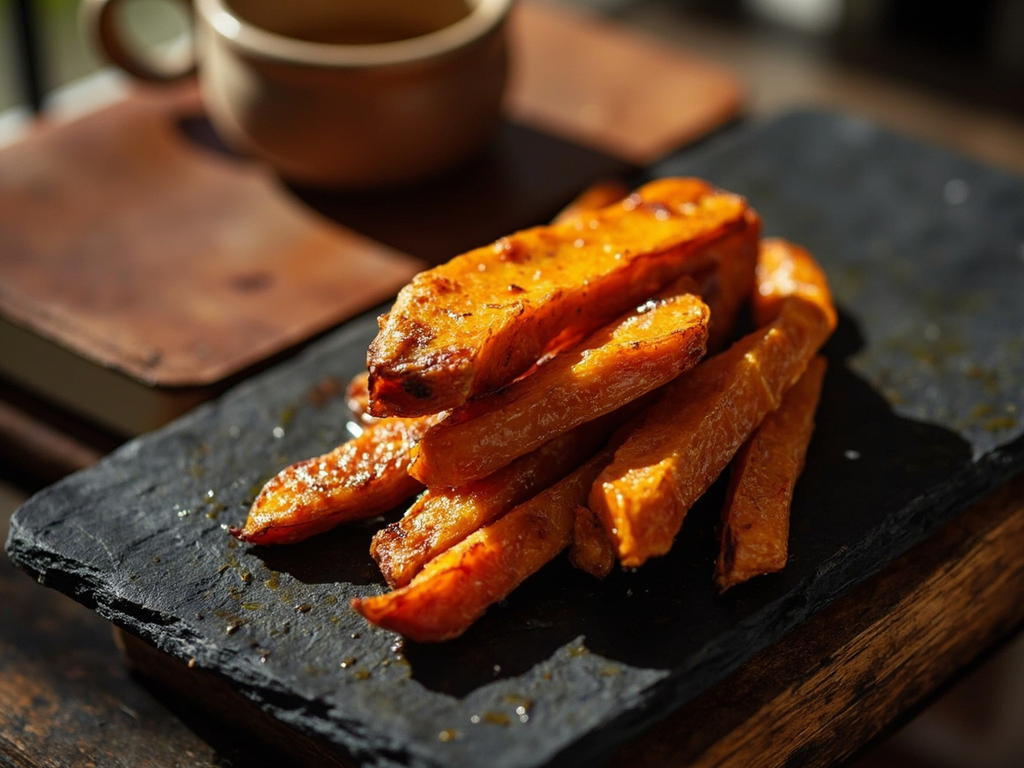
A sweet treat from the sweet root of tī kōuka (cordyline), long steam-cooked to release its sugar, then dried and beaten. Here, an accessible evocation: oven-caramelized kūmara, sweet and concentrated like the travel kāuru of old.
On long marches through the forest, one carries no pantry; a food that keeps and comforts is needed. The elders taught me kāuru, from the tī kōuka: the root is cooked for days in a large oven until it yields all its sweetness, then dried and beaten to chew the sweet fibres along the path. I found there a sugar of the woods that no trader had brought. Lacking a cabbage tree at your door, I propose you recapture its spirit in a caramelized sweet potato—the same garden sweetness.
- •Root of tī kōuka (cabbage tree, Cordyline australis) — one large root (sugar source)
Kāuru, the sweetness of tī kōuka
A sweet treat from the sweet root of tī kōuka (cordyline), long steam-cooked to release its sugar, then dried and beaten. Here, an accessible evocation: oven-caramelized kūmara, sweet and concentrated like the travel kāuru of old.
Why this dish? When Best walked the trails of Urewera, field notebook in pocket, durable and nourishing provisions were needed. Kāuru, dried sugar from the root of the cabbage tree, was precisely that kind of walking food the ancients carried.
On long marches through the forest, one carries no pantry; a food that keeps and comforts is needed. The elders taught me kāuru, from the tī kōuka: the root is cooked for days in a large oven until it yields all its sweetness, then dried and beaten to chew the sweet fibres along the path. I found there a sugar of the woods that no trader had brought. Lacking a cabbage tree at your door, I propose you recapture its spirit in a caramelized sweet potato—the same garden sweetness.
Ingredients (period version)
- Root of tī kōuka (cabbage tree, Cordyline australis) — one large root (sugar source)
Ingredients
- Kūmara (sweet potato) — 2 large (sweet base)
- Honey (ideally mānuka) — 2 tbsp (concentrates sweetness)
- Water — 1 tbsp (loosens honey)
- Pinch of salt — 1 pinch (enhances sweetness)
Method
- Preheat oven to 180 °C.
- Cut kūmara into thick sticks without peeling.
- Mix honey, water and salt, then coat the sticks.
- Spread on a tray and roast 35-40 min, turning halfway, until edges caramelize.
- Let cool slightly: they concentrate and become sticky-soft, perfect to carry.
How it was made : True kāuru required a special oven, the umu tī, where the cordyline root cooked sometimes for days to transform its sugars into a sweet, fibrous mass, then dried and stored for a long time. It was a major reserve and travel food, abundantly described by Best.
The contemporary twist : Roll the warm sticks in a little ground roasted nuts: a hiking snack that winks at the sugar of the Māori forest.
Sources : Elsdon Best, Forest Lore of the Maori (1942) · Elsdon Best, Maori Agriculture (1925)
Elsdon Best · Charactorium