 flip
flipThe Roof of the World Ration
The Roof of the World Ration
Why this dish? On 29 May 1953, en route to the summit, Hillary ate what was light to carry and rich in calories: biscuits, cheese, chocolate, smoked bacon, hot soup, and very sweet tea. Above 7,000 m, appetite collapses and every bite had to be forced down.
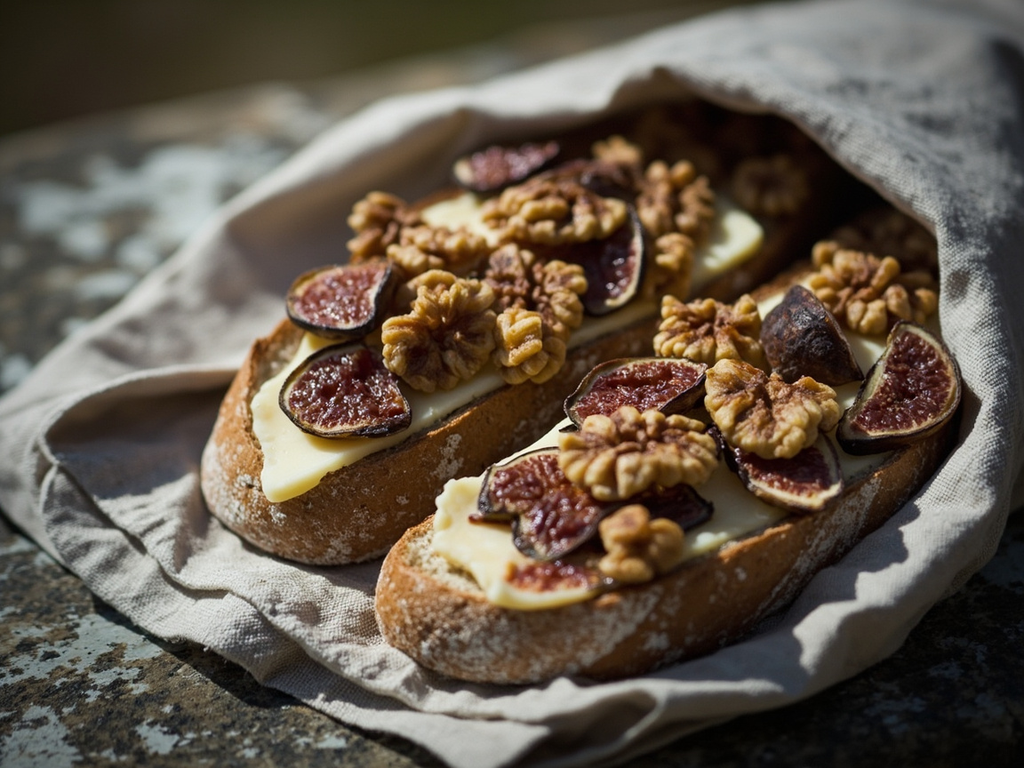
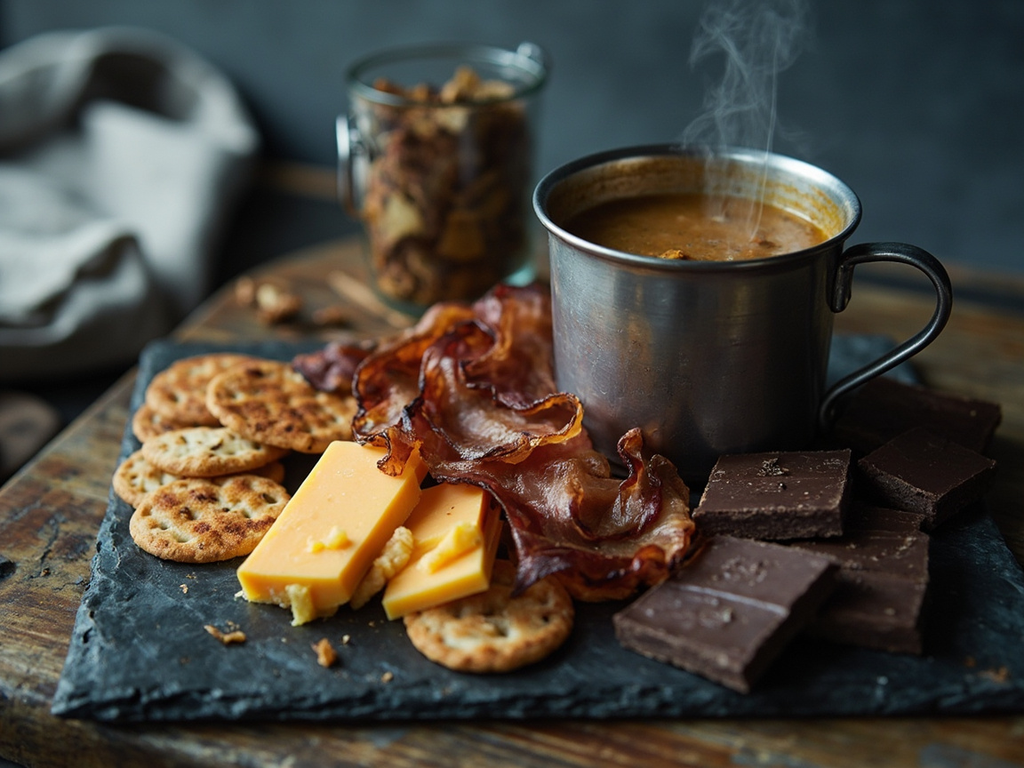
A reconstructed expedition "plate": crackers spread with hard cheese, strips of grilled bacon, squares of dark chocolate, all warmed by a mug of soup. Not a gourmet dish, but the exact fuel that hoisted a man to 8,849 metres.
You know, up there, eating becomes a job like any other — and not the easiest. At that altitude, your stomach doesn't want to know, so you choose what weighs little and feeds a lot: biscuit, a bit of cheese, chocolate, a slice of bacon. Tenzing and I would melt snow for hours just to get a mug of soup and a good sweet tea. You didn't eat for taste, old chap, you ate to keep climbing.
- •Hard tack (expedition crackers) — a handful (caloric base, carbohydrates)
- •Hard cheese — a wedge (fat and protein, keeps well)
- •Smoked bacon — a few slices (fat, salt, dense energy)
- •Dark chocolate — two squares (quick sugar, morale)
- •Dehydrated soup — one packet (warmth and rehydration)
The Roof of the World Ration
A reconstructed expedition "plate": crackers spread with hard cheese, strips of grilled bacon, squares of dark chocolate, all warmed by a mug of soup. Not a gourmet dish, but the exact fuel that hoisted a man to 8,849 metres.
Why this dish? On 29 May 1953, en route to the summit, Hillary ate what was light to carry and rich in calories: biscuits, cheese, chocolate, smoked bacon, hot soup, and very sweet tea. Above 7,000 m, appetite collapses and every bite had to be forced down.
You know, up there, eating becomes a job like any other — and not the easiest. At that altitude, your stomach doesn't want to know, so you choose what weighs little and feeds a lot: biscuit, a bit of cheese, chocolate, a slice of bacon. Tenzing and I would melt snow for hours just to get a mug of soup and a good sweet tea. You didn't eat for taste, old chap, you ate to keep climbing.
Ingredients (period version)
- Hard tack (expedition crackers) — a handful (caloric base, carbohydrates)
- Hard cheese — a wedge (fat and protein, keeps well)
- Smoked bacon — a few slices (fat, salt, dense energy)
- Dark chocolate — two squares (quick sugar, morale)
- Dehydrated soup — one packet (warmth and rehydration)
Ingredients
- Whole-grain crackers or Swedish crispbread — 6 to 8 (crunchy base)
- Aged cheddar or comté — 80 g (fat and umami)
- Smoked streaky bacon — 4 thin slices (salty grilled)
- 70% dark chocolate — 4 squares (sugar and comfort)
- Packet vegetable or pea soup — 1 bowl (hot savoury drink)
Method
- Grill the bacon in a pan (or on a stove) until crispy.
- Prepare the dehydrated soup with very hot water in a mug.
- Spread or place the cheese on the crackers, top each with a strip of bacon.
- Serve with chocolate squares on the side and the steaming soup.
- Eat slowly: in real conditions, every bite is earned.
How it was made : On the 1953 British expedition, supplies were designed for weight and calories: about 4,000 calories per day were planned, but at altitude men consumed much more fighting the cold. Dehydration was enemy number one: litres of hot liquid were needed, hence the obsession with tea and soup.
The contemporary twist : Serve on a real slate board "summit platter" style, with a small flag and the day's temperature chalked on — like a mountaineer's logbook.
Sources : Edmund Hillary, High Adventure (1955) · John Hunt, The Ascent of Everest (1953)
Edmund Hillary · Charactorium