 flip
flipRye and Indian Bread
Rye and Indian Bread
Why this dish? Emily made the household bread every day, and her father said he only liked the bread she kneaded. She won a prize for her rye and Indian bread at the Amherst agricultural fair.
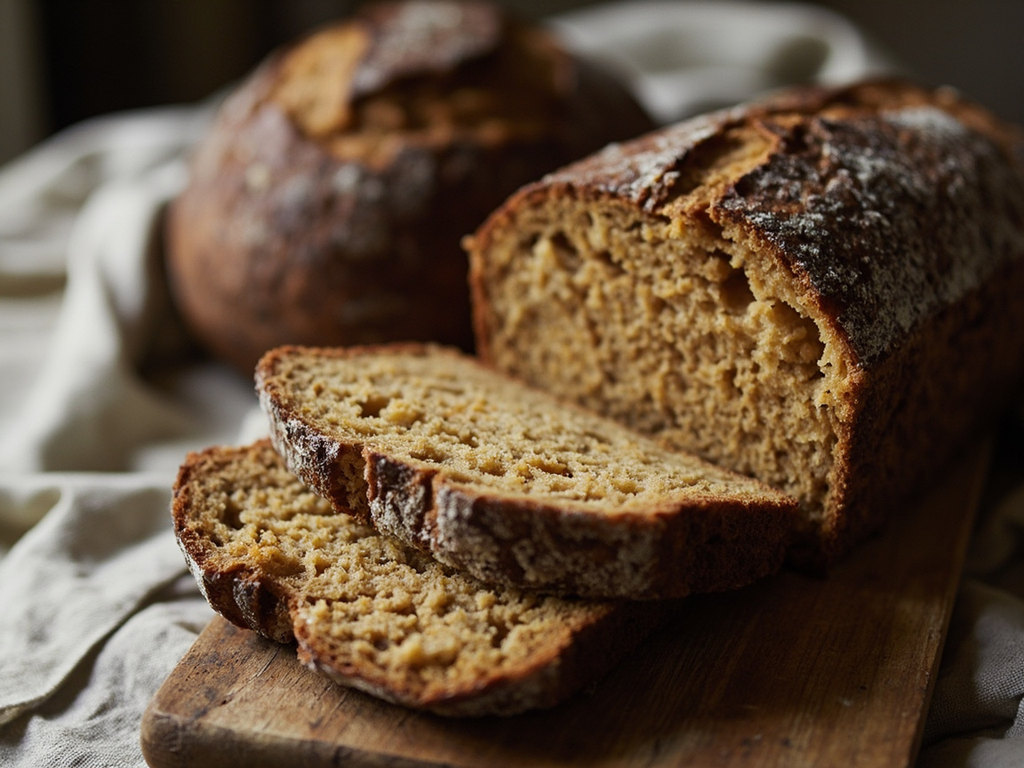
A dense loaf, slightly sweetened with molasses, baked slowly in a low oven: the emblematic brown loaf of New England farms, both nourishing and long-keeping.
Bread is my charge, and no one kneads my Father's but me. I mix rye with the golden coarse grain of Indian meal, I pour in a dark stream of molasses like a winter evening, and I let the dough rise unhurriedly near the hearth. The baking is slow—far slower than a tedious visit—and the whole house smells of warm grain. A well-made loaf, I confess, is worth a small prize at the county fair.
- •Rye flour — two measures (base grain, earthy flavor)
- •Cornmeal (Indian meal) — one measure (texture and sweetness)
- •West Indies molasses — a good splash (sweetness and brown color)
- •Sourdough starter or brewer's yeast — enough (leavening)
- •Warm water and a pinch of salt — as needed for dough (binding)
Rye and Indian Bread
A dense loaf, slightly sweetened with molasses, baked slowly in a low oven: the emblematic brown loaf of New England farms, both nourishing and long-keeping.
Why this dish? Emily made the household bread every day, and her father said he only liked the bread she kneaded. She won a prize for her rye and Indian bread at the Amherst agricultural fair.
Bread is my charge, and no one kneads my Father's but me. I mix rye with the golden coarse grain of Indian meal, I pour in a dark stream of molasses like a winter evening, and I let the dough rise unhurriedly near the hearth. The baking is slow—far slower than a tedious visit—and the whole house smells of warm grain. A well-made loaf, I confess, is worth a small prize at the county fair.
Ingredients (period version)
- Rye flour — two measures (base grain, earthy flavor)
- Cornmeal (Indian meal) — one measure (texture and sweetness)
- West Indies molasses — a good splash (sweetness and brown color)
- Sourdough starter or brewer's yeast — enough (leavening)
- Warm water and a pinch of salt — as needed for dough (binding)
Ingredients
- Rye flour — 300 g (base grain)
- Fine cornmeal (polenta) — 150 g (sweetness and grain)
- Molasses — 4 tbsp (sweetness, color)
- Active dry yeast — 7 g (leavening)
- Warm water — 350 ml approx. (hydration)
- Salt — 1 tsp (seasoning)
Method
- Dissolve the yeast in warm water with the molasses.
- Mix the rye flour and cornmeal with the salt, pour in the liquid, and knead into a soft, sticky dough.
- Cover and let rise for 1 hour 30 minutes in a warm place.
- Shape into a loaf, place in a buttered loaf pan, and let rise another 45 minutes.
- Bake at 170°C for 50 to 60 minutes, until the bottom sounds hollow when tapped.
- Let cool completely before slicing: the crumb holds together better the next day.
How it was made : In the 19th century, this bread baked for hours in the brick bread oven still warm from the day's baking, sometimes steamed in a covered mold (brown bread). Molasses replaced expensive refined sugar.
The contemporary twist : Serve warm with a pat of salted farm butter and a drizzle of molasses—the poet's toast.
Sources : Emily Dickinson Museum, Amherst — section 'Emily Dickinson the baker' · Lydia Maria Child, The American Frugal Housewife (1829)
Emily Dickinson · Charactorium