Character Catalog

Historical Library

CollectionGalaxy
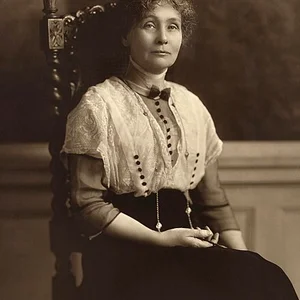
Portrait de Emmeline Pankhurst

Emmeline Pankhurst

Emmeline Pankhurst

1858 — 1928

Royaume-Uni, Royaume-Uni de Grande-Bretagne et d'Irlande

SocietyActivisteRévolutionnaire19th CenturyLeader of the British suffragettes, women's right to vote

British feminist political activist (1858–1928)

Émotions disponibles (6)

N

Neutre

par défaut

I

Inspirée

P

Pensive

S

Surprise

T

Triste

F

Fière

Key Facts

    Works & Achievements

    Foundation of the WSPU (Women's Social and Political Union) (1903)

    Organisation founded in Manchester with her daughters Christabel and Sylvia, the WSPU became the spearhead of the radical British suffragist movement. Its motto 'Deeds not Words' marked a turning point in the history of militant feminism.

    Campaign of direct action and civil disobedience (1905-1914) (1905-1914)

    Emmeline Pankhurst coordinated years of demonstrations, arrests, hunger strikes and spectacular actions (window smashing, setting fire to letterboxes) that forced public opinion and the government to take the issue of women's suffrage seriously.

    My Own Story (autobiography) (1914)

    An autobiographical account published in English, in which Emmeline recounts her activist journey and justifies the use of direct action. This book is a valuable historical source on the British suffragist movement.

    Lecture tours in the United Kingdom, the United States and Canada (1908-1918)

    Emmeline Pankhurst travelled the English-speaking world to advocate for women's right to vote, raising funds and mobilising international opinion with an eloquence recognised by supporters and opponents alike.

    Mobilisation of women for the war effort (1914-1918)

    During the First World War, Emmeline Pankhurst organised demonstrations to encourage women to enter factories and support the war effort, which helped change the government's view of their civic capacity.

    Representation of the People Act (indirect contribution) (1918)

    Without having participated in drafting the legislation, Emmeline Pankhurst is widely credited with making the granting of voting rights to British women inevitable, achieved in 1918 for women over 30, then in 1928 for all women.

    Anecdotes

    In 1913, Emmeline Pankhurst was arrested no fewer than twelve times in a single year. After each release, she immediately resumed her militant activities, defying the so-called 'Cat and Mouse' Act, which allowed weakened suffragettes to be released after hunger strikes, then re-arrested once they had recovered.

    At a meeting in New York in 1909, Emmeline Pankhurst received a standing ovation lasting several minutes. Her speech, delivered in impeccable English with remarkable eloquence, convinced thousands of Americans to support the cause of the British suffragettes and earned her international media coverage.

    On 4 June 1913, at the Epsom Derby, Emily Wilding Davison — a militant of the WSPU founded by Emmeline — threw herself under the hooves of King George V's horse and died from her injuries. Her funeral, organised by the WSPU, drew thousands of women into the streets of London and made front pages in newspapers around the world.

    During the First World War, Emmeline Pankhurst suspended all militant action and called on women to support the war effort. This unexpected reversal alienated some of her supporters, including her own daughter Sylvia, but helped to change the image of the suffragettes in the eyes of the British government.

    At her death in 1928, Emmeline Pankhurst did not live to vote in the general election: the Representation of the People Act, which granted the right to vote to all women over the age of 21, was passed a few weeks after her death. Her statue was unveiled in 1930 outside the Palace of Westminster.

    Primary Sources

    My Own Story (autobiography) (1914)
    I have described myself as a woman who had a lifelong training for the revolutionary movement... We were determined to win the vote, and we meant to do so by constitutional means if we could, and by other means if we must.
    Speech 'Freedom or Death', Hartford (Connecticut) (13 November 1913)
    We are here, not because we are law-breakers; we are here in our efforts to become law-makers.
    Founding manifesto of the WSPU (Women's Social and Political Union) (1903)
    The WSPU is not a debating society, but a union of women united by a common determination to obtain the Parliamentary vote as a means of furthering the interests of their sex.
    Letter from Emmeline Pankhurst to Prime Minister Herbert Asquith (1908)
    We claim that the time has arrived when women, equally with men, should have the right to vote for Members of Parliament, and we call upon His Majesty's Government to grant this claim without further delay.
    Suffragette, official journal of the WSPU (1912)
    Votes for Women is not a party question. It is a human question — a question of justice and of common sense.

    Key Places

    Manchester, England (birthplace and founding location of the WSPU)

    Emmeline Pankhurst was born in Manchester in 1858 and founded the WSPU there in 1903. The working-class industrial city shaped her political and social conscience from childhood.

    Westminster Parliament, London

    The main stage for suffragist demonstrations, WSPU militants regularly organised rallies there and chained themselves to the gates to demand the right to vote. A statue of Emmeline stands today in the garden adjoining Parliament.

    Holloway Prison, London

    Emmeline Pankhurst was imprisoned there on numerous occasions. She conducted hunger strikes and endured force-feeding, becoming a living symbol of female resistance in the face of injustice.

    Clement's Inn, London (WSPU headquarters)

    From 1906, the WSPU established its headquarters at Clement's Inn. It was from there that Emmeline coordinated national campaigns, publications, fundraising, and militant actions.

    Hartford, Connecticut, United States

    Emmeline Pankhurst delivered one of her most celebrated speeches there in 1913, 'Freedom or Death', which made a profound impact on American public opinion and helped internationalise the suffragist cause.

    Typical Objects

    Green, white and purple tricolour sash

    These three colours were the official colours of the WSPU: green for hope, white for purity, purple for dignity. Emmeline and her activists wore them at all demonstrations as a sign of recognition and solidarity.

    Chains and padlock

    Suffragettes chained themselves to the railings of Parliament or Buckingham Palace to force the authorities to arrest them publicly, turning each arrest into a media platform. Emmeline herself used this technique during several actions.

    Megaphone and rally platform

    A great orator, Emmeline Pankhurst regularly spoke at open-air rallies, on improvised platforms or in large halls. Her voice carried by a megaphone had become one of the symbols of her militant power.

    Copy of the 'Votes for Women' newspaper

    This newspaper, founded in 1907 by the WSPU, was sold in the streets by uniformed activists. It spread the movement's ideas and reported on the actions, arrests and trials of suffragettes across the country.

    Activist's hammer

    From 1912, suffragettes used hammers to smash the shop windows of London businesses during coordinated actions. These tools symbolised the shift towards more radical resistance in the face of government inaction.

    Enamel brooch in suffragette colours

    Brooches and badges decorated in green, white and purple were worn daily by activists and sympathisers as a sign of belonging and solidarity with the cause of women's suffrage.

    School Curriculum

    Vocabulary & Tags

    Key Vocabulary

    Tags

    societeactiviste

    Daily Life

    Morning

    Emmeline rose early, usually before seven o'clock. She read the daily press — The Times, the Manchester Guardian — scanning for articles on the question of women's suffrage. She would then dictate her correspondence to a secretary, responding to the hundreds of letters received from activists, journalists, and political figures from around the world.

    Afternoon

    Her afternoons were devoted to WSPU executive committee meetings, speech preparation, and coordinating activist campaigns. She regularly received delegations of provincial or foreign suffragettes, and frequently visited Parliament to present petitions or attend debates from the gallery reserved for women.

    Evening

    Her evenings were often taken up by public meetings in large halls in London or the provinces. A gifted orator, she prepared her speeches meticulously, rehearsing them aloud. When she was not on a platform, she gathered with her daughters and closest collaborators over a simple dinner, before writing articles or calls to action.

    Food

    Emmeline Pankhurst had a sober, typically British middle-class Edwardian diet: porridge in the morning, sandwiches or soup at midday, roast or stew in the evening. During her hunger strikes in prison, she refused all food for several days at a time, considerably undermining her health over the years.

    Clothing

    Emmeline Pankhurst placed great importance on her dress, viewing appearance as a political statement. She wore elegant, well-fitted gowns, wide-brimmed hats adorned with feathers, and always displayed the WSPU's green, white, and purple tricolour cockade. Her polished silhouette directly contradicted the image of a disorderly woman that her opponents sought to project.

    Housing

    In London, Emmeline Pankhurst lived for several years at Clement's Inn, in the very premises of the WSPU headquarters, turning her personal space into a permanent site of militant work. She also lived in Manchester in her youth, and in Brittany after the war, seeking to recover from the ordeal of imprisonment. Her lodgings, always modest given her political commitments, were cluttered with files, newspapers, and correspondence.

    Historical Timeline

    1858Naissance d'Emmeline Goulden à Manchester, dans une famille libérale et engagée politiquement.
    1868Adoption du Reform Act de 1867 : les hommes propriétaires des villes obtiennent le droit de vote, mais les femmes en sont totalement exclues.
    1879Mariage d'Emmeline avec Richard Pankhurst, avocat républicain et défenseur des droits des femmes, qui milite pour leur accès au vote.
    1884Le Reform Act de 1884 étend le droit de vote aux hommes ruraux, mais exclut toujours les femmes, ravivant la frustration des militantes.
    1897Fondation de la National Union of Women's Suffrage Societies (NUWSS) par Millicent Fawcett, qui adopte une approche constitutionnelle et pacifique.
    1898Décès de Richard Pankhurst. Emmeline, veuve avec cinq enfants, s'engage encore plus résolument dans le combat suffragiste.
    1903Emmeline Pankhurst fonde le WSPU (Women's Social and Political Union) Ă  Manchester avec ses filles Christabel et Sylvia, sous la devise 'Deeds not words'.
    1905Première arrestation de militantes du WSPU lors d'un meeting à Manchester : le mouvement entre dans une phase d'action directe et de désobéissance civile.
    1910Vendredi Noir (18 novembre) : affrontements violents entre suffragettes et policiers devant le Parlement, scandant les manifestations.
    1913Adoption du Cat and Mouse Act permettant de libérer temporairement les suffragettes en grève de la faim, puis de les réincarcérer dès leur rétablissement.
    1914Déclenchement de la Première Guerre mondiale : Emmeline suspend la lutte suffragiste et mobilise les femmes pour l'effort de guerre.
    1918Representation of the People Act : les femmes de plus de 30 ans propriétaires ou épouses de propriétaires obtiennent le droit de vote au Royaume-Uni.
    1928Equal Franchise Act : toutes les femmes britanniques de plus de 21 ans obtiennent le droit de vote. Emmeline Pankhurst décède le 14 juin, quelques semaines avant la promulgation.

    Period Vocabulary

    Suffragette — A term initially coined as a pejorative by the Daily Mail in 1906 to mock women campaigning for the right to vote. Women of the WSPU reclaimed it and wore it with pride, distinguishing it from the more neutral term 'suffragist'.
    Deeds not Words — The official motto of the WSPU. It encapsulated Emmeline Pankhurst's philosophy of direct action and civil disobedience, marking a break from the peaceful petitioning favoured by moderate suffragists.
    Cat and Mouse Act — Popular nickname for the Prisoners (Temporary Discharge for Ill Health) Act of 1913, which allowed suffragettes weakened by hunger strikes to be temporarily released, then re-imprisoned once they had regained their strength — like a cat toying with a mouse.
    Militant — In early twentieth-century Britain, this term referred specifically to suffragettes who were willing to engage in illegal acts (window-smashing, arson, chaining themselves to railings) to advance their cause, as opposed to law-abiding campaigners.
    Hunger strike — A form of resistance adopted by many imprisoned suffragettes, including Emmeline Pankhurst, consisting of refusing all food to protest their conditions of detention and compel the government to release them.
    Force-feeding — A practice used by British prison authorities to feed hunger-striking suffragettes through a nasal tube. This violent method was widely condemned by the international press and increased public sympathy for the activists.
    Franchise — The British legal and political term for the right to vote. The Equal Franchise Act of 1928 granted the franchise to all women. Winning the franchise was at the heart of the suffragette struggle.
    Petition — A document signed by thousands of citizens and presented to Parliament to demand legislative reform. Before turning to direct action, suffragists had relied on petitions for decades without result — which convinced Emmeline to change tactics.
    WSPU (Women's Social and Political Union) — Organisation founded in 1903 by Emmeline Pankhurst and the leading force of the radical British suffragist movement. Highly centralised around Emmeline and her daughter Christabel, it coordinated militant actions on a national scale.
    Reform Act — Refers to the major British nineteenth-century laws that progressively extended voting rights to men (1832, 1867, 1884), systematically excluding women. These non-inclusive reforms fuelled the anger of the suffragist movement.

    Gallery

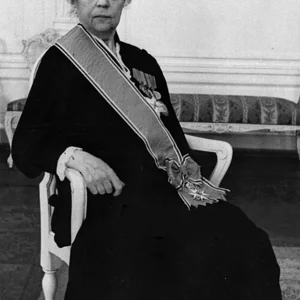
    Elizabeth Garrett Anderson; Emmeline Pankhurst

    Elizabeth Garrett Anderson; Emmeline Pankhurst

    Emmeline Pankhurst Arrested 1907-1914

    Emmeline Pankhurst Arrested 1907-1914

    Mrs Emmeline Pankhurst, Leader of the Women's Suffragette movement, is arrested outside Buckingham Palace while trying to present a petition to King George V in May 1914. Q81486

    Mrs Emmeline Pankhurst, Leader of the Women's Suffragette movement, is arrested outside Buckingham Palace while trying to present a petition to King George V in May 1914. Q81486

    Emmeline Pankhurst (Brackenbury)

    Emmeline Pankhurst (Brackenbury)

    
E[mmeline] Pankhurst

    E[mmeline] Pankhurst

    Rise Up Women - The Statue of Emmeline Pankhurst - geograph.org.uk - 6003103

    Rise Up Women - The Statue of Emmeline Pankhurst - geograph.org.uk - 6003103

    Emmeline Pankhurst Statue (close up) - geograph.org.uk - 6003106

    Emmeline Pankhurst Statue (close up) - geograph.org.uk - 6003106

    Rise up, women - geograph.org.uk - 6713605

    Rise up, women - geograph.org.uk - 6713605

    Pankhurst Postcard c.1907

    Pankhurst Postcard c.1907

    Emmeline Pankhurst plaque

    Emmeline Pankhurst plaque

    Visual Style

    Style pictural réaliste inspiré de la peinture édouardienne britannique, dominé par le tricolore suffragiste vert, blanc et violet, avec des scènes de manifestations devant le Parlement sous la lumière dramatique des becs de gaz.

    #4a2265
    #2d6a3f
    #f5f5f0
    #8b7355
    #c0392b
    AI Prompt
    Edwardian Britain, early 20th century suffragette movement. Realistic oil painting style inspired by John Singer Sargent and Harold Knight. Palette of deep purple, forest green and stark white — the WSPU colors. Scenes of women in long Edwardian skirts and wide-brimmed hats holding banners in the London rain, gathered before the imposing Gothic facade of the Houses of Parliament. Dramatic chiaroscuro lighting from gas street lamps. Suffragette newspapers and pamphlets scattered on cobblestones. Composed and dignified female figures against a grey, smoky industrial skyline. Tricolor sashes and enamel badges catching the light.

    Sound Ambience

    Ambiance sonore d'un meeting suffragiste londonien au début du XXe siècle, mêlant la foule militante, les voix oratoires, la ville industrielle et la tension des confrontations avec la police.

    AI Prompt
    Suffragette rally in Edwardian London, 1910s. Crowd noise of hundreds of women chanting 'Votes for Women'. A powerful female voice speaking from a wooden platform through a megaphone. Horse-drawn carriages passing on cobblestones. Police whistles in the distance. Newspaper sellers shouting headlines. The rattling of chain link fences as protesters attach themselves. Rain on Victorian rooftops. The rumble of a steam train at a nearby station. Inside a suffragette meeting hall: the scratch of pens on paper, hushed urgent conversation, the rustle of tricolor sashes.

    Portrait Source

    Wikimedia Commons